Friday, August 8, 2008

Salade Tricolore

I’ve been reading Vegetable Harvest by Patricia Wells and wanting to make every recipe I’ve seen so far. These are simple recipes that require perfect ingredients at their peak. For my first selection, I prepared salade tricolore with creamy lemon-chive dressing. I collected arugula at the farmers’ market, and the radicchio and endive came from the grocery store. This combination of greens is classic, but the creamy lemon-chive dressing gave the salad an interesting twist.
Although it is a creamy dressing, it’s not heavy at all. The lemon and chives point up the flavors. Also, by adding a little dressing at a time as you mix the leaves together, you can prevent the salad from becoming sodden. The peppery greens with the smooth, fresh veil of the dressing were just right together.

Wednesday, August 6, 2008

Clams in Cartoccio

Last weekend, I reached for my copy of Italian Grill once again. I don’t actually eat much red meat, so I’ve been cooking from the fish and shellfish section. I have read through all of it, however, and Mario is just fantastic. I noticed in the pizza section that his dough includes white wine. Interesting. I’m going to have to try that too.

The clams in cartoccio couldn’t be simpler to prepare. Pancetta is browned, and garlic, crushed red pepper, and diced sweet peppers are added. All of this is bathed in white wine and then allowed to cool. This mixture is spooned over clams that have been placed in foil packets, and the packets are sent to the grill.

As I just mentioned, I don’t eat much red meat, but Mario suggested the use of pancetta, and so be it. I included it because I sensed the flavor was important here, and the pork nuggets were easily avoided while eating the dish. It’s a grey area. My reason for not eating red meat is that I just don’t really enjoy it. Little tastes slip by here and there, but I’m not drawn to it. For instance, paella isn’t paella without the flavor from chorizo. But, my attention is on the chicken and shellfish and the sausage pieces get moved to the side of the plate. This isn’t my only food issue, and maybe I’ll change my mind some day. I won’t even attempt to explain my thing with onions.


Kurt has no meat eating issues and was very pleased with the clams and the pancetta. The clams were perfectly tender, and the resulting broth was indescribably good. Grilled bread was used as a vehicle for it; although, I could have drunk from the parchment-lined foil. The clams and pancetta provided the only source of salt, and it was just the right amount. Mario wrote that when the foil packets are opened at the table, your guests will experience a piscatorial facial. I would like to steal his term and refer to the broth as heavenly piscatorial nectar. I highly recommend it, and eating or not eating the pancetta is entirely up to you.

Tuesday, August 5, 2008

Zucchini and Summer Squash Spaghetti

The concept of cutting zucchini into pasta-like ribbons and saucing them like spaghetti is popping up all over the place. On Iron Chef America Battle Zucchini, Bobby Flay made a fantastic looking version. There was also a raw food recipe in Food and Wine in June, and I’ve had such a dish a few times at the raw bar at Whole Foods. I felt the need to create my own version, and this is a perfect time of year for it.

At the farmers’ market on Saturday, we found lovely zucchini, yellow summer squashes, sweet pepperoncini and cherry peppers, and lots of other things too. As I gathered the fresh peppers at the market, I began imagining how to incorporate them into this dish. I was mostly inspired by the raw preparations I’ve read about or eaten, but I veered a little off the raw path in the end. My take on the dish was:

2 medium summer squashes
1 small zucchini
note: the size varies quite a lot, but for the amount of sauce here, a total of five cups or so of squash pasta works well

2 medium fresh tomatoes, chopped
1/3 c sun-dried tomatoes from jar packed with olive oil
1 garlic clove, finely chopped
1/2 c fresh basil leaves
1/4 c extra virgin olive oil
1/2 t Aleppo pepper
juice of half of a lemon
Salt and freshly ground black pepper to taste

3 T kalamata olives, pitted and halved
3 fresh cherry peppers, thinly sliced
2 fresh pepperoncini, thinly sliced
Grated parmigiana reggiano to taste

Slice squashes and zucchini into thin strips lengthwise, and then cut each strip into strands. I used a grater to slice the strips and then hand cut the strands. It takes a little time and patience. Place cut strands in a medium bowl and set aside.

(A spiral slicer would make the task much easier, and the ribbons would be perfectly consistent. I’m now coveting one and am trying to come up with ways to justify a purchase. I would make this every day if I had a handy tool to cut the ribbons.)

In a blender pitcher, place fresh tomatoes, sun-dried tomatoes, garlic, basil, olive oil, Aleppo pepper, lemon juice, salt and black pepper. Puree until smooth. Pour over squash strands and toss to combine. Serve garnished with olives, cherry peppers, pepperoncinis and parmigiana as four small first course servings or two large main course plates.
This summery dish, requiring no stove use at all, packs a burst of flavors. The fresh and sun-dried tomatoes combine to form a bright tasting sauce, the olives add depth of flavor, and the peppers bring a fresh, crunchy contrast. You won’t miss the semolina pasta for a minute.

Monday, August 4, 2008

Carmelitas

It doesn’t take much to talk me into baking. Someone at work made an off-handed comment about how she deserved some cookies, and that was enough to send me to my kitchen. I had tucked away this recipe from Food and Wine’s March 2007 issue. These are Texas-standard cookie bars, but I had never baked them. I’ve eaten carmelitas from Whole Foods, and theirs are fantastic. They’re very dense and filling but deliciously so. The chewy layers of chocolate chips, pecans, and caramel make it hard to stop with just a dainty bite.

While shopping for ingredients, I was reminded that dulce de leche is also known as cajeta. I thought it would be easy enough to locate, but two grocery stores later, I finally found it near the peanut butter and nutella. You can also make your own from sweetened condensed milk. The brand I bought is made from goat’s milk, but others are made from cow’s milk. I could have happily sat down with the jar and a spoon and called it a day, but instead I assembled and baked the carmelitas.

The dough comes together quickly, and the half used for the base gets pre-baked. Then, the other ingredients and crumbled remaining dough are layered on top, and the pan is returned to the oven. There is a curious instruction about leaving the pan to cool and letting it sit uncovered at room temperature overnight. Uncovered all night long? I couldn’t do it. We have a cat, and who knows what other creatures could have found their way into the carmelitas overnight? I left it for several hours and then covered the pan before going to sleep. Maybe being left uncovered overnight makes for a firmer cookie bar. Mine were a little crunchy on the bottom, yielding in the middle, and just slightly firmer on top, and I was quite pleased with my result. I brought the cookie bars to work, and happy munching ensued.


Thursday, July 31, 2008

Hoisin-Grilled Spatchcocked Chicken with Asparagus and Shitake Stir-Fry

How weird, anal, and obsessive is my recipe collecting? You don’t really want to know. I’ll just say that for years I’ve been cutting photos and recipes out of magazines and filing them by category. One of those magazines is Living, and its recipes get their own filing system. Recipes from other food publications have a separate system of their own. Too much information? You don’t want to see the files or how they’re overflowing at this point. The important thing is that I do actually, eventually thumb through them for inspiration.

In Living, there’s a section each month called What’s for Dinner, and four recipe cards are included with photos on the front sides. They get their own file folder. Well, at long last, a What’s for Dinner dating from March 2003 made it to our table last Sunday. As it appeared on the recipe cards, it was
Hoisin-Roasted Game Hens with Asparagus and Shitake Stir-Fry.

I revised the meal a little by using a whole chicken instead of game hens, and the chicken was spatchcocked and grilled instead of roasted. The chicken was prepared as follows:
3 garlic cloves, minced
2 T minced fresh ginger
2 fresh red Fresno chiles, seeded and finely chopped
3 T chopped fresh cilantro
1 T lime juice
1 t soy sauce
¼ c canola oil
½ c hoisin sauce
-remove backbone from chicken and flatten it with wings tucked back
-mix all ingredients except hoisin together and spoon mixture over both sides of chicken and rub under skin; refrigerate until ready to grill
-grill over high heat for seven to ten minutes per side, then move chicken to a cooler side of the grill; baste with hoisin sauce and cook for ten minutes; turn and baste other side and cook until juices run clear when pierced, about another ten minutes


Note about hoisin sauce: Some brands list sugar as the first ingredient and contain astronomical amounts of sodium. I chose
House of Tsang brand because the first ingredient listed is fermented soybean paste, it contains no msg, and it is much lower in sodium and sugar than others.

For the asparagus and shitake stir-fry, my only change was adding red bell pepper. The plated chicken and vegetables were sprinkled with black and white sesame seeds and chopped cilantro. I’m glad I kept these recipes. Hoisin makes a great barbeque sauce, and this was another really easy meal.

What will I do if I ever make it through all of my files? What if they’re left empty with nothing remaining to cook? I’ll just keep reading so that never happens.

Tuesday, July 29, 2008

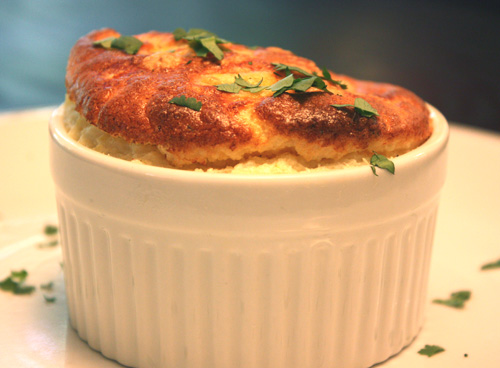
Grits, Cheese, Corn, and Onion Souffles

Last weekend, I tried a few new and different dishes, and all of them had one thing in common. Everything I prepared was incredibly simple and shockingly good given the scant active time involved. Souffles, so dramatic in appearance but simple to create, clearly fit this description. This recipe from Bon Appetit’s June issue was the main dish of our Sunday brunch.

After making corn cream and macque choux the night before, I had some remaining fresh corn. It just seemed like a perfect fit to include it in the grits soufflés. And, it was. The airy egg texture was contrasted by a fresh burst of corn. I didn’t have any leeks, but the 3/4 c yellow onion plus green onions provided enough flavor from the allium family. The pepper Monterey Jack was a nice addition, and more heat from fresh jalapenos would be a consideration in the future. I garnished the finished soufflés with chopped cilantro.

When dishes require a lot of chopping, marinating, blanching, basting, waiting, mixing, turning, slicing, etc., you feel like you really earned the right to a delicious meal. As you gladly get to finally sit and taste, you think, yes, this was worth all of that. Last weekend, I felt almost guilty that I wasn’t even a little fatigued after preparing these meals. It was like some magic happened that made amazing meals come out of nowhere. I sat, ate, and was delighted to enjoy really great, nearly effortless food.

Monday, July 28, 2008

Seared Scallops with Corn Cream and Macque Choux

Last Thursday evening, we attended Crescent City Cooking with a Focus on Seafood at Central Market cooking school. The class was taught by Susan Spicer who is Chef of Bayonna and Herbsaint in New Orleans. Her self-described style of French-inspired, eclectic cooking was demonstrated in four courses. Spinach salad with pan-sauteed Gulf oysters, a soup and sandwich course of shrimp and tomato bisque with a seared tuna muffaletta, a duo of fish course of cornmeal crusted catfish over a red bean puree and a pecan crusted red snapper with a citrus butter sauce, and last, mint julep ice cream. I left the class very happy and inspired. Bean puree as a sauce for fish! Keep the shrimp flavor subtle in bisque and add just a hint of anise from Herbsaint or Pernod! Cook over lower heat when using a nut crust on fish fillets so it doesn’t burn!

Armed with a signed copy of Crescent City Cooking: Unforgettable Recipes from Susan Spicer's New Orleans and the desire to keep eating food like what we sampled in the class, I set out to create one of her dishes at home over the weekend. That dish was Seared Scallops with Corn Cream and Macque Choux. Spicer explains that macque choux is a Cajun version of Yankee succotash made with corn kernels, diced tomatoes, and green onion.

Now, Kurt likes to point out that, due to my Illinois upbringing, I’m a sucker for fresh corn. He’s from Illinois too, but I really love fresh corn (and popcorn and cornmeal and polenta and grits). I can tell good fresh corn from so-so fresh corn and several levels of ok-ness in the middle. Small-kerneled, crunchy white corn can be the very best there is, but big, juicy yellow kernels are undeniably addictive. But, even if you only moderately like corn, like normal people, you will really like this dish. It was in the category of I can’t believe I made this it’s so good.

Corn freshly cut from the cob is briefly cooked in butter and a small amount of water. Then, it’s pureed in a blender and should be poured through a sieve into simmering cream. I didn’t sieve it because I wanted all the corn goodness I could get. The texture was still very smooth and silky despite having skipped the sieving. The corn cream is pooled on a plate, the macque choux is piled in the center, the scallops are nestled about the center pile, and pan drippings from the searing are dribbled about the composition. It was unbelievable how simple this preparation was in relation to its deliciousness. 1:5,000. I think this new book and I are going to be spending a lot of time together in the kitchen.


Blogging tips