




Showing posts with label buckwheat. Show all posts

Monday, January 10, 2022

Smoked Herring and Buckwheat Blinis

I was busy baking cookies and more cookies and celebrating the holidays. But, now I want to tell you all about a new cookbook. I received a review copy of Take One Fish: The New School of Scale-to-Tail Cooking and Eating by Josh Niland, and I was excited to read about his approach to using more of each fish and using less popular types of fish. I had recently watched the documentary Seaspiracy. That film goes into detail showing that certification programs aren’t always what we expect them to be. A sustainably-caught label on fish at the grocery store may not mean much. I wasn’t feeling so great about meals from our oceans. When I opened this book, right off the bat in the introduction it’s explained that NIland’s approach to fish increases its usable yield considerably. His goal is for every fish caught to “generate the yield of two” by using more than just fillets. If chefs followed his lead, fewer fish could feed more people. He understands that not everyone catches and butchers her own fish, and he offers suggestions for how to make the most of store-bought fish pieces and how to ask for cuts that aren’t usually in the seafood case. The book’s sections are ordered by size of fish, each chapter is devoted to a type of fish, and there are stunning photos throughout. At the start of the chapters, there are suggestions for other types of fish that would work for the recipes. The John Dory chapter is a great example of the overall intent. Niland is able to use 90% of the whole weight of John Dory. There’s Salt and Pepper John Dory Tripe that looks like crispy calamari; a tagine made with tail shanks; John Dory Chops with Anchovy and Reaper Butter and Jerk Cauliflower that I have marked for the cauliflower alone; and John Dory Liver Terrine with Chopped Sauternes Jelly. One of the prettiest dishes is the Raw Flounder, Fragrant Leaves, Herbs and Citrus Dressing that’s shown served as a taco of sorts in thinly-sliced daikon. And, there are actual tacos made with Swordfish al Pastor. Fish fat is even featured since it does account for a substantial amount of total weight. The head note for the Kingfish Fat Caramel Macarons explains that the “result was delicious, with only a very mild hint of fish flavor.” For another foray into sweets, there’s a Custard Tart with Sardine Garum Caramel that has me very curious. I was pulled in by the X-Small section with the Pissaldiere and Pichade both made with fresh sardines rather than salted anchovies. Then, I set about making the Smoked Herring and Buckwheat Blinis. 

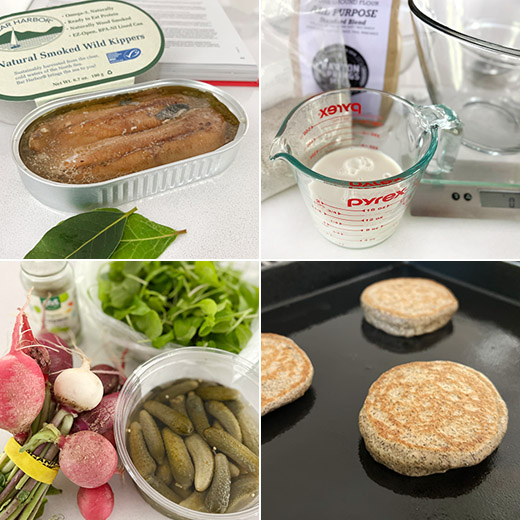
I had definitely used buckwheat flour before and may have even used it in some type of pancakes, but I had never made proper blinis. The batter was made in a few steps involving warmed milk, yeast, a mix of flours, egg yolks, and whisked egg whites that were gently folded into the mix. I cooked the blinis on a griddle with melted butter brushed over the surface. The smoked herring was steeped in milk with a bay leaf before being mashed with butter, lemon juice, and olive oil. I should mention, the recipe as shown below calls for a mix of smoked herring and cooked white fish. I used all smoked herring. Mashed potato and more butter were added before creme fraiche and chives were folded in to form the brandade. If you have chiled the brandade before serving, you should let it sit at room temperature for a bit to soften to a scoopable state. Lots of garnishes were prepped including cornichons, capers, radishes, and arugula. 
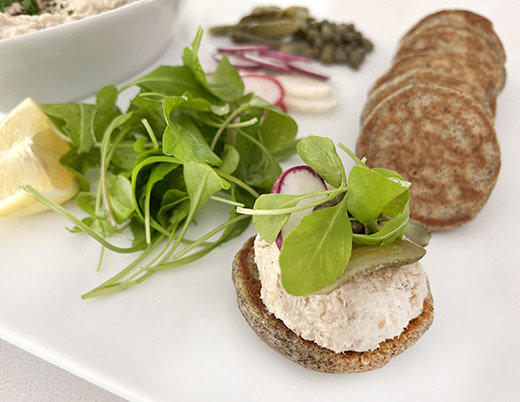
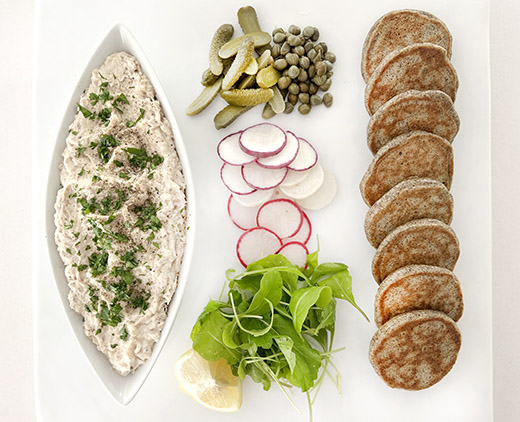
I love a serve-yourself hors d’oeuvre with lots of options for toppings. The smoked herring brandade was spooned onto a blini, and sliced cornichon, capers, radish slices, and baby arugula leaves were balanced on top. The pickled and peppery toppings balanced the rich brandade, and the buckwheat blinis were perfect delivery vehicles for everything. I’m still thinking twice before trusting every certification label, and I'm eating a bit less seafood that I previously did. But, I’m delighted to use more tiny fish like herring and to make use of more of each fish whenever I can. 

Smoked Herring and Buckwheat Blinis 
Recipes excerpted with permission from Take One Fish: The New School of Scale-to-Tail Cooking and Eating by Josh Niland published by Hardie Grant Books, August 2021. 

This tastes as joyful as it looks, with the condiments lifting the smoked herring brandade into truly celebratory territory. Blinis are not hard to make but they often fall down for a few basic reasons: a stodgy mix that hasn’t been lightened with egg white or leavened with yeast, too much ghee in the frying pan (creating a greasy crust around the edges) or sitting around for too long after being cooked. The other challenge is getting the size and colouring consistent, but here, practice makes perfect. As long as you keep all of the above in mind, you’ll be fine. 

SERVES 2 AS A LIGHT MEAL 
4 French shallots, finely diced

90 g (3 oz/1⁄2 cup) cornichons, drained and finely diced

60 g (2 oz/1⁄2 cup) tiny salted capers, rinsed and drained

8 radishes, cut into thin wedges 
 30 g (1 oz/1 cup) picked watercress extra-virgin olive oil, for dressing 
sea salt flakes and freshly ground black pepper

seeded mustard, to serve (optional) 

Smoked herring brandade 
80 g (23/4 oz) Smoked Herring Fillet 

210 ml (7 fl oz) full-cream (whole) milk 
1 bay leaf

70 g (2 1⁄2 oz) skinless, boneless white-fleshed fish, such as ling or snapper 
60 g (2 oz) butter, softened

juice of 1⁄2 lemon

2 tablespoons extra-virgin olive oil 
60 g (2 oz) mashed potato 
fine salt

1 1⁄2 tablespoons sour cream or crème fraîche, plus extra to serve

2 bunches chives, very finely chopped 

Buckwheat blinis 
125 g (4 1⁄2 oz) buckwheat flour

125 g (4 1⁄2 oz) plain (all-purpose) flour 
1 teaspoon fine salt

250 ml (8 1⁄2 fl oz/1 cup) full-cream (whole) milk

10 g (1⁄4 oz) dried yeast 
3 eggs, separated 
ghee, for pan-frying 

To make the brandade, check the smoked herring meat and make sure it is boneless and skinless. Put the milk and bay leaf in a small saucepan and bring to the boil, then remove from the heat and add the smoked herring. Leave for 10 minutes, then strain the herring and discard the milk (or keep it to use in mashed potatoes or a root vegetable soup). Steam the white fish in a bamboo steamer for 5 minutes or until the flesh is cooked and flakes apart easily. Put the herring and fish in a small bowl, add half the butter and mash together with a fork. Drizzle over the lemon juice and 1 tablespoon olive oil, mixing with the fork as you go, then add the mashed potato and mix well. Add the remaining butter and olive oil and mix again, then season to taste with salt. Leave the mixture to cool, then fold in the sour cream or crème fraîche. Chill in the fridge for at least 1 hour. 

For the blinis, sift both flours and the salt into a stand mixer fitted with the paddle attachment. Pour the milk into a small saucepan and warm to blood temperature over a low heat. Remove from the heat, add the yeast and let it dissolve, then stand for 5 minutes until frothy. Turn the mixer onto a low speed and combine the flours and the salt. Slowly pour in the milk and mix for 2 minutes to form a smooth batter. Cover the bowl with a tea towel (dish towel) and allow to prove in a warm place for 45 minutes or until doubled in size. Add the egg yolks to the batter and mix with a whisk for 1 minute. Add the egg whites to the very clean bowl of your stand mixer fitted with the whisk attachment, and whisk the whites to soft peaks. Add half to the batter and gently fold through to loosen it, then fold in the remaining egg white (this second batch aerates the batter to give the blini the desired lightness). Set aside to prove for another 15 minutes. 

To cook the blinis, heat a wide-based cast-iron frying pan over a medium-low heat for a good 2 minutes before starting. It’s important that the pan is hot. Add 1 tablespoon ghee and swirl it around to ensure the base is well greased, with a very light haze coming off the ghee. Working in batches of six, add a tablespoon of batter for each blini to the pan, taking care to create neat circles. Cook for 30 seconds or until the edges are lightly golden and bubbles start to appear on the tops. Flip the blinis over and cook for another 30–60 seconds until they are firm but soft to the touch and the centres are set. Transfer to a wire rack to cool or place in a cloth napkin to keep warm. Repeat with the remaining batter. You should have enough to make 25–30 blinis. 

To serve, assemble the shallot, cornichon, capers and radish separately alongside the herring brandade. Top the brandade with the finely chopped chives, dress the watercress with a little olive oil and season. Serve with the blinis and a little seeded mustard, if you like.


I am a member of the Amazon Affiliate Program. 

Wednesday, August 19, 2015

Crunchy Fermented Buckwheat Cereal with Homemade Yogurt

Other than mentioning sourdough breads, I’ve been doing lots of fermenting of food and not talking about it here. It started two years ago after I read Sandor Katz’s The Art of Fermentation and made lacto-fermented pickles for the first time. I was hooked. I loved that the sour flavor is a little different and a little more complex than what you get when pickling with vinegar. I’ve made lacto-fermented pickles with cucumbers, okra, peppers, and green beans, and I’ve made a fermented tomato salsa. And, it’s all so easy. For vegetables like cucumbers and okra, I start with a five percent brine and add garlic, dried hot chiles, and other spices like dill seed, and then the vegetables to be pickled are placed in the brine and held below the surface with jars or ramekins. It takes about four days for the fermentation process at room temperature. I still need to invest in a proper pickling crock with a weight that fits the top. A few months ago, I read Cultured Foods for Your Kitchen, and it gave me even more ideas for fermenting. But, let’s back up for a moment. You may be wondering, why ferment food at all? Traditionally, fermentation allowed foods to be preserved, but magically, it also offers a way of getting even more nutrition from food than you would without doing so. During fermentation, good bacteria are formed with all sorts of beneficial effects ranging from better absorption of nutrients to boosting the immune system. The only thing to keep in mind regarding fermentation is that those beneficial bacteria get killed off when exposed to high heat. I keep fermented pickles in the refrigerator for a couple of months if they even last that long. If they were heat-processed for canning and long-term storage, they’d still taste great but the beneficial bacteria would be killed off. Fermented foods, however, can be frozen and the good bacteria will survive. I mention this because the fermented cereal shown here was heated to a point that destroyed the good bacteria. In this case though, all was not lost. 
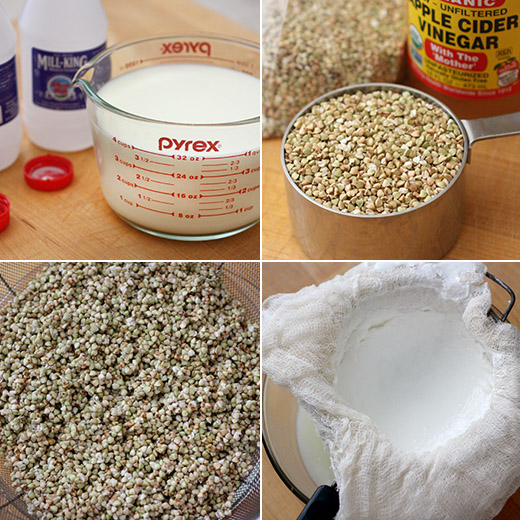
This recipe is from Cultured Foods for Your Kitchen, and in the head note, the Crunchy Buckwheat Cereal is compared to Grape Nuts. I’ve always loved Grape Nuts! When I was little, I used to sprinkle Grape Nuts cereal on my ice cream. It stayed crunchy until the end of the bowl. I couldn’t wait to make a homemade version or something similar. You begin with a couple of cups of untoasted whole buckwheat groats, and they were rinsed and drained. They were placed in a large bowl, a couple of tablespoons of raw apple cider vinegar were added, and the groats were covered with water. The bowl was covered with a dish towel, and it was left to ferment for two days. The buckwheat was then drained and rinsed, and I spread it on a baking sheet to dehydrate it in the oven. It took a little over two hours at 200 degrees F. Now, the reason this wasn’t such a bad thing even though the heat destroyed the beneficial bacteria produced during fermentation is because soaking grains before cooking makes them much more digestible and nutritious. Grains contain phytic acid which can block the absorption of minerals and enzyme inhibitors that can impede digestion. Soaking neutralizes phytic acid and breaks down the enzyme inhibitors. These benefits in the grain remain after cooking. There’s a side note in the book that explains this in detail and encourages you to always soak your grains before cooking even if just for a few hours. So, the soaked and fermented buckwheat groats were dried until crunchy in the oven, and then I added a teaspoon of cinnamon and stirred it through before storing the cereal. The second part of this breakfast is the yogurt which I finally succeeded at making at home. I used good, local milk; heated it to the proper temperature; let the temperature reduce; added some leftover yogurt; transferred it to a bowl and covered it; placed the bowl in the Wonderbag; and left it to ferment. Once I had homemade yogurt, I chilled it and then strained it to make a thick Greek-style yogurt. 

I will say that this homemade buckwheat cereal isn’t exactly like Grape Nuts. I wondered if adding a little salt would make it seem more similar. But, it’s delightfully crunchy and makes a fantastic yogurt topping. As you see in the photos, I added some blueberries as well. And, I’m thrilled to have finally made homemade yogurt that didn’t fail. My fermenting will turn back to pickles next. I need to get okra and peppers in some brine before their season ends. 

I am a member of the Amazon Affiliate Program.

Tuesday, June 10, 2014

Buckwheat Crepes with Gruyere, Sage, and Sunny-Side-Up Egg

I’ve never been to Buvette, but I’ve decided I want to live there or at least right upstairs. It’s a dreamy thought to imagine waking up to breakfast there every morning. And, I'm not picky. I would live at either the New York City or Paris location. After reading a review copy I received of the new book, Buvette: The Pleasure of Good Food, by Jody Williams, it’s clear that there’s more to this restaurant than just the lovely food. There’s a sense of hospitality that runs through the uncomplicated but perfectly prepared things chosen for the menu, the way they’re served on antique silver trays and pedestals, and the care in all those details. Just reading about the coffees and teas convinced me I would be quite comfortable here. From classic cappuccinos, lattes, and the Bicerin which is espresso with shaved bittersweet chocolate melted into it with barely whipped cream on top to the Russian samovar used to keep hot water at the ready for teas and tisanes, every aspect of the service has been considered to set the right mood. That mood seems to be unfussy but with a sense that things have been made special. For breakfast, I’d want the custardy Oeufs Brouilles served with smoked salmon and creme fraiche or the Asparagus Milanese with eggs and Parmigiano-Reggiano. The menu is equally influenced by French and Italian cuisine. For lunch, the Pan Bagnat with diced bell pepper, cucumber, and fennel would be my choice or maybe the Carciofi alla Romana. The list of Aperitifs and Cocktails is classic and edited including Lillet, a perfect Martini, Pimm’s Cup, and a Manhattan. And, there are snacks to go with the drinks like freshly made Rosemary Potato Chips, Marinated Olives with Orange Zest and Red Chili, and Tartinettes and Crostini with various toppings. For dinner, there’s Scallops with Brown Butter and Capers, simply perfect Poulet Roti, and a few options for Risotto. Dessert might be Tarte Tatin or Espresso Granita topped with whipped cream. Yes, I would be quite happy living here. 

Every page in the book has something I want to try, but first, I had to face my ongoing fear of crepes. There’s something about thin crepe batter and its refusal to spread itself into a nice circle in my pan that puts the fear in me every time. I’ve realized while making crepes that my stove isn’t perfectly level. The batter always runs more to the back of the pan. So, that’s one problem. And, I don’t seem to have the skill to swirl the pan in a way that makes pretty crepes. I still need more practice. Some actually from circles, and others look more like state shapes like Michigan or New York. I made the Buckwheat Crepe variation and left the batter to rest in the refrigerator overnight. Using the crepes I managed to make into proper circles, I filled them with grated Gruyere, sage leaves from my garden, and sunny-side-up eggs. Each crepe was folded around the fillings and placed on a baking sheet. The filled crepes were baked for about ten minutes until the edges were crisp and the cheese had melted. It was a rich and delicious dish for brunch. 

Some other suggestions for serving crepes were: to spread them with butter, sprinkle with sugar, squeeze on some lemon juice, and roll them and top with powdered sugar; or to julienne an apple and saute in butter with walnuts, cinnamon, and sugar and then add crepes cut into ribbons and cook until crisp. Until I get a chance to see about moving into Buvette, I’ll keep trying to create the experience at home. 

Crepes 
Excerpted from the book Buvette: The Pleasure of Good Food by Jody Williams. © 2014 by Jody Williams. Reprinted by permission of Grand Central Publishing. All rights reserved. 

[Makes a generous pint of batter; about a dozen 8-inch crêpes] 

Ingredients: 
3⁄4 cup unbleached all-purpose flour 
Pinch coarse salt 
2 large eggs 
4 tablespoons (1⁄2 stick) unsalted butter, melted and cooled, plus more for cooking the crepes 
1 1⁄4 cups whole milk 

Directions: In a large mixing bowl, whisk together the flour, salt, and eggs to make a paste. Whisk in the butter. Slowly whisk in the milk, being sure to take your time so that you avoid lumps. Cover the bowl with plastic wrap, or transfer the batter to an airtight container and refrigerate for at least 4 hours or up to 3 days before cooking. 

Once the batter has rested, heat up a slick of butter in a small skillet, preferably nonstick (if not, just use more butter!) over medium heat. Pour in just a little less than 1⁄4 cup of batter. Tilt the pan in a circular motion so that the batter finds itself in an even layer on the bottom of the pan. Cook the crepe until the bottom is just golden brown, about 1 1⁄2 minutes, loosen the edges with a spatula, and turn the crepe. Cook until it’s nicely browned on the opposite side, about 1 minute more. Transfer the crepe to a warm plate and fill it or garnish it however you’d like. Repeat the process until you’ve used up all of the batter. 

Buckwheat Crepes: 
Prepare the Crepes as directed, but substitute 1/4 cup buckwheat flour for 1/4 cup of the unbleached all-purpose flour. Fill each crepe with a slice of good ham (prosciutto cotto if you can find it), a small handful of grated Gruyere, or a slice of Brie or other soft cheese (Epoisses is really lovely here), and a sage leaf and fold the crepe into quarters. Transfer the filled crepes to a buttered baking dish and bake in a 400 degree F oven until crisp and golden brown, about 10 minutes. These can also happily get a sunny-side-up egg tucked inside as well. 

I am a member of the Amazon Affiliate Program.

Thursday, June 2, 2011

Blackberry Buckwheat Tea Cake

Early spring means strawberries, and the season for them is short here. Strawberries have always been my favorite fruit, but this year, they had a contender. Blackberries start showing up at farmers’ markets at the tail end of strawberry season, and they only make a few appearances before they’re gone for another year. I started looking for them about a week too early wanting to make sure I didn’t miss them. Then, at last, on a Saturday morning a couple of weeks ago, there they were in baskets all lined up and waiting, looking juicy, perfectly ripe, and ready for dessert. No disrespect to the strawberries, but I was just more eager for blackberries this year. I’d been reading the review copy I received of Farmers' Market Desserts by Jennie Schacht, and the Basket of Berries chapter had given me several good ideas. Just about any berries can be used in these desserts even though several are shown with strawberries. The strawberries and cream roll cake looked good as did the mixed berry pavlovettes with lemon-lime cream. But, when I read the recipe for the strawberry buckwheat tea cake and learned that it was made with browned butter, my decision was made. I used those prized blackberries instead of strawberries of course. The inspiration for this tea cake was strawberry and buckwheat pancakes. By adding browned butter to the cake batter, it becomes reminiscent of a buttery stack of pancakes. There’s also thick yogurt in the cake giving it great texture.

The first step of this recipe is aromatherapy in the form of browning butter. One stick was melted and then swirled in the pan as it became nutty-smelling and more delicious by the minute. That was left to cool while AP flour, buckwheat flour, sugar, baking powder, baking soda, and salt were combined. Then, Greek yogurt, eggs, and vanilla were added to the butter, and that mixture was stirred into the dry ingredients. Last, the precious blackberries were folded into the batter, and the batter was spread in a square baking pan. Now, some of the berries were to be set aside and tossed with sugar so the juices would start running, and then the berries and resulting juice could be used to top the whipped cream served on the pieces of cake. I have a thing about not wanting much sugar with my berries because I like them just the way they are with a little tartness peeking through here and there. So, I left the remaining berries plain and there were no running juices to drip over the whipped cream. I did, however, follow the suggestion at the beginning of the book to add creme fraiche to the whipped cream.

The book offers ideas for fresh fruit from every season as well as dried fruits and nuts. There’s a first-prize peach pie that promises to deliver a perfect proportion of crust to filling. There’s also a sweet cornmeal cake made with fresh corn kernels and berries that I have to try while I can get local corn, and I’ve already made one of the ice cream desserts that I’ll post soon. This book may make you eager for certain growing seasons to arrive, but when they finally do, you’ll have some great desserts to make.


Blogging tips