








 . This brings together dishes for every season with all sorts of vegetables, but it’s not a vegetarian cookbook. The recipes highlight what’s great about the vegetables, and in some cases the star vegetable isn’t the only player in the dish. The chapters group types of vegetables like Bulbs, Roots, Greens, Pods, Fruits, etc. In this case, Fruits refers to tomatoes, eggplants, peppers, and cucumber because they are technically fruits due to the seeds held within the flesh. Each chapter begins with an introduction to its type of vegetable with good information about how the plants are grown, their growing season, and some general tips for buying, storing, and preparing. This book is a little breezier about the vegetable information and doesn’t go quite as deep into the taxonomy of the plants as does Vegetable Literacy by Deborah Madison, but it offers a very good overview of the different kinds of plants we include in our meals. And, page after page reveals beautiful dishes ranging from stir-fries to sandwiches to soups, salads, and pasta with inspiration from several types of cuisine. The Herb-and-Scallion Bread Pudding would be perfect for Thanksgiving, Beet Risotto with Beet Greens would brighten a winter table, and Twice-Cooked Potato and Leek Casserole looks like a comfort food dish no one could resist. I want to try the Fried Rice with Collard Greens, Fennel and Smoked Salmon Salad, and Moroccan Vegetable Soup. Right away, I was intrigued by the Green Bean and Shell Bean Fattoush, and all the main ingredients are in season here right now.
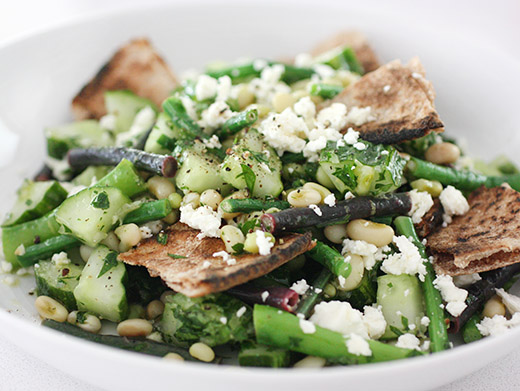
 In the book, the recipe name is Green Bean, Shell Bean, and Sweet Onion Fattoush. But, I have an onion thing. I only use onion if it’s minced or if it’s in pieces large enough that I can easily scoot them out of my way on the plate. So, in my version, the onion was minced and whisked into the dressing for this salad. But, the important parts of this dish were the green beans, shell beans, and cucumber. I found all of those at Boggy Creek Farm. For green beans, I used purple and green long beans that I cut into two-inch lengths before blanching. The shell beans were fresh, golden creamer peas that cooked quickly with just about 15 minutes of simmering. Both kinds of beans were shocked with cold water after cooking and left to drain. The dressing, in my case, was made with minced onion, lemon zest, lemon juice, and garlic. Olive oil was whisked into the mixture. Pita was grilled and broken into shards. The cooled and drained beans were tossed with chopped cucumber, parsley, and homegrown basil rather than mint. Crumbled feta was added along with the dressing, and the pita pieces were added to each serving.

Green Bean, Shell Bean, and Sweet Onion Fattoush
Recipe courtesy of Clarkson Potter/Publishers, a division of Penguin Random House, LLC. Copyright 2016 by Martha Stewart Living Omnimedia, Inc. Photographs copyright 2016 by Ngoc Ming Ngo.
In late summer, fresh green beans and shell beans make a wonderful pair, one sharp and crisp-tender, the other buttery and plump. They’re the beginnings of our version of fattoush, a Middle Eastern bread salad that’s a fine way to enjoy summer produce. You can blanch the beans in the same pot: first the green beans, and then the shell (and not the other way around, since shell beans release a lot of starch).
Serves 4
2 lemons, 1 zested and both juiced
2 garlic cloves, crushed
Coarse salt and freshly ground pepper
1/2 cup extra-virgin olive oil, plus more for brushing
1/2 pound haricots verts, trimmed
3/4 cup shelled fresh shell beans, such as limas
3 pita breads (6-inch)
1/2 large Vidalia onion, coarsely chopped
1 English cucumber, quartered and cut into 1- inch pieces
4 ounces feta cheese, crumbled
1/2 cup coarsely chopped fresh mint, plus more for garnish
1/3 cup coarsely chopped fresh flat-leaf parsley
1. Whisk together lemon zest, lemon juice, and garlic, and season with salt. Whisking constantly, pour in oil in a slow, steady stream and whisk until emulsified. Season with pepper. Let stand 15 minutes; discard garlic.
2. Blanch haricots verts in a pot of salted boiling water until crisp-tender and bright green, about 1 minute. Transfer beans to an ice-water bath (reserve pot of water); let cool, then drain and pat dry. Place in a large bowl.
3. Return water to a boil. Blanch shell beans until just tender, 18 to 20 minutes. Transfer to ice bath; let cool, then drain in a colander and pat dry. Combine with haricots verts.
4. Heat a grill (or grill pan) to medium. Split each pita in half. Brush both sides of pita halves with oil; season with salt and pepper. Grill pita, turning once, until golden and crisp, about 1 minute per side. Let cool, then tear into 1-inch pieces.
5. Add onion, cucumber, feta, herbs, and pita to the beans; drizzle with ½ cup vinaigrette; toss well to combine. Season with salt and pepper; garnish with mint. Let stand at least 10 minutes and up to 1 hour before serving.
TIP The pita is charred on the grill (or under the broiler) to make it sturdy enough to soak up the vinaigrette without falling apart. The longer the salad sits before serving (up to an hour), the better the flavors and textures will be.


Tweet


 , and I received a review copy. The book begins with stories about three generations and five different kitchens and the types of cooking in each. The goal for mother and daughter was to keep the flavors from the past while fine-tuning approaches to arrive at healthy dishes for celebrations and every day. They’ve written of the historical complexity of the kitchen for many African-American families. “(The kitchen) has been a place of servitude and scarcity, and sometimes violence, as well as a place of solace, shelter, creativity, commerce, and communion.” When excess appeared in the kitchen, foods began causing illness rather than nourishing families. The authors want to change that pattern by offering dishes that are easy to make part of your home-cooking routine and are free of guilt. The Soups chapter begins with a few homemade broths, and one of them is Sweet Potato Broth. It’s a puree of cooked sweet potatoes in water with onion, celery, and carrot, and it sounds like a delicious base for lots of soups. It’s used in the Sweet Potato, Kale, and Black-Eyed Pea Soup and the Peanut Chicken Stew. There are several fresh and light salads like Savory Avocado Salad with Corn, Peppers, and Cilantro and New-School “Fruit” Salad with watermelon, cherry tomatoes, avocados, and feta. There are also updates to dishes made with practical ingredients like canned fish. The story behind the Salmon Croquettes with Dill Sauce brought back memories of the mackerel cakes my Mom used to make that I loved. Likewise, there’s a story about how eating sardines used to be thought of as a hardship, but now we know that they’re a healthy and sustainable choice. The recipes nicely weave together the best of the past with a health-conscious look forward.


 is by Susan Russo from


 falls into that very category. It's been a pleasure to read this book about using locally grown food and the stories about farmers from different parts of the US. The recipes are straightforward and familiar, but they all have an unexpected twist that makes them fresh and new. For instance, beets with goat cheese or feta is a natural combination. But here, cooked beet greens and stems are topped with whipped feta seasoned with Aleppo pepper and mint. There’s also a zucchini bread, but this one has grated carrots and minced candied ginger in it. There are grilled cauliflower steaks with tahini sauce that look great too. The many stunning photos and the little, surprising additions to the recipes kept me turning the pages to see what I’d find next. Throughout the book, there are introductions to farmers from Oregon, Massachusetts, Minnesota, Illinois, and even Austin, Texas, and the stories offer glimpses into what inspires these farmers to do what they do, their challenges, and their successes. I could go on and on, but I will just tell you one more thing about the book. It’s organized by ingredient alphabetically. You can look to the top right or left corner of each page and flip until you find the item you want to prepare. If you just received ten pounds of eggplants from your CSA, flip to the eggplant pages and you’ll get several ideas. Ok, one more thing. There are also recipes for fruits, poultry, eggs, and meat.

