









 . She writes about her grandfather who opened the bakery in 1932 and began making the large sourdough loaves, how her father took the reins in the 1970s and expanded capacity by building La Manufacture Poilane outside of Paris, and the tragic loss of both of her parents in 2002 when she found herself in charge of the business. At the age of eighteen, she was running Poilane while attending college at Harvard. The book explains the changes the bakery has made from one generation to the next and the things that have never changed. The starter is maintained the same way it always has been, the bakers know by feel when the dough is mixed correctly and when it has risen enough, and the ovens are wood-fired as they always have been. The book includes all the information for creating and maintaining a starter just as they do and for baking sourdough loaves, and there are lots of other recipes too. There are other breads like the Black Pepper Pain de Mie and the Rye Loaf with Currants shown here. There are recipes for using bread including one for toast. Of course, Apollonia Poilane has a preferred way of making toast! And, she shares it. She pairs two pieces of bread and toasts them in one toaster slot so one side stays untoasted for texture variation. There are also croissants and brioche and jams for topping them all. One chapter is for main dishes that include bread or croutons or breadcrumbs, and the Savory Pain Perdu topped with chopped tomatoes looks like a great summer lunch. It was interesting to learn more about the Punitions. Those are the little butter cookies left in baskets for customers to nibble while waiting and are also sold by the box. In the bakery, they range in color from just golden to darker brown so each person can choose his/her preference. A generous, fellow food blogger once sent me a box of these cookies from Poilane as a gift. In the box, they were all light golden, and I didn’t know they’re usually intentionally baked to varying degrees of doneness. The recipes also include tarts, quick breads, crepes, and even an oat milk used in a rice pudding that I have to try. But first, let’s get back to the Rye Loaf with Currants.
 This loaf is made with some sourdough starter in addition to commercial yeast. The publisher was not able to provide the recipe and instructions for the sourdough starter, but I can tell you that my starter that I’ve used for ages and maintain at 100% hydration worked fine here. To begin, the currants were soaked in hot water before being strained while reserving that soaking liquid. The starter was mixed with rye flour, and I was fortunate to get some locally-milled rye flour from Barton Springs Mill. Yeast was added, and some of the currant soaking liquid was mixed in a separate bowl with salt before it was added to the flour mixture. The dough was shaped into a ball and left to rest before being shaped again and left to rise. After rising, it went into a loaf pan to proof for about two hours. Just before baking, the top of the loaf was brushed with the remaining currant soaking liquid.

Rye Loaf with Currants
Recipe excerpted from Poilane
Copyright 2019 by Apollonia Poilane. Photography Copyright 2019 by Philippe Vaures Santamaria. Reproduced by permission of Houghton Mifflin Harcourt. All rights reserved. Makes one 9-by-5-inch (23-by-13-cM) loaf
My father regularly ran home from the bakery before we went to school to drop off a small version of this loaf for our morning snack. He would cut it in half, add a generous pat of butter, and pack it for us to enjoy in his car. Today I still love to have a few slices—buttered or not—for breakfast or as a midmorning treat. We make this in metal loaf pans, but you can also shape it freeform.
1 1/2 cups (240 g) dried currants
2 1/2 cups (595 ml) hot water
230 g (1 1/4 cups) starter
435 g (3 cups plus 2 tablespoons) rye flour
3/4 teaspoon (2 g) active dry yeast
1 1/2 teaspoons (9 g) fine sea salt
Neutral oil, such as canola or sunflower seed, for the pan
Put the currants in a medium bowl, add the hot water, and let soak for 10 minutes.
Set a fine-mesh sieve over a bowl and drain the currants; reserve the soaking liquid. Pat the currants dry with a paper towel and reserve.
Put the starter in a large bowl. Add the rye flour and yeast. In a small bowl, combine 1 1/2 cups (355 ml) of the reserved soaking liquid (save the rest for brushing the loaf) and the salt, stir to dissolve the salt, and add to the flour mixture, along with the currants. With wet hands, mix and knead the dough in the bowl until it comes together in a smooth, homogeneous mass. Transfer the dough to a work surface and shape into a ball. Return it to the bowl and let rest for 15 minutes.
Reshape the dough into a round, return to the bowl, cover with a cloth, and let rise for 1 1/2 hours. Brush a 9-by-5-inch (23-by-13-cm)pan with oil. Turn the dough out and, using wet hands to prevent sticking, shape it into a 9-by-4-inch (23-by-10-cm) log. Transfer to the oiled pan.
Brush a piece of plastic wrap with oil, drape it over the loaf, and let it rise in a warm (72°F to 77°F/22°C to 25°C), draft-free place until it rises about 1/2 inch (1.25 cm) above the sides of the pan, 1 1/2 to 2 hours.
Meanwhile, about 25 minutes before baking, position a rack in the lower third and preheat the oven to 450°F (230°C).
Use a pastry brush to brush the top of the loaf with the reserved currant-soaking liquid. Bake until the loaf is golden and firm, 45 to 50 minutes; if you carefully remove it from the pan, it should feel hollow when you knock on it. Transfer the pan to a wire rack and let cool for 1 hour.
Remove the loaf from the pan, return to the rack, and let cool completely before slicing. Stored in a paper bag or wrapped in linen at room temperature, the loaf will keep for up to 1 week.
NOTE: As with our sourdough, you will either need to have the starter on hand or plan ahead to make it, which takes a couple of days.


Tweet


 . As soon as I began reading it, I remembered all the details of her style that I became familiar with in her book
  from 2010. The recipes have a relaxed and easy-going feel to them, but quality of seasonal ingredients as a route to their success is always highlighted. She has a way of describing each dish that coaxes me into making plans to make it. For instance, I now can’t let another week go by without mixing oats with lemon and orange zest and orange juice so I can add some yogurt and grated apple to a serving in the morning for Bircher Muesli. I’ve seen several versions of muesli recipes in the past, but somehow this was the first time I’ve decided I really do need to make it. Also, and this helps to explain why I like reading cookbooks like novels, there’s more to the recipes than what appears in their titles. That muesli recipe gives you a way to have muesli for breakfast every day for a week with fresh fruit and yogurt added as it’s served. Then, the Scrambled Eggs with Spinach and Slow-Roasted Tomatoes is actually a special take on scrambled eggs. Grated, cold butter is added incrementally while the eggs are slowly scrambled over low heat. The book is organized by type of meal with full menus for different seasons and times of day. An example from the Alfresco Eating chapter is: A basket of little vegetables with aioli, Poached langostines with green goddess dressing, Salad of Jersey Royal potatoes with herbs and creme fraiche, Swiss chard with Parmesan, Roasted caramelized peaches, and Shortbread. I’d love to plop on a blanket outside on a nice day with that complete menu within reach. There’s also a chapter for Afternoon Tea, and I wanted to make everything in it including Strawberry Sponge Cake and Lemon and Poppy Seed Cake. So far, I’ve only gotten as far as the Orange and Currant Scones, and again there’s a twist to how this is made. The dough is formed into one disk that is scored before baking. It becomes a pull-apart scone experience of sorts, and the center remains deliciously tender. I had seen this way of making scones in Joanne Chang Myers’
  cookbook and couldn’t wait to try this version.

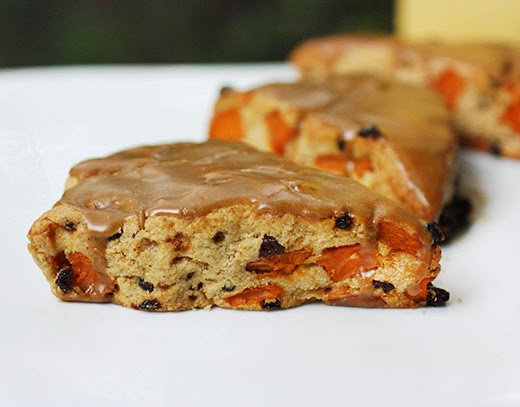
 , and I received a review copy. There’s a forward by Michael Chabon, who happens to be a regular customer, and photos are by Jody Horton of Austin. I was struck by Chabon’s thoughtful definition of soul food: “Soul food is the little joint at the broken heart of America where all the kitchen inheritances ingather, and get tangled like travelers’ yarns, like the paths of exile and homecoming, like strands of DNA.” If I were visiting Oakland, I would happily wait in line to try the Cornmeal Waffles with Apple Cider Syrup, the Creole Shrimp and Grits, or one of those lovely-looking Sticky Buns. And, with the book, I can try them at home without planning a trip. That more contemporary angle on soul food I mentioned shows through in the Roasted Green Beans with Sesame-Seed Dressing which I tried and which disappeared from our plates faster than any other green bean dish to date. Also, the Simply Sauteed Collard Greens, Okra Peperonata, and Green Chile-Harissa Potato Gratin are updated versions of classic dishes. There’s a Caribbean Lobster Roll with Spicy Lime Aioli, a Bourbon and Chili-Glazed Salmon, and Buttermilk Fried Chicken. There are also soups and sandwiches, desserts, and drinks. But, I got distracted in the breakfast chapter when I saw the Sweet Potato Scones with Brown Sugar Icing.


 book. This dough was very rich, with plenty of sweetness, and it was filled with both currants and dried cranberries. The buns were brushed with egg wash before the final rising and again before going into the oven, and that produced glossy, browned tops. The white cross on these buns was made with a very thick icing flavored with cinnamon and cardamom. They were as delightful as I expected them to be considering the source.


 For such a simple cookie, there was a lot going on with its flavors. The rum and coconut were subtly delicious, while the orange zest grabbed more attention. Their small size made it easy to lose count of how many I’d eaten in one sitting, but who’s counting when it comes to cookies at this time of year?

 Scones and muffins are Kurt’s favorite things for breakfast because they’re very grab and go. He liked that these were only lightly sweetened, and the combined flours, wheat germ, and oats gave them an almost nutty taste. They were light and tender, and if you take the time to sit down with one of them, they go very nicely with strawberry preserves. It won’t be long before I try the other scones in this book or recipes from elsewhere, but I’ll definitely be making these again too.

 For a simple salad of some chicken on some leafy greens, there was actually a lot going on here in the flavor department. The pinch of cumin added an interesting hint of earthy spice, and the sweet currants balanced the peppery arugula. The lemon juice and preserved lemon peel were bright notes in the mix, and the marinated chicken made it all deliciously more substantial. This was a thumbs-up meal, and it’s going into the permanent file with one note: don’t willy-nilly substitute yellow squash for zucchini. My lesson of the day was to always remember that color can matter more than you might think in a dish.

 The richness of the ricotta and creme fraiche was fanastic with the greens. And, this could, of course, be made with milder spinach, but let me tell you about the relish first. The currant pine nut relish with the sauteed onions and reduced balsamic vinegar was such a perfect complement to the greens, I would recommend using the boldest flavored greens you can find. The layers of sweetness and spice and the hint of acidity mingled with the bitterness of the greens in amazing ways. Instead of making this to use up some greens, in the future, I’ll be making this because it’s really delicious.

