Showing posts with label salad. Show all posts

Tuesday, March 9, 2021

Forbidden Rice Salad with Blistered Broccoli and Miso Dressing


Sometimes when I first open a new cookbook, there’s something that quickens my pulse, makes me hungry, and makes me want to cook. With my review copy of East: 120 Vegan and Vegetarian Recipes from Bangalore to Beijing by Meera Sodha, it was the chapter devoted to tofu. A whole chapter, just for tofu! That’s not so surprising given that this is a plant-focused cookbook based on Sodha’s vegan column for the Guardian. But, I like tofu, and it was exciting to see it used in several dishes here. The book is vegetarian rather than strictly vegan since it expands on what she has written for the column, and the dishes are inspired by flavors from South, East, and Southeast Asia. It’s intended to be a practical cookbook for getting meals on the table in a reasonable amount of time. The tofu chapter grabbed my attention first, but to be honest I want to make just about everything in every chapter. The Snacks and Small Things chapter has Celery and Peanut Wontons with Chile Soy Sauce that are simply boiled before being topped with sauce, and the Potato Dosa with Pea and Coconut Chutney looks crispy and delicious. Among the noodles, the Mouth-Numbing Noodles with Chile Oil and Red Cabbage and Food Court Singapore Noodles are on my short list. There are curries for every season, and the summery Thai Green Curry with Eggplant, Zucchini, and Snow Peas will be in my warm weather plans. From the rice dishes, I tried the Brussels Sprouts Nasi Goreng right away and loved the marinated, sliced Brussels sprouts on top. One of the other first things I made from the book was, of course, a tofu dish. The Honey, Soy, and Ginger Braised Tofu was sweet and spicy. Some others I’ll try soon are the colorful Chile Tofu with sweet peppers and chiles and the Spring Vegetable Bun Cha with pickled cabbage. There are also chapters for legumes, sides, condiments, and sweets, but I want to tell you more about a dish from Salads. 

The Forbidden Rice Salad with Blistered Broccoli and Miso Dressing looked fresh, crunchy, and full of flavor, and it was. In the book, it’s made with broccolini, but I had just received regular broccoli from my CSA and used that. First, the rice was cooked, drained, and left covered with a towel in a sieve. The dressing was a puree of cashews, fresh ginger, white miso, oil, and lemon juice. The broccoli was blistered in a frying pan as were the snap peas that I used in place of snow peas. To put it all together, the rice was spread on a platter, shredded red cabbage was layered with sliced watermelon radish in my case, thawed edamame, avocado wedges, and the blistered broccoli and snap peas. Last, dressing was drizzled on top. 


The magic of pureed cashews made the dressing thick and rich, and the lemon, ginger, and miso flavors would work well with a variety of salad ingredients. That combination worked especially well here with the chewy rice, crisp radishes, and blistered vegetables. Like all the recipes in this book, the mix of tastes and textures brings a lot of fun to the plate.

I am a member of the Amazon Affiliate Program. 

Wednesday, February 3, 2021

Indian-Spiced Chicken Salad with Mixed Lettuces, Walnuts, and Preserved Lemon


It’s true. To my mind, Nancy Silverton can do no wrong. I’ve been a fan of hers for years. However, her new book, Chi Spacca: A New Approach to American Cooking of which I received a review copy, had me feeling uncertain. Chi Spacca is Italian for “the butcher” and is the name of her very meat-focused restaurant in Los Angeles. And, my cooking isn’t very meat-focused. Regardless, I wanted to read it because it’s from Nancy Silverton, and I dove in with an open mind. Despite the name, the food isn’t entirely Italian nor is it entirely meat-based. The salads and vegetables are treated with the same degree of care. From the start, from the very first recipe in the book, I was hooked. That recipe is for Focaccia di Recco, and Silverton provides a detailed explanation of what it is and why she became interested in it. I had heard about this thin, cheese-filled, crispy type of focaccia before but was never inspired to make it until I read about it again here. The recipe is also extremely detailed and includes specific recommendations for the type of pan to use, the type of cheese buy, and how to stretch the dough as thin as it needs to be. I jumped right into making it. The dough stretching process was a lot like make strudel, and it was as fun as I expected it to be. The result was delicious too. Of course, I got detoured by the crispy bread recipe, but for meat lovers, there are detailed instructions for seasoning, grilling, and cooking on the stovetop with recipes covering beef and veal, pork, lamb, duck, rabbit, and chicken. I’m especially interested in the Pollo alla Diavola on Toast recipe in which a halved chicken is roasted on thick slices of toast. There’s also a chapter just for fish, and it was delightful to see salmon steaks being used rather than filets. The chapters for contorni and salads got my full attention as did the dolci chapter. One of Silverton’s recipes that has been in my head for years is the butterscotch budino. In this new book, it’s recreated in a simpler, family-style form. Before getting to that though, the Indian-Spiced Chicken Salad with Mixed Lettuces, Walnuts, and Preserved Lemon Vinaigrette called to me. 

I’d been craving Indian flavors, and the thought of satisfying that craving in salad form sounded ideal. Every recipe in this book includes careful, step-by-step instructions with guidance for plating and serving. In fact, in the head note of each recipe, you’ll even find suggestions for what type or types of platters and/or bowls you’ll need for serving. I do appreciate that kind of specificity, but you can take it or leave it. For this salad, chicken was roasted with garam masala, allowed to cool, and then shredded into long pieces. I love using preserved lemons and might have added a bit more than called for to the shredded chicken and toasted walnuts. The mixed lettuces were to include escarole, but I wasn’t able to find it that day. I used frisee and little gem lettuces along with cilantro leaves. Following the instructions, the salad was built up in layers of dressed lettuces, chicken and walnuts, chopped preserved lemon, and cilantro. 


The tall, layered salad was full of flavor with the Indian-spiced chicken and bursts of preserved lemon, and the crunchy walnuts were a nice addition. There are more salads for every season that I want to try like the Roasted Beets with Chicories, Yogurt, and Lemon Zest. And, there are vegetable dishes like the Roasted Cabbage with Bagna Cauda Yogurt and Crunchy Grains on my list as well. Yes, it’s a meat-focused book, but there’s a lot here for me too. 

Indian-Spiced Chicken Salad with Mixed Lettuces, Walnuts, and Preserved Lemon Vinaigrette 
Excerpted from Chi Spacca: A New Approach to American Cooking by Nancy Silverton, Ryan DeNicola, and Carolynn Carreno. Copyright © 2020 by Nancy Silverton. Excerpted by permission of Alfred A. Knopf, a division of Penguin Random House LLC. All rights reserved. No part of this excerpt may be reproduced or reprinted without permission in writing from the publisher. 

When I am in San Francisco, I always try to make time to eat at Boulettes Larder, a one-of- a-kind food shop/restaurant in the Ferry Plaza Farmers Market. I have never eaten there and not been inspired. When I ordered their Indian chicken salad, I loved it so much I basically tried to replicate it as closely as possible, right down to the mix of escarole and Little Gem lettuces that are the base of the salad. When shopping for escarole, look for “blanched escarole” at farmers’ markets and specialty food stores. Blanched escarole is light green, almost white, in color, and sweeter and crunchier than traditional escarole. It is grown the same way white endive and white asparagus are grown, by shielding the young plants from direct sunlight, so they don’t go through photosynthesis, which is what gives all plants their green color. If you can’t find blanched escarole, buy conventional escarole and remove the dark, floppy outer leaves as described in the recipe. You will need a large platter or large wide-mouth bowl to serve this salad. 

Serves 4 

For the Chicken Salad 
1/4 cup shelled walnuts, halves or pieces 
1 boneless, skinless chicken breast (about 3/4 pound) 
3/4 teaspoon kosher salt 
2 tablespoons Garam Masala 
4 preserved lemon halves 
1/4 teaspoon red pepper flakes 
1 teaspoon finishing-quality extra-virgin olive oil 
For the Vinaigrette 
1/4 cup peeled and minced shallots 
1/4 cup fresh lemon juice 
1 tablespoon champagne vinegar 
1 teaspoon kosher salt 
Fresh coarsely ground black pepper 
1/2 cup extra-virgin olive oil 
For the Green Salad 
1 head escarole (preferably “blanched” escarole) 
1 head Little Gem lettuce 
1/2 lemon 
1/2 teaspoon kosher salt 
1/4 cup micro cilantro (or finely chopped fresh cilantro leaves) 

To prepare the chicken salad, adjust the oven rack to the center position and preheat the oven to 325°F. 

Spread the walnuts on a baking sheet and toast them in the oven for 10 to 12 minutes, until they’re toasted and fragrant, shaking the baking sheet and rotating it from front to back halfway through that time so the nuts brown evenly. Remove the walnuts from the oven and set aside until they are cool enough to touch. Finely chop the walnuts. 

Increase the oven temperature to 350°F. 

While the nuts are toasting, to make the vinaigrette, combine the shallots, lemon juice, vinegar, salt, and a few turns of black pepper in a small bowl. Gradually add the extra-virgin olive oil, whisking constantly. 

Season the chicken breast on both sides with the salt. Sprinkle 1 tablespoon of the garam masala on the chicken breast, rubbing it to coat both l sides evenly. Lay the chicken on a baking sheet and roast it in the oven for about 25 minutes, rotating the baking sheet from front to back halfway through that time so the chicken browns evenly, until the juices run clear when the chicken is pierced with a sharp knife. Remove the baking sheet from the oven and set aside for the chicken to cool to room temperature. Shred the chicken into the longest shreds possible into a medium bowl. 

Rinse the preserved lemons to remove the sugar and salt and drain well. Use a paring knife to remove the pulp, pith, and seeds and discard, so you are left with only the bright yellow peel. Finely chop the peel and add 1 tablespoon to the bowl with the chicken. Add half of the walnuts, the remaining 1 tablespoon of the garam masala, and the red pepper flakes. Drizzle with the finishing-quality olive oil and toss to distribute the ingredients and coat them with the oil. Taste and add more salt if desired. 

To prepare the green salad, cut off and discard the root end of the escarole. Remove the dark green outer leaves until only the tender, light yellow leaves remain. Tear the remaining leaves from the core and put them into a large wide-mouth bowl. Remove and discard any unappealing outer leaves from the head of the Little Gem lettuce. Tear the remaining leaves from the core and drop the leaves into the bowl with the escarole, discarding the core. Squeeze the lemon half over the lettuces, sprinkle with the salt, and toss to coat the lettuces. Drizzle 1/4 cup of the vinaigrette over the salad and toss to coat, gently massaging the leaves with your hands to coat them with the vinaigrette. Add the remaining chopped preserved lemon peel and half of the cilantro and toss gently to distribute them. 

To serve, building the salad in three layers and choosing the largest leaves first, arrange one-third of the leaves to cover the surface of a large platter or wide-mouth bowl. Scatter one-third of the chicken-walnut mixture over the lettuces, leaving the edges of the lettuce layer visible. Scatter one-third of the remaining chopped walnuts, one-third of the chopped preserved lemon, and one-third of the cilantro from the bowl the salad was tossed in over the salad. Continue, building two more layers the same as the first one, using the medium leaves for the second layer and the smallest leaves for the top layer, and making each layer smaller than the one before. Sprinkle the reserved undressed cilantro over the salad.

I am a member of the Amazon Affiliate Program. 

Sunday, November 29, 2020

Radish and Cucumber Salad with Chipotle Peanuts


I have to admit, the new Ottolenghi Flavor cookbook, of which I received a review copy, took me by surprise. It is, of course, focused on developing big flavors in every dish, but some of those flavors are a bit of a departure from what we’ve come to expect from Ottolenghi recipes. It’s particularly fun to see more chiles being used with inspiration from Mexican cuisine. This book expands on Plenty and Plenty More by continuing the vegetarian theme, and all the recipes can easily be made vegan if preferred. The goal here was to distinguish each vegetable with cooking techniques and paired ingredients to maximize flavor potential. There are three sections that focus on Process, Pairing, and Produce, and all three are filled with exciting dishes I want to try. One example is the White Bean Mash with Garlic Aioli. At first glance, this looks like a fun take on hummus made with white beans and topped with aioli, whole white beans, herbs, and oil. But reading through the recipe reveals that the aioli is a nontraditional version made from cooked and softened garlic, cooked white beans, Dijon, anchovies if you wish, and lemon juice. I’m already making plans for some cooked cannellini beans I have stored in the freezer. Another is the Lime and Coconut Potato Gratin that looks like a typical potato gratin but is completely vegan with coconut cream and bright-flavored with lime, chiles, ginger, and green onion. Vegetables take on deep flavor from slow roasting in some cases and smoky char from grilling in others. A whole roasted celery root is sliced into steaks and topped with Café de Paris Sauce. Eggplant is charred for a soup with lots of herbs that looks delightful. And, Smoked Cascabel Oil sounds like something I want to drizzle on everything. There really are too many things I want to try to mention them all, but Tofu Meatball Korma, Olive Oil Flatbreads with Three-Garlic Butter, and Udon Noodles with Fried Tofu and Orange Nam Jim are at the top of my list. Right away, I had to try the Stuffed Eggplant in Curry and Coconut Dal, and it did not disappoint. And before that, I made the Radish and Cucumber Salad with Chipotle Peanuts. 

For this salad you start by making the spiced peanuts, and I highly recommend making more than the suggested amount. They make a terrific snack and disappear quickly while working the remaining ingredients. A dried chipotle was ground to a powder in a spice grinder. Some of that was combined with peanuts, cayenne, maple syrup, salt, lime juice, and olive oil in a saute pan in which the mixture was cooked while stirring until the peanuts were coated. The mixture was then transferred to a baking sheet and allowed to cool before being broken into pieces. For the salad, sliced cucumber, daikon, and cilantro leaves were tossed with a dressing made from minced garlic, jalapeno, cumin, lime zest, lime juice, olive oil, and salt and pepper. The salad was served on a platter topped with the spiced peanuts. 

This salad was big on texture and flavor. I had cucumber, purple daikon, and jalapeno from local farms to use here. The freshness of the vegetables and spicy kick from the dressing and peanuts made for a great combination. It reminded me of a Thai salad I’ve made before that also brought together cucumber, chiles, and peanuts, but here the smoked chipotle and jalapeno took it in a new direction. I can't wait to taste all the other new directions found in dishes throughout the book.

I am a member of the Amazon Affiliate Program. 

Tuesday, November 12, 2019

Rosti with a Green Salad on Top

I’m all for encouraging more people to cook their own meals at home. So, I was delighted to see the newest book from the Canal House team: Cook Something: Recipes to Rely On of which I received a review copy. This book is full of simple, classic dishes that home cooks can learn from and use to build confidence in their cooking skills. Hirsheimer and Hamilton of Canal House describe themselves as “salt and pepper cooks.” They like to stick to the basics of great flavor pairings and highlighting the deliciousness of the season. While there is simplicity to their approach, the results of their recipes are always stellar. Over the years, I’ve accumulated several favorite recipes from Canal House books. I recall in the early days of reading their work, I noticed the frequent use of preserved lemon which I loved. A salmon salad and a lentil dish, both with preserved lemon, come to mind. I remember a lemon-butter sauce that was perfect for sockeye salmon. It was their recipe and technique for making a quick puff pastry that finally sold me on the concept. It’s the only way I make it now. I’m also a devoted fan of their quick cioppino, and it was their lasagne with fresh-made spinach pasta sheets that was one of our favorite Christmas Eve meals of all time. This new book sticks to their tried-and-true cooking point of view with recipes for all sorts of meals, sides, starters, and desserts and even a Grilling chapter that made me want to stock up on hardwood charcoal. Right away, you see their knack for flavor pairings with all the suggested toppings for deviled eggs like asparagus tips and preserved lemon(!); smoked salmon, black pepper, and fresh dill; and sliced cherry tomato, olive oil, pepper, and fresh basil. Likewise, there’s also a delectable list of toppings for small toasts or crackers to serve as appetizers such as roasted red peppers, capers, and currants; blue cheese and watercress mash; and lima bean and lemon mash. I should mention the photos show how deliciously lovely each of these looks. The soups chapter distracted me since we’ve had some chilly weather. I was pulled in by the description of a simple dinner involving the Hearty Squash and Bean Minestrone with a Green Sauce made from arugula served with warm bread and had to recreate it for a Sunday dinner at home. And, it was the photo of the Caramelized Apple Galette that made me try that recipe too. But, it’s the Salads chapter I want to tell you more about today. The Rosti with a Green Salad on Top was an ideal combination of flavors and textures with a lemony-anchovy dressing and a generous garnish of smoked salmon. 

If you just saw the photos of the salads in the book, you would think “those look so great with beautiful ingredients that have been simply plated.” But, when you read about how the salads are made and then look at the photos, the whole story becomes apparent. That straightforward tomato and fennel salad is actually a warm salad with peeled, fresh tomatoes that were briefly sauteed in olive oil just to warm them. The fennel was sauteed longer until tender and topped with lemon-anchovy vinaigrette, and the two were plated with a nice slab of feta. Little details of putting each salad together make each one special. For this salad on rosti, I had some local potatoes that I grated and mixed with chopped green onion and salt and pepper. The grated potato mixture was cooked in melted butter and pressed into flat cakes. Each cake cooked for a few minutes per side. I made the salad with arugula and opted for the Lemon-Anchovy Vinaigrette that’s made with supremed lemon segments. The lemon juice was caught in a bowl while cutting the segments. Chopped anchovies, olive oil, and crushed red pepper flakes were added, and the lemon pieces were broken up while stirring the vinaigrette. The option of adding a “flourish of silky smoked salmon” made this a meal. 


Like every Canal House recipe I’ve ever made, this one was a winner. I get excited to cook as I flip the pages, see the photos, and read the great ideas. I’m not surprised that the variations on Loose Ravioli have inspired me, but I didn’t expect to want to attempt Duck a L’Orange. There’s something for everyone and for every occasion here. 

Rosti with a Green Salad on Top 
Excerpted with publisher's permission from Cook Something: Recipes to Rely On Copyright © 2019 by Christopher Hirsheimer and Melissa Hamilton, photographs by Christopher Hirsheimer. Used with permission of Little, Brown and Company, New York. All rights reserved. 

Rosti is a Swiss potato pancake. A big russet potato on the kitchen counter was our inspiration. 

Grate 1 large, peeled, russet potato (about 1 pound), on the large holes of a box grater into a bowl. Add 4 chopped scallions, and season with salt and pepper. Melt 2 tablespoons butter in a nonstick skillet over medium-high heat. Add the potatoes, pressing them into a flat cake. Fry until golden, about 10 minutes. Cover the skillet with a large plate and flip the skillet and the plate over so that the rösti is cooked-side up on the plate. Add 2 tablespoons butter to the skillet and slide the rösti back into the skillet. Fry until golden, about 10 minutes. While the potato cake finishes browning, toss bibb lettuce, radicchio, and parsley leaves in Another Anchovy Vinaigrette. Divide the rosti between dinner plates and pile the salad on top. Add a flourish of silky smoked salmon for garnish. —serves 2–4 

Lemon-Anchovy Vinaigrette  
A lighter, brighter option for all Caesar salad lovers. This vinaigrette involves supreming the lemon, a French technique (they always know how to refine things) that removes the peel and the pith, then cuts the juicy fruit out from the membranes. This method works well with all citrus fruits. 

makes about 2/3 cup

2 lemons 
4 anchovy filets packed in oil, drained and finely chopped 
1/2 cup extra-virgin olive oil 
1/4 teaspoon crushed red pepper flakes 
Salt and freshly ground black pepper 

Using a sharp knife, cut off and discard all the peel and white pith from the lemons. Working over a medium bowl, cut lemons along sides of membranes to release the segments into the bowl. Squeeze the juice from the membranes into the bowl, and discard the membranes. Stir in the anchovies, oil, and crushed red pepper flakes, breaking up the lemon segments against the side of the bowl with a spoon. Season with salt and pepper to taste.


I am a member of the Amazon Affiliate Program. 

Tuesday, April 30, 2019

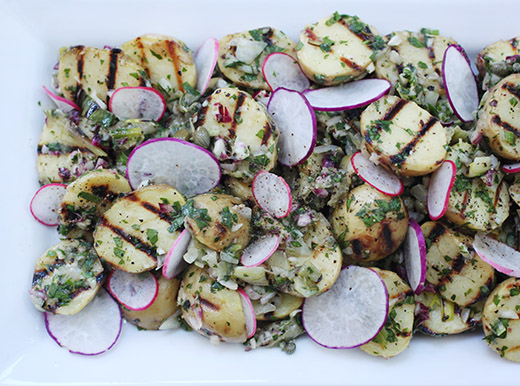
Grilled Potato and Leek Salad with Salsa Verde Vinaigrette

If you love to throw parties and are amazing at it or if you’d like to get better at doing it, I have a new book for you. Life Is a Party: Deliciously Doable Recipes to Make Every Day a Celebration from David Burtka is full of festive ideas, and I received a review copy. And, you can win a copy! Just leave a comment on this post before the end of Monday, May 6th including an email address where I can contact you. Two randomly selected winners in the US or Canada will each receive a copy of the book from the publisher. The book begins with handy party planning tips like setting the mood by testing lighting the day before, stocking up on plenty of ice and storing it in the bathtub or washing machine, checking with guests about any food allergies, and more. My favorite of the tips, and one that I live by, is getting as much done in advance as possible. You should enjoy the party too! Then, the party menus are grouped by season. But, there’s more than just menus and recipes. There are also suggestions for table decor, what to wear, how to take the theme to the next level, activities, and even a playlist for each occasion. Everything you need for an incredible party is here, but this is an easy-going book. You’re invited to pick and choose how much you want to do and how you want to shape your party. The recipes tend to serve six to eight, and you can scale up or down as needed. Each menu includes cocktails or mocktails, salads or sides, main dishes, and dessert. Of course, you could also mix and match recipes to create your own menus too. As soon as I opened the book, the Scallops with Peas and Green Oil got my full attention. It’s part of a spring party menu that starts with a Cucumber-Herb Cocktail and ends with a Flourless Chocolate Cake. The Mexican Fiesta looks like a lot of fun, and I would love to find big serving bowls of guacamole and ceviche at a party. I also loved the look of the Chocolate Chunk Hazelnut Bars and the pitcher of Fresh Blueberry Fizz at the Summer Picnic. It was the Sunday Funday menu that got me headed into the kitchen though. It starts with Mojito Slushies and includes Grilled Tofu Skewers with Coconut-Peanut Dipping Sauce, a DIY Sundae Bar, and the Grilled Potato and Leek Salad shown here. 

I did fall for the idea of grilling potatoes for a potato salad, but in truth, I can never pass up salsa verde of the Italian variety. The herby sauce with olive oil sounded like a perfect match for grilled potatoes. I used small, white potatoes, and they were boiled and allowed to cool before grilling. I opted for a grill pan on top of the stove for better heat control with the small potatoes and leeks and onions. I had a collection of local spring bulb onions and leeks, and I had just brought home some shallot scapes that I used here as well. The onions and leeks were halved lengthwise, brushed with oil, seasoned with salt and pepper and grilled on the pan until tender. The cooled potatoes were sliced in half, oiled, seasoned, and grilled for a few minutes on each side. The vinaigrette was made with mustard, white wine vinegar, olive oil, parsley, cilantro, and I added capers. I chopped the grilled onions and leeks because I prefer them finely chopped. They were added to a big bowl with the grilled potatoes to be tossed with the vinaigrette. The salad was garnished with sliced radishes. 

My instincts did not fail me in assuming the salsa verde vinaigrette would be great with potatoes. The mix of alliums with the herbs all worked together fabulously. I would definitely serve this to guests or bring it to a party. Whether your guest lists are family-friendly or grown-ups-only, your gatherings are formal or anything-goes, and you plan every detail to a T or just want some basic ideas, this book has it all for your next party. 

Grilled Potato and Leek Salad with Salsa Verde Vinaigrette 
Recipe reprinted with publisher’s permission from Life Is a Party: Deliciously Doable Recipes to Make Every Day a Celebration

Serves 6 to 8 

for the potatoes and leeks 
Kosher salt 
3 pounds fingerling potatoes 
1 tablespoon whole black peppercorns 
3 large leeks (about 11/2 pounds) 
1/4 cup plus 3 tablespoons olive oil 

for the salsa verde vinaigrette 
1/4 cup whole-grain mustard 
1/4 cup white wine vinegar 
1/2 cup extra-virgin olive oil 
1 1/2 teaspoons kosher salt, plus more for seasoning 
4 scallions, thinly sliced 
Leaves from 1 large bunch flat-leaf parsley, finely chopped 
1 bunch cilantro 
1/4 cup sliced radishes, for garnish 

special equipment 
outdoor grill or grill pan 

1. Cook the potatoes: Bring a large stockpot of heavily salted water to a boil (the water should taste like the sea). Add the potatoes and peppercorns, reduce the heat to medium-low, and simmer the potatoes until tender, about 20 minutes. 
2. While the potatoes are cooking, make the salsa verde vinaigrette: In a medium bowl, whisk together the mustard, vinegar, olive oil, and salt. Stir in the scallions, parsley, and cilantro. 
3. Grill the leeks: Heat the grill or grill pan to medium-high. 
4. Slice off the root ends and dark green tops of the leeks and discard. Halve the leeks lengthwise, then peel back the layers by the base so they are slightly separated. Immerse the leeks in a bowl of cold water and gently shake to dislodge any dirt and grit. Pat dry, then drizzle with 3 tablespoons of the olive oil and sprinkle liberally with salt. Grill the leeks cut-side down until dark grill marks form, about 4 minutes, then flip and cook until the leeks no longer feel stiff, about 4 minutes more. Transfer to a plate and let cool. 
5. When the potatoes are tender, drain them and spread them out on a baking sheet to cool, discarding the peppercorns. Once cool enough to touch, slice them in half lengthwise and toss with the remaining 1⁄4 cup olive oil and 2 teaspoons salt. Grill, cut-side down, until dark grill marks appear, 3 to 4 minutes, then flip and grill for 3 minutes more. 
6. Toss the potatoes, leeks, and salsa verde vinaigrette in a large bowl; garnish with the radishes. The salad can be served right away or allowed to sit on the counter for 2 to 3 hours before serving.

I am a member of the Amazon Affiliate Program. 

Tuesday, April 16, 2019

Rice Noodle Salad Bowl with Sriracha Tofu

Sometimes I enjoy hunting ingredients. I set aside part of day to drive around town from market to market to find just what I need for some recipes I’m planning to tackle. But, there are definitely times when the convenience of gathering what’s needed at one grocery store is necessary. If you’ve ever backed away from trying any Vietnamese recipes because of the challenge of an ingredient hunt, your worries are over. Andrea Nguyen’s new book, Vietnamese Food Any Day: Simple Recipes for True, Fresh Flavors, of which I received a review copy, shows you how to achieve great results with what you can find in any grocery store. This book was inspired by her mother’s resourcefulness when their family first arrived in the US in the 1970s. There weren’t nearly as many Asian products available in grocery stores then, and they had to make do with what they could find. They embraced learning about and becoming part of their new surroundings while continuing to honor Vietnamese culture. Today, many products you would need for Vietnamese dishes like fish sauce, rice noodles, and rice paper are available at most grocery stores. But, she offers some great ideas for substitutes for things that are more difficult to find. For example, if you can’t easily find tamarind, you can use pomegranate molasses for a similar tart flavor. She even includes a recipe to make your own from pomegranate juice. And, if the size of rice noodle you want isn’t on offer with other Asian products, try checking the options among the gluten-free pastas. The recipes cover all types of dishes from snacks to desserts, and I’ve been having fun trying several of them. First, I was excited about the Grilled Trout Rice Paper Rolls. I found brown rice paper and used it for the first time. I also had pretty, dark purple lettuce leaves that I brought home from Boggy Creek Farm and some homegrown cilantro and mint. The mixture was very pretty sitting on the rice paper before I rolled it up and realized that dark purple lettuce under brown rice paper was not photogenic at all. It was delicious, just not great for photos. And, the homemade Nuoc Cham Dipping Sauce was fantastic with the rolls. I also tried the Roasted Cauliflower “Wings.” They’re a vegan version of Chile Garlic Chicken Wings. Both recipes appear in the book. The cauliflower became incredibly crunchy after roasting with a rice flour coating, and the dipping sauce was addictive. The Gingery Greens and Shrimp Soup was a marvel. The flavor to effort ratio was unparalleled. Onion was cooked in oil with salt, fish sauce and water were added, and it was boiled for a few minutes. That alone created a flavorful broth for the soup. Incredibly fresh, chopped Swiss chard and snow peas from the farmstand cooked briefly with shrimp in the broth. This was one of the best soups I’ve ever made. In the book, there are also tempting rice and noodle dishes, chicken and fish dishes, egg and tofu dishes, and desserts like No-Churn Vietnamese Coffee Ice Cream that I can’t wait to try. But, my next stop in the book was for the Rice Noodle Salad Bowl with Sriracha Tofu. 

There are notes throughout the recipes that offer suggestions for substitutions for some ingredients or ways of making the recipe vegetarian or vegan if it isn't already. The Rice Noodle Salad Bowl is topped with marinated and grilled beef or chicken, but the notes suggest topping it with Sriracha Tofu instead. That’s what I did. To make the tofu, it was first cut into domino-like pieces. In a skillet, water, soy sauce, and sriracha were combined. The tofu pieces were added, and it was cooked until bubbly. The tofu pieces were flipped, and when the liquid in the pan had evaporated a little oil was drizzled over the tofu. It was left to cook for a few minutes before being flipped once again. The tofu pieces took on an orange and brown color from the sauce. For the noodle bowl, rice noodles were cooked, and I found a brand that I really like shown in the photo below. I wanted to include some pickled vegetables and made a quick pickle from carrot and kohlrabi matchsticks. The toppings were prepped including crispy fried shallots, chopped cashews, lettuce leaves, cucumber ribbons, sliced chiles, cilantro, and mint. Homemade Nuoc Cham made with maple syrup, lime juice, water, rice vinegar, fish sauce, and chiles served as the dressing. The noodles, lettuce leaves, and vegetables were arranged in bowls. The chiles, cashews, and herbs were added on top, and the sriracha tofu was the crowning glory. 

The fresh flavors of all the vegetables with the simple, citrusy sauce makes for a light and lovely dish with great texture from the noodles. This way of cooking tofu is one I’ll be using often. It’s a quick and easy process, and the tofu was delicious. I might not bother fitting this book onto the shelves just yet. There’s lots more I want to try as soon as I can.

I am a member of the Amazon Affiliate Program. 

Friday, March 8, 2019

Xato

Back in 2011, I attended a class at the Central Market Cooking School taught by Daniel Olivella. It was a seafood-focused class, and I fondly remember the octopus dish with potatoes and smoked paprika. I also remember the paella and learning about Bomba rice, and I remember the Xato salad. Chef Olivella told us about the popularity of this salad in Catalonia. There’s a competition every winter among towns to see who makes the best version. It’s a salt cod salad with a dressing made with Romesco sauce, but I’ll get to more of the specifics of it shortly. At the time of that class, Chef Olivella was operating a Spanish tapas restaurant in Oakland. He mentioned that he’d like to open a restaurant in Austin and was considering it. Soon thereafter, Barlata changed its address from California to Texas, and Austin had a new tapas restaurant. And now, recipes from the Austin restaurant and from Olivella’s upbringing in Spain can be found in the new book Catalan Food: Culture and Flavors from the Mediterranean of which I received a review copy. The chapters cover everything from starters to desserts with vegetables, rice and noodle dishes, seafood, and meat. It’s some of the simplest dishes that really got my attention. The Wrinkly Potatoes are cooked in an abundance of salt before being halved and served with allioli, and they look completely irresistible. The Biquini Mallorque is a grilled cheese sandwich made with Manchego cheese, but the twist is the addition of Romesco sauce and sausage—and cooking the sandwiches in olive oil. I made some with just the cheese and Romesco, and it’s my new favorite grilled cheese. The Warm Octopus with Potatoes dish from the class is in the book, and I can’t wait to revisit it. There’s also a Chicken with Shrimp dish made with an almond and hazelnut picada with sherry that’s on my to-try list. And, despite the churros, doughnuts, and Crema Catalana in the desserts chapter, my first stop there was for the Chocolate-Covered Marcona Almonds. That’s such a good combination with the roasted, salted nuts. Then, I flipped back to the page with the salt cod salad. The main elements are the big flakes of salt cod and the dressing made with a mix of Romesco sauce, olive oil, and sherry vinegar. I still have my recipe list and notes from the cooking class, and I see that the version made that night included a black olive puree and no salad greens. So, there are options for how to proceed, but I mostly followed the instructions in the book. 

Something I learned about Xato from the book is that frisee is the salad green of choice for it. This makes sense since frisee is a sturdy salad green, and the dressing is on the thicker side. The day I planned to make it, frisee wasn’t available at the farm stand I visit every week or even at the grocery store. I used a mix of local salad greens and radicchio instead. I started by making the Romesco sauce. I can never locate nora chiles and used anchos instead. They were stemmed and seeded and rehydrated in boiling water. Tomatoes were broiled until charred, and almonds were toasted. Bread was fried in olive oil, allowed to cool and cut into small pieces. Then, the garlic was cooked in the olive oil. I pureed everything in a food processor with some sherry vinegar. Some of the finished Romesco was whisked with olive oil and more vinegar to create the dressing. The salt cod had been soaking for a day in the refrigerator. I drained it and broke it into chunks. The mixed greens were tossed with the dressing and placed on plates before being topped with salt cod chunks, black olives, anchovies, and chopped herbs. Canned tuna is also listed among the ingredients in the book, but I skipped it and added extra salt cod. 

I made a meal out of this salad with lots of salt cod on each serving. There are a lot of big flavors going on in this mix of ingredients, but they all go together well. I also served the Manchego and Romesco grilled cheese sandwiches on the side, and those are so good after browning in olive oil. It’s easy to make meals from the snacks and salads in this book, and eating Catalan food is never disappointing.

I am a member of the Amazon Affiliate Program. 

Tuesday, July 26, 2016

Thai Chicken and Watermelon Salad

It’s been over a week since we returned from vacation, but I’m still not really ready to be back to our usual schedule. It is still summer after all. We escaped the Austin heat and spent a week in the mountains in Colorado where we hiked on trails under bright, sunny skies in Beaver Creek, Vail, and Breckenridge. This wasn’t really a food-focused trip, but a few meals were definitely memorable. The homemade donuts at Northside Kitchen were nearly habit-forming, and we had to stop in for one last fix on our way to the airport. Another gem was found in Aspen. I highly recommend a visit to Meat and Cheese which is a gourmet shop and restaurant with very well-sourced items both to purchase and on the menu. Another meal that I keep thinking about involved a simple salad with watermelon, grilled chicken, and arugula at a spot in Avon. I love using watermelon in savory dishes, and the light, crisp, sweet chunks are perfectly refreshing summer food. Watermelon with seared haloumi, basil, and olive oil is one of my favorite salads, and watermelon with feta and olives is another. But, that salad with grilled chicken got me thinking about this recipe I knew was stored away in my files from a few years ago. In the September 2011 issue of Food and Wine, those ingredients were given a Thai spin. As soon as we got back home, I found the recipe and fired up the grill. 

First, the chicken needs to be marinated while the grill is being prepped. Lemongrass is needed, and I was thrilled to have some growing again that I could use here. It was minced and mixed with canola oil, and I added some minced serrano chiles as well. The chicken was added to the oil and left to marinate for 30 to 60 minutes. After being grilled, the chicken was allowed to cool before being chopped into cubes. The watermelon was seeded and cut into cubes as well. The dressing was a simple mix of Thai chiles, lime juice, fish sauce, water, and more canola oil that was mixed and pureed in a food processor. The original recipe suggests mint and cilantro, and they would be great but I used Thai basil, purple basil, and Genovese basil instead since that's what's growing in my herb garden. I also added some frisee leaves. The herbs, frisee, and watermelon chunks were tossed with the dressing. That mixture was plated and topped with the cubed chicken. I garnished with more herbs and a chiffonade of lime leaves from my tree. 

This salad is everything I want in a summer meal. It’s light but still satisfying and full of bright flavors. Lime juice and chiles are meant to be with juicy watermelon, and the flavors of the chicken and herbs pair well with it too. If vacation has to be over, at least I can still eat like it isn’t. 


Friday, February 12, 2016

Vietnamese Chicken Salad

I might have been repeating myself with the New Year’s resolution I made last month. But, I meant it this time. I resolved to pull all those books off the shelf that have several pages marked with colorful sticky flags and cook the things I’ve been meaning to try for ages. With a new kitchen ready to be put to work, it’s time to cook even more new and different things than ever. So, off to the bookshelves I went, and the first book I grabbed was The Slanted Door which currently has no fewer than nine sticky flags poking up from the tops of pages. Every time I look through this book I find more pages to mark. Last weekend, I decided to try the Vietnamese Chicken Salad. This book doesn’t ask too much of the reader as far as hunting down specific ingredients is concerned, but there is an occasional item called for that’s not so easy to find. In this recipe, that ingredient was rau ram leaves which are also called Vietnamese coriander. I used cilantro leaves instead. The salad was primarily poached chicken, fresh green cabbage, and rice noodles. With lots of pretty heads of cabbage to be found at the farmers’ markets right now, this was a great time to make this salad. 

In the book, a whole chicken is suggested for this recipe, but I used a couple of bone-in breasts instead. The chicken was salted, rinsed, and set aside while a pot of water was brought to a boil. The chicken, some sliced ginger, and four green onions were added to the boiling water and left to cook for 15 minutes. The heat was turned off, the pot was covered, and the chicken was left to sit in the hot water for another 15 minutes. Then, the chicken was removed from the water, allowed to cool, and the meat was pulled from the bones and shredded. Meanwhile, a half head of cabbage was sliced into thin ribbons. The cabbage ribbons were salted and left in a colander for a few minutes before being rinsed and drained. Rice noodles were cooked, drained, and set aside, and I tossed them with a little oil to prevent them from sticking together. The sauce for this salad was a flavored fish sauce made by adding white vinegar, water, minced garlic, and minced Thai chiles to plain fish sauce. Sugar was also to be added, but I’m preferring less sugar in food lately and used a smaller amount of agave syrup instead. To complete the salad, the cabbage, cilantro leaves, and rice noodles were tossed with the flavored fish sauce. The chicken was added and tossed with the other ingredients. Each plate was garnished with fried shallots and chopped peanuts. 

I should have known better than to wing it with the number of chiles in this. I was sure I would want one more minced Thai chile in the sauce. Next time, I’ll stick to the recommended amount. So, yes, this was a spicy dish, and luckily I do like spicy. It’s also light and refreshing with the vinegar and cilantro. The flavors got even better after the salad had sat in the refrigerator for a bit. Now, I’m off to find more pages marked in other books and more new dishes to try. 

I am a member of the Amazon Affiliate Program. 

Wednesday, September 9, 2015

Spicy Clam Salad

Every time I talk about the book On Top of Spaghetti I point out that I don’t play favorites with my cookbooks, but it’s one that is particularly special. It’s all pasta on every page, and everything I’ve made from it has been fantastic. Today, I won’t be talking about that book but instead about its authors and their first book. For years, I’ve been meaning to get a copy of Cucina Simpatica by Johanne Killeen and George Germon because of how much I enjoy On Top of Spaghetti. For that matter, their restaurant, Al Forno, is the reason Providence, Rhode Island has been on my list of places I want to visit. I still haven’t made it to Rhode Island, but I finally ordered Cucina Simpatica which was originally published in 1991. This one is more than pasta. It covers all of the Italian-based food they serve at Al Forno from starters and salads to pizzas, pasta, braises, and vegetables. And, now I have a new reason to want to visit their restaurant. I learned that most of their desserts are made to order including the ice cream that’s churned fresh for each customer. I checked the website, and their menu states that they continue to do this. Obviously, they have a knack for hospitality and an understanding of how to make really good food. As I was reading this book and choosing what to make from it first, our CSA box arrived. We received big ears of corn, pretty ripe tomatoes, and cucumbers. That helped me decide to try this Spicy Clam Salad. 

Making the salad requires pre-prepping a couple of items, but it all comes together simply for serving. First, oven-cured tomatoes were made. In the book, they suggest slow-roasting cored, whole tomatoes at 200 degrees F with basil or parsley and olive oil for eight to twelve hours. I took a quicker route by quartering the tomatoes, increasing the temperature, and giving them two hours in the oven. The flavor was concentrated and delicious. Meanwhile, hot pepper-infused olive oil was made by combining olive oil, paprika, crushed red pepper flakes, and garlic in a saucepan and simmering for 10 minutes. The pan was removed from the heat and left to infuse for 30 minutes before being strained. Next, the corn was cut from the cobs and cooked, and croutons were made with melted butter and garlic. The last thing to cook was the clams. They were steamed with white wine and water, and I added more crushed red pepper flakes. To complete the salad, the corn, croutons, chopped cucumbers, some sliced green onion, arugula, and parsley leaves were tossed with red-wine vinegar and the spicy olive oil. That was arranged on a platter, and the salad was topped with oven-cured tomatoes and the steamed clams. 

Fresh corn and clams always go nicely together, and all the other ingredients were like summer’s greatest hits. I always like clams, but this instantly became one of my favorite uses of them. Once again, Johanne Killeen and George Germon did not disappoint. I’m delighted to have another book of theirs to cook from, and I’d love to see a new one from them too. 

I am a member of the Amazon Affiliate Program.

Wednesday, July 1, 2015

Tomato Salad with Crisped Farro, Purslane, and Roasted Tomato-Miso Vinaigrette

Do you know what’s happened? Including this one, I’ve just given you five posts in a row about salads. Apparently, I don’t call it salad season for nothing. I promise to bring something else to the blog soon and maybe even bake something. But for today, here’s another really great salad for beautiful tomatoes. I received a review copy of The Broad Fork by Hugh Acheson and immediately appreciated the book’s intent. Acheson was inspired to offer ideas for cooking with several common types of produce from farmers’ markets and CSA’s, and of course his humor is injected throughout the book. There are about four recipes each for 50 different seasonal items, and they’re the kind of interesting recipes that get you thinking of new ways to use these ingredients. I’m wishing our local season for artichokes wasn’t over yet now that I see the Pickled Shrimp, Crisp Artichokes, and Butter Lettuce dish and Shaved Artichokes, Bay Scallops, and Preserved Lemon. For summer corn, there’s Perfect Pan-Roasted Chicken Breasts with Creamed Corn, Lemongrass, and Crisp Shallots. And, since this year’s first appearance of purple hull peas just arrived from our CSA, I can’t wait to try the Gratin of Field Peas and Roasted Tomatoes or Fried Black-Eyed Peas. I grabbed one of the first local melons I found and tried the Sauteed Catfish with Cantaloupe, Lime, and Cilantro Salsa. I love the flavors of sweet fruit with spicy chiles in a salsa for seafood, and this was a delicious example of that combination. Next, I found myself stuck in the Tomato section on this salad with crispy farro and that lovely-sounding Roasted Tomato-Miso Vinaigrette. Those two components make this much more than a simple act of layering sliced tomatoes and salad greens. 

To begin, you need to cook, drain, and dry the farro. Once tender, I strained off the cooking water and spread the grains on a towel-lined baking sheet to let them cool and dry. The dried, cooked grains were then fried in small batches in a saucepan of oil. I can tell you the grains want to stick to a spoon both when lowering them into the oil and when removing them from the oil. It helps to have two spoons handy so one can be used for scooping up the grains and the other can be used for scraping grains from the first spoon. After frying, the grains were left to drain on paper towels and sprinkled with salt. This step can be done in advance, and the crisped farro can be left at room temperature. But I did find them a bit addictive and kept reaching back for tastes risking not having enough for the salad. The vinaigrette needs to be started in advance as well since tomato slices need to roast for 30 minutes. Once roasted and cooled, the slices were added to a blender with thyme, white miso, soy sauce, and rice vinegar to be pureed until smooth while olive oil was added. The recipe calls for purslane and arugula, and I was lucky enough to be at the Boggy Creek Farmstand on a day when they had purslane. There was no arugula though, so I used baby mustard greens instead. But, any sturdy, flavorful salad greens would work here. The salad was built by placing tomato slices on a platter and drizzling them with some vinaigrette. Next, the salad greens were tossed with vinaigrette, and they were placed on top of the tomatoes. Last, the crisped farro was sprinkled on top. 

This vinaigrette made me wonder why I’m not putting miso into every salad dressing I make. With the roasted tomato, the big flavors were a great match for salad greens with character. Thankfully, I didn’t snack on every last bit of crisped farro before finishing the salad because the grains added a tasty contrast in texture. This book is for everyone who needs fresh new ideas for all those farmers’ market vegetables. It even has me looking forward to turnip season, and I don’t think I’ve ever said that before. 

Tomato Salad with Crisped Farro, Purslane, Arugula, and Roasted Tomato-Miso Vinaigrette 
Recipe reprinted with publisher’s permission from The Broad Fork by Hugh Acheson, published by Clarkson Potter/Publishers. 

Great tomatoes sprinkled with kosher salt are enough to make me giddy, but when you add an awesome vinaigrette, some wonderfully fresh greens, and the crisp texture of fried farro, then I am over the moon. This is summer. Bring on the front-porch dinners. 

Serves 4 

Kosher salt 
1⁄2 cup farro 
2 cups peanut oil 
2 pounds heirloom tomatoes, cored, halved, and sliced into half-moons 
1⁄3 cup Roasted Tomato–Miso Vinaigrette (recipe follows) 
2 cups fresh purslane 
2 cups arugula leaves 
Freshly ground black pepper 

1. Bring 2 cups of water to a boil in a saucepan, and add 1⁄2 teaspoon kosher salt and the farro. Lower the heat to a simmer and cook the farro until it is tender, 25 to 30 minutes. Strain the farro. Spread it out on a large platter lined with paper towels to steam off and drain off as much of the water as possible. 
2. In a large saucepan, heat the peanut oil to 350°F. Add the farro, in batches, and fry until crisp, 1 to 11⁄2 minutes. You want the grains to be crisp but not like little rocks. Remove from the oil and drain on the platter, lined with fresh paper towels. Season with kosher salt to taste. 
3. Arrange the sliced tomatoes on a large platter and season them with kosher salt. Drizzle half of the vinaigrette over the tomatoes. In a large bowl, combine the purslane and the arugula. Dress the greens with the remaining vinaigrette and toss well. Place the greens in the center of the platter. Garnish with the crisp farro and season with freshly ground black pepper to taste. Eat, and eat well. 

Roasted Tomato-Miso Vinaigrette 
Makes about 1 1⁄2 cups 

1 large heirloom tomato 
1⁄4 teaspoon kosher salt 
1 tablespoon fresh thyme leaves 
1 tablespoon white miso paste 
1 teaspoon Japanese soy sauce 
2 tablespoons rice vinegar 
1⁄3 cup olive oil 

1. Preheat the oven to 400°F. 
2. Core the tomato and cut it into thick rounds. Season the tomato slices with the kosher salt and arrange them on a parchment-lined baking sheet. Place in the oven and roast for 30 minutes, until the tomato slices are concentrated and very soft. 
3. Remove the tomatoes from the oven and let them cool to room temperature. When they have cooled, place them in a blender and add the thyme, miso, soy sauce, and vinegar. Puree until smooth, and then, with the motor still running, slowly drizzle in the olive oil. The dressing will keep for a week in a jar in the fridge. 

I am a member of the Amazon Affiliate Program.

Blogging tips