



Showing posts with label masa. Show all posts

Tuesday, August 13, 2019

Sopes con Pescado Adobado

Can we talk salsa? I practically need to count it as one of my food groups. I definitely can’t live without it, and I have several favorites. A new one just joined that list thanks to the book My Mexico City Kitchen: Recipes and Convictions: A Cookbook by Gabriela Camara of which I received a review copy. The book is about so much more than salsa or any other particular dish. The recipes and tips combine to explain Camara’s style of cooking, with the freshest and best-produced ingredients, inspired by Mexican traditional cuisine. The menus at her Mexico City and San Francisco restaurants vary due to availability of locally-grown and sustainably-produced ingredients in each location. In Mexico City, she offers a Tuna Tostada when sustainable tuna is available. But, in San Francisco, a locally-farmed trout is a better choice, and that’s what she uses there. She also explains her choice of cheeses. In Mexico, she’s able to source traditional cheeses that are made with high-quality milk from pastured cows. Those cheeses aren’t available in the US, and our Mexican-style cheeses tend to be from larger companies making compromises on the milk used. She recommends choosing similar cheeses that aren’t Mexican but are well-made rather than being strictly traditional. The recipes will mostly seem familiar, but upon closer inspection, Camara’s personal touch is revealed. The chapters include basics, breakfast, first courses, main dishes, desserts, and drinks. The simplest dishes are taken to new levels when each ingredient is carefully considered. For instance, the Tacos de Huevo are made with fresh-made corn tortillas, a soft-boiled egg, beans, rice, and a homemade salsa or two. And, the photos convey the deliciousness. Seafood figures heavily in the recipes, which I loved seeing, and its use in the soups got my full attention. There’s a spicy crab soup, a shrimp broth made with adobo sauce and whole shrimp and served with lots of garnishes, and an herb and chile inflected soup with fish meatballs. There’s even a Chiles en Nogada made with seafood as the filling rather than pork. The Mexican-style clams, mussels in chipotle sauce, and the signature red and green grilled red snapper all delighted me, but there are plenty of meat options as well. Those include chicken and pork stews; cochinita pibil; an al pastor approach that would work well for pork, chicken, or vegetables; and an actual meat meatball recipe in salsa de chile morita. Speaking of salsa, the one that got added to my favorites list is the Adobo de Chiles Rojos made with dried chiles, fresh tomatoes, onion, lots of garlic, and some citrus. It’s added to cooked fish and reduced before the mixture is spooned into masa sopes. And then I started adding it to just about everything else I cooked. 

I love playing with masa, and I’ve made lots of shapes from masa dough like tlacoyos, gorditas, and various tortillas. So, I was excited to try the sopes which were similar in shape to gorditas. Masa harina was mixed with water to form the simple dough that was divided into ping pong ball size pieces before being shaped into rounds with a cupped top. The sopes were then fried in oil and left to drain. The salsa was made by reconstituting dried ancho, guajillo, and pasilla chiles. The softened chiles along with chiles de arbol, chopped fresh tomato, onion, lots of garlic, olive oil, orange juice, lime juice, achiote seeds, cumin, oregano, and salt were pureed in the blender. There’s a surprising amount of salt in this salsa at one and a half tablespoons, but this is the correct amount. The sopes are not seasoned at all. They are simple masa vehicles for all the flavor of the filling. So, the aggressive seasoning of the salsa is balanced. For this version of sopes, a firm-fleshed fish was to be cut into small cubes and cooked in oil. I used halibut. After the fish was cooked, the salsa was added and reduced a bit. The fish and sauce mixture was spooned into the sopes and topped with a crumbly, salty cheese and purslane leaves. Queso fresco would ordinarily be used, but ricotta salata is also suggested depending on what you can get that is better quality. I used a locally-made goat feta. 

Little, crispy masa cakes will be addictive with just about any filing, but this adobo-sauced fish version was a big winner. I use a lot of purslane while I can get it at a local farm stand in the summer. So, I was thrilled to see it as a suggested topping. Cilantro or finely chopped lettuce would work well too. For the salsa, I’ll be doubling the recipe from now on and stocking my freezer with it. It was great in tacos, for dipping chips and vegetables, and especially on huevos rancheros. Next, a soup and a couple of the desserts are on my to-try list.

I am a member of the Amazon Affiliate Program. 

Tuesday, January 8, 2013

Tlacoyos with Swiss Chard, Potatoes, Mushrooms, and Salsa Borracha

I had heard lots of good things about Hugo Ortega's Street Food of Mexico and was curious to learn more about the chef and the new book. I made my way to the Texas Book Festival on a chilly Saturday morning in late October of last year for his talk and cooking demo. He spoke about traditional Mexican home cooking as well as the variety of food offered by street vendors in different areas of Mexico. He mentioned how cooking locally and seasonally was a given with the food of his upbringing, and he explained traditional cooking techniques and ingredients and some contemporary updates that can be made these days. For instance, although lard is often used in traditional recipes, he suggests olive oil as a substitute in most of the dishes in the book. I was impressed with the dishes he prepared that morning and couldn’t wait to read the review copy of the book I had received. In the book, you’ll find snacks, tacos, salsas, tortas, ceviches, sweets, and drinks along with stories about how the dishes are prepared by street vendors. Although the food is finished quickly and served to people on the go from vendors, the prep starts in advance so all the parts can be easily combined just before serving. The meats are slowly cooked, the salsas are made fresh, and the masa is portioned and shaped in advance. It’s fast food that isn’t. And, the recipes are very doable at home. The book also offers a visual feast of photos of the dishes, the ingredients, and street scenes in Mexico shot by Penny De Los Santos. After learning about masa and all the different things made with it, I had to decide whether to start with little indented masa bowls called sopes or sweet potato masa cakes for garnachas or thicker gorditas. I’ll get back to the others soon enough, but I decided to try tlacoyos first which are oval masa cakes with a filling of refried beans. They can be topped with any taco filling you like and whichever salsa you prefer, but I went seasonal with Swiss chard, mushrooms, and potato, and a salsa made from dried chiles, orange juice, garlic, and beer.

I made the salsa first since it can sit in the refrigerator for a few days. Dried pasilla chiles were to be used but I only found guajillos the day I was shopping, and I tend to use those two dried chiles interchangeably. The chiles were stemmed and seeded and then left to soak in a mixture of orange juice, beer, and garlic. After about an hour, the chiles and soaking liquid were transferred to a blender to puree. Trust me, use the blender here. My food processor was sitting right there as the chiles were ready to be pureed, so I tried it unsuccessfully. I ended up pouring everything into the blender and washing extra dishes. With this much liquid, the blender is a better choice, and it will produce a smoother puree. Next, I turned to the recipe for refritos. I had some black beans that I had already cooked in my freezer, so I started with those. My thawed beans were pureed in a food processor while finely chopped onion was sauteed in olive oil. Once the onion was translucent, the bean puree was added and simmered for 15 minutes. The refritos were cooled and refrigerated until the next day. For the tlacoyos, I mixed masa flour with a little salt and water and divided the dough into portions. Each ball of dough was flattened, a spoonful of refritos was placed on the dough, and the dough was rolled to enclose the beans. Then, the cakes were formed by pressing the dough into an oval. Mine weren’t very tidy. The dough cracked here and there, and the bean filling squished out in places. I decided not to worry about it. After all the cakes were formed, they were cooked for a few minutes on each side in a cast iron skillet with a little oil. The topping was a quick saute of onion and garlic to which sliced mushrooms, chopped Swish chard, roasted potato chunks, and peeled and chopped roasted poblanos were added. I served the tlacoyos with the “drunken” salsa and some crumbled cotija cheese. 


There are several other things I can’t wait to try from this book like the green tomatillo salsa, the pickled peppers, the cemitas which are sesame seed buns for tortas, the aguachile with shrimp and lime juice, meringue-filled pastries, and rum raisin ice cream. The freshness and flavors and all the great colors in these dishes jump off the pages and make me hungry.

Tlacoyos
Recipes reprinted with publisher's permission from Hugo Ortega's Street Food of Mexico by Hugo Ortega, Bright Sky Press, 2012.

Masa Cakes Stuffed with Refried Beans | Makes 4-8 servings

Tlacoyos are masa cakes stuffed with refried beans — pinto or black. They are usually prepared the night before and the ladies (page 18-19) pack them in baskets to sell the next day. If making ahead, place the raw tlacoyos on a sheet pan lined with a piece of parchment paper; cover with another piece of parchment paper and plastic wrap. Cook on a hot comal right before serving. The papas, champinones y acelgas taco filling (page 96) is another great vegetarian option that can be used as a topping for this recipe.

For the tlacoyos:
1 lb masa (fresh or prepared from mix, page 24)
1/2 cup refritos (page 132)
1 tbsp corn oil

For the tlacoyos (make ahead up to 1 day):
Divide the masa into eight equal masa balls; cover with a moistened kitchen towel while working. Using the palm of your hand, flatten each masa ball into a patty, about 4 inches in diameter and 1/4 inch thick. Place 1 tablespoon refritos in the center and enclose the beans inside each patty by rolling it into a cylinder. Place each cylinder on a clean surface and pat down into an oval shape, about 1/4 inch thick. Store in refrigerator until ready to cook.

Before serving:
Place comal over low heat, preheat 5 minutes. Drizzle with corn oil and wipe off excess with a paper towel. Working two at a time, place each tlacoyo onto the hot comal and cook 3 to 5 minutes on each side. Remove from comal and top each with potatoes, Swiss chard and mushroom mixture, salsa, and garnish with cotija.

Tacos de papas, acelgas y champiƱones
Potatoes, Swiss Chard and Mushroom Tacos | Makes 4-8 servings

This vegetarian taco is fulfilling as well as hearty. This recipe shows that tacos are very versatile for any eating lifestyle. This vegetarian Mexican saute can also be used as a substitute for the chicken in the tacos de chile relleno (page 77).

1/3 cup olive oil
1/2 medium white onion, sliced
6 garlic cloves, peeled, minced
1/2 lb white button mushrooms, cleaned, sliced or a mixture of your choice
1/2 large bunch Swiss chard, washed, stemmed
2 chilaca or poblano peppers, roasted, seeded, peeled, deveined, cut into strips
1 large yellow potato, roasted, cut into 1/2-inch cubes
1 tsp kosher salt
8 regular-sized tortillas or masa cakes (page 74), warm
1 recipe Hugo's salsa Mexicana or Salsa Borracha, optional to accompany

Place cast iron skillet over medium heat, add olive oil to skillet and preheat 2 minutes. Add onion and cook until translucent, about 3 minutes. Add garlic and cook 2 minutes more. Add mushrooms and cook until browned, about 5 minutes. Add Swiss chard and allow it to wilt, about 5 minutes. Add peppers and cook for 6 minutes. Add potato and continue to cook 2 minutes. Stir gently as not to mash the potato. Add salt. Divide evenly among the tortillas. Serve with salsa.

Salsa borracha
Drunken Red Chile Salsa | Makes 1 1/2 cups

Traditionally, salsa borracha is made with pulque, a milk-colored alcoholic beverage made from the fermentation of the maguey and agave plant. Due to its scarcity, I used my favorite Mexican beer instead, giving it a delicious, tangy taste. This particular salsa will keep in the refrigerator up to three days. Store in airtight jar or plastic container.

6 long dried pasilla peppers, toasted, stemmed
1 cup fresh orange juice
3/4 cup beer or 1 1/2 cups pulque if available
5 garlic cloves, peeled
1 tsp kosher salt

Place peppers in a deep bowl. Add orange juice, beer or pulque if using, and garlic. To completely submerge peppers in liquid, place a small bowl over peppers to act as weight. Allow peppers to soften in liquid, about 1 hour. Strain, reserving 1 cup liquid, discard the rest. Transfer peppers, garlic and reserved liquid to a blender and add salt. Puree into a smooth, thick consistency. 

I am a member of the Amazon Affiliate Program.

Sunday, June 19, 2011

Poached Shrimp with Watermelon Curry and Masa Cookie

It’s time for summer fun, summer vacations, and summer food. To celebrate the beginning of the season, Tribeza has organized an event, the Summer Solstice Chef’s Table Series from June 27 to June 29, to showcase menus inspired by this time of year. At eight different Austin restaurants, guests will have an opportunity to dine with the chef and enjoy special dishes created just for this event. Trio is one of those participating restaurants, and Chef Todd Duplechan’s menu will include poached gulf shrimp with watermelon curry and a masa cookie, warmed loch salmon with braised market vegetables and lemon aioli, and bacon wrapped lamb loin with heirloom squash and black garlic custard. I had the opportunity to stop by the kitchen at Trio, talk with Chef Duplechan about the Chef’s Table dinner, and watch as he showed me how to prepare the poached shrimp dish. We talked about the Texas heat, spices and chiles, what grows locally, and he taught me a few interesting cooking techniques along the way.

Here in central Texas, Chef Duplechan likes to cook what grows nearby, and that fits with his idea of creating a new southwestern cuisine. He says “there’s more to southwestern cuisine that blue corn chips.” Rather than taking influence solely from Mexican cooking as most southwestern dishes do, his creations brings together elements of cooking from various hot weather climates around the world. By taking cues from Southeast Asia, his dishes have a lightness that’s especially welcome during our hot summer season. A perfect example of how these ideas come together is this poached shrimp dish. The shrimp are from the Gulf and as many of the other ingredients as possible were procured locally.

Watermelon, which is a well-loved Texas summer fruit, is taken in a new direction via Southern India for this curry sauce. Making the sauce began with mustard seed oil being warmed in a saute pan. Cumin seeds were toasted in the oil, ground coriander and ground mustard seeds were added, finely diced green chiles and ginger came next, and this mixture cooked just until the chiles softened. Next, turmeric and pureed watermelon were added, and the sauce was allowed to reduce and thicken. The watermelon was not strained, so it retained some texture. I was offered tastes as the sauce reduced and Chef Duplechan explained how the watermelon takes on a squash-like flavor when cooked. It also becomes sweeter as the water evaporates. Once reduced, lime juice and zest were added which cut the sweetness, and chopped cilantro was added. In the end, the sauce had an underlying sweetness, bright lime flavor, and nice notes of heat from the chiles and ginger.

Next, we talked about the shrimp. These were big, fresh, gorgeous ten per pound, Gulf shrimp. They had been shelled, deveined, and skewered to make them straight. They were going to be oil poached but not in plain oil. This was one of those cooking tips that’s genius, that adds so much flavor, and that I never would have thought to do. The oil had been treated like a stock. The shrimp shells and some of the same spices used in the curry had been cooked in the oil and then strained out before the oil was used to poach the shrimp. I tasted the oil before the shrimp were placed in it, and it was so flavorful I knew the shrimp were going to be phenomenal. To gently poach shellfish in oil, the temperature needs to be no higher than about 125 degrees F. Duplechan checked the temperature and maintained the low heat by pulling the pan with the oil off the heat when the temperature climbed too high. He explained the good news about poaching shellfish is that you have a long window of doneness. You can watch as the shrimp turn from translucent to opaque white, and you want to pull them from the oil before the opaque-ness reaches the center of the shrimp. They’ll finish cooking from residual heat once removed from the oil.

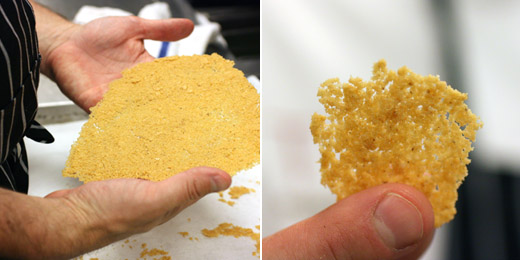
One last element for this dish was a masa cookie. Masa is a typical southwestern ingredient, but it was given a new twist here. It was baked into a tuile after being mixed with sugar, and ground coriander and mustard seeds. No water was added. The dry mixture was spread on a baking sheet, and as it heated in the oven, the sugar melted and the tuile formed. The big, thin cookie then easily broke into pieces. It was a sweet, savory, corn-flavored bit of crunch.

The dish was plated with a layer of arugula, then the watermelon curry, the shrimp were pulled from the skewers and placed on the sauce, the masa cookie was broken into shards which were strewn about, and last, a little drizzle of the poaching oil was added. My reaction upon tasting the finished dish was a wow. That was perfectly cooked, juicy, plump shrimp, and all those wonderful flavors in the watermelon curry accompanied it nicely. The fresh, bright flavors and slight edge of heat, the mix of textures with the crisp masa cookie, and the lightness of it all made a stellar combination. And, this is just one of the courses offered at Trio for the Chef’s Table Series.

For more information about the menus, the locations, and the opportunity to sit and dine with some of Austin’s top chefs, see the Tribeza site.


Wednesday, August 25, 2010

Gorditas with Roasted Tomatillo Chipotle Salsa

I would like to know why no one ever told me how easy it is to make gorditas. Had I known this, these would always have been part of our regular week-night meal rotation. These little masa cakes get a dent in their tops to hold whatever you wish from refried beans and sour cream to shredded grilled chicken and salsa. Hot off the stove, they’re slightly crisp on the surface and delicate on the inside with great corn flavor. I kept this recipe from last November’s issue of Food and Wine and followed it precisely for total quantity and size of each gordita. As soon as I realized how easy the dough is to make and how simple each gordita is to form, I started planning to make mini versions for parties and off my mind wondered to all the possible toppings for them. For this first batch ever, I had a salsa in mind to pair with them. A few weeks ago, Kurt and I had dinner at La Condesa here in Austin, and we quite enjoyed the duck with mole negro sauce. We also enjoyed the chips and salsa as usual, but what you get at La Condesa is organic chips and four different fresh, house-made salsas. I dutifully and carefully tasted each salsa in an attempt to choose a favorite and then asked our server for the recipe of the one I picked. I was sure he would tell me no, but instead he went straight to the kitchen and came back with an ingredient list. I had to figure out exact quantities for myself, which was easy enough, and that’s the salsa shown here. I’ll include my version of the recipe below.

To make delicious, homemade gorditas, all you have to do is combine masa harina, water, and vegetable oil and stir it together to form a dough. Place the dough on a sheet of plastic wrap and shape it into a log about ten inches long. This doesn’t need to be perfect at all because you will cut disks that are then formed into cakes. You cut ten disks from the log of dough and press each into a three inch biscuit cutter to mold round cakes. The cakes can be refrigerated overnight in an airtight container if you want to prep them in advance. When you’re ready to cook them, heat a griddle or cast iron skillet over high heat. Cook the gorditas for two minutes on each side to brown them in spots, and then remove them to a baking sheet and press an indentation in each with the back of a spoon. Last, you heat some oil in a skillet and fry the gorditas for two minutes per side to crisp them. Drain on paper towels, and then top them as you wish.

Our toppings included refried black beans, sour cream, shredded queso quesadilla, sliced jalapenos, shredded chicken, chopped tomatoes, diced avocado, and roasted tomatillo chipotle salsa. We didn’t really talk during this meal, but we smiled and nodded a lot. The salsa was smoky and velvety smooth since it was pureed with olive oil, and the gorditas were crisp, tender, perfect vehicles for the toppings. I don’t know why I didn’t learn sooner, but now that I know about these, I’ll be making a lot of them.

Roasted Tomatillo Chipotle Salsa
inspired by La Condesa
2-3 chipotles in adobo depending on size and how spicy you want your salsa to be, plus 2 tablespoons adobo sauce from can
1 large red onion
12 tomatillos, husks removed and washed
4 tablespoons olive oil, plus more for roasting
Salt and pepper to taste

-Pre-heat oven to 400 degrees F. Chop onion into wedges and place on a baking sheet with tomatillos, and drizzle with olive and season with salt and pepper. Roast in the oven for about 20 minutes or until the vegetables are softened and browned.

-Transfer roasted vegetables to a food processor and add chipotles and adobo sauce. Puree until smooth and then slowly add olive oil while the machine is running. Taste for salt and add more if needed.


Blogging tips