I have a little problem. I'm addicted to cookbooks, food writing, recipe collecting, and cooking. I have a lot of recipes waiting for me to try them, and ideas from articles, tv, and restaurants often lead to new dishes. I started losing track of what I've done. So now I'm taking photos and writing about what I've prepared—unless it's terrible in which case I forget it ever happened.
I’ve really liked baking with sourdough since my first attempt years ago. I have a few favorite recipes that I bake often like sourdough bagels, baguettes, and a rye and wheat combo loaf that seems foolproof. I realized that I may have gotten stuck in my habits with sourdough. I’m used to the recipes I’ve made several times, know how the timing will work, and understand when there is flexibility in the scheduling. Dare I say, I’d gotten stuck in a sourdough comfort zone? It was time to try something new, and Modern Sourdough: Sweet and Savoury Recipes from Margot Bakery, of which I received a review copy, by Michelle Eshkeri was great inspiration. These breads from Margot Bakery in North London are varied in origin but all rely on great flavor from sourdough. The book also includes some cakes, cookies, and bars offered at the bakery that are not made with sourdough, but I was intrigued to find Sourdough Rye Brownies, Fennel and Feta Muffins, and Aubergine Einkorn Galettes all made with sourdough in the recipes. The Margot loaf is a round, country-style loaf with Khorasan and white bread flours, and it rests for a long, slow rise in the refrigerator before baking. There’s also Focaccia, Challah, Simit, Beetroot Bread, and even laminated pastry dough all made with no commercial yeast or other leavening. There’s even a version of Rugelach made with that laminated pastry dough that looks delicious. But, it was the brioche that got my attention. I’ve made brioche several times and in different ways in the past. Most recently, my old mixer broke and I ended making a very rich brioche dough by hand with lots of kneading. I’ve made a sourdough brioche before that was used for hamburger buns, but that recipe included some yeast in the dough. Here, the brioche is definitely rich with eggs and butter, but it was all up to the starter to make it rise. I had to give it a try. I was torn between using the dough for a Babka loaf or Cinnamon Buns. Both are made with the same dough and same filling and I’ll eventually come back to try the Babka, but a cinnamon bun craving had to be addressed first.
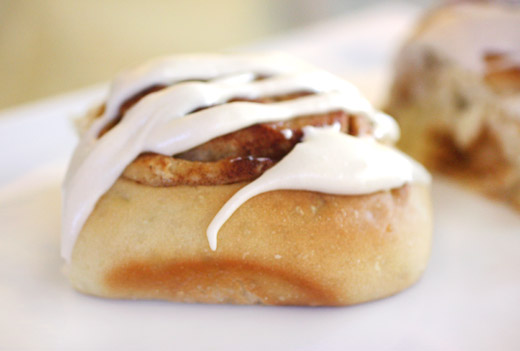
The recipe itself was a multi-day process after I had fed my starter for a day to revive it. Stage one just involves feeding a small amount of active starter with the amounts of water and flour listed. Stage two mixes the Stage one starter with more flour and water, and this time a little sugar. Stage three is for mixing the brioche dough with a pause for the autolyse, a long ferment in a warm oven with a bowl of water, and then additional resting in the refrigerator to make the dough easier to handle. Once chilled, the dough was patted into a rectangle and schmeared with a butter, brown sugar, and cinnamon mixture. With every other cinnamon bun recipe I’ve ever made, the dough is always rolled into a log and then sliced into rounds. Here, the dough was cut into strips first and then rolled three strips at a time before being separated into rolls and placed in a baking dish. It prevented the dough from becoming stretched and elongated. Once the rolls were formed, they sat, covered, at room temperature for 16 to 24 hours before baking. At last, the next day, they were baked. I can never resist topping cinnamon buns with cream cheese frosting, and I did that here as well with a coffee-flavored frosting. In the book, a simple syrup is poured over the buns while they’re still warm from the oven for a simpler look.
To call these cinnamon buns decadent would be an understatement. They are delightfully rich, and all the waiting time was worth it for the flavor it produced. While I have no complaints about these at all, next time I might reduce the amount of filling since it did escape the rolls a bit. But first, I need to try those brownies and the focaccia and the muffins.
I am a member of the Amazon Affiliate Program. Tweet
Declaring something 'the best' is tricky, but I can easily proclaim something like these cinnamon buns to be 'my favorite' I've ever made. And, I've made lots of different cinnamon buns or rolls. In fact, cinnamon rolls are one reason this blog was started in the first place. I once spent most of a Saturday morning hunting through files and stacks of recipes trying to find the one for some cinnamon rolls I had made before. Several hours later, I remembered the recipe was from an old Better Homes and Gardens cookbook. This blog makes it so much easier to keep track of details like that. But, that was some other version of cinnamon rolls. The ones shown here today are now my favorites. They come from Maida Heatter's Cakes, and the secret is potatoes. I knew potato dough for breads is very tender and fluffy, but I had never considered making cinnamon buns from a potato dough. Maida explains that yeast likes potatoes, and indeed, the dough puffed very well while rising. The twelve buns filled a fifteen and a half inch by ten and a half inch pan. Fear not, there is no flavor of potatoes in the dough. The buns taste buttery, cinnamony, and sweet. The potatoes just affect the texture, and they do so in the best way possible.
First, you're going to need some plain, mashed potatoes. Anything leftover that might have been seasoned with salt and pepper or garlic isn't going to work. Maida points out that three quarters of a pound of potatoes will produce the one cup of mashed potatoes needed. The plain mashed potatoes were warmed in a saucepan, and milk was slowly stirred into them followed by sugar, a little salt, and butter. Meanwhile, yeast was added to warm water in a measuring cup, and in a separate bowl, and egg was mixed with vanilla. Then, in the bowl of a mixer, the potato and milk mixture was combined with the water and yeast and egg. Flour was slowly added, and this produced a sticky dough. The dough was turned out onto a floured board, and kneading was easier with a dough scraper. When the dough felt smooth, it was placed in a oiled bowl and left to rise for an hour or a little longer. After rising, it was rolled out on a floured board into an eighteen inch square, covered with melted or very soft butter, and sprinkled with a mix of cinnamon, sugar, and nutmeg. I opted to leave out the raisins. Next, the dough was rolled into a log and cut into buns. I let the covered tray of buns rest in the refrigerator overnight, and then brought them to room temperature while the oven pre-heated the next morning. They baked for twenty minutes, and when cool, the glaze was drizzled on top. I added a few tablespoons of cream cheese to the butter, confectioners' sugar, vanilla and almond extracts, and cream in the glaze.
Usually, the best part of a cinnamon bun is the very middle, but these were that good all the way on the outside edge. For years, my favorite cinnamon bun or roll was one made with pumpkin puree, and when October arrives, I reserve the right to change my mind again. Until then, these cinnamon buns will hold the title.
I’m submitting this to Yeastspotting where you’ll find some seriously well-made bread.
Cinnamon rolls are one of my many weaknesses. They are excellent breakfast sweets just as they are. Lately, however, I’ve started seeing more and more varieties of rolls like sticky lemon rolls, coconut pull apart rolls, and butterscotch sticky buns. And, did you see Foodblogga’s blueberry sweet rolls last summer? Then, I just saw another version of blueberry cinnamon rolls on Health Nut a couple of weeks ago. I started getting ideas about changing things up with a slightly more wholesome sweet roll made with sourdough and whole wheat flour, and Texas-grown blueberries are everywhere I look lately. Blueberries on their own would have been great, but I thought using both blueberries and raspberries would give these some Fourth of July spirit.
I followed a recipe for sourdough cinnamon rolls using half whole wheat flour and half all-purpose flour. The recipe states the commercial yeast and vital wheat gluten are optional. I added the yeast but not the gluten. The dough also included sourdough starter, water, sugar, powdered milk, melted butter, and eggs. With less butter, no cream cheese, and whole wheat flour, these were virtuous sweet rolls compared to the last ones I made. I let the dough rise for a few hours, and then rolled it into a big rectangle. I spread on two tablespoons of softened butter and scattered the berries, one half pint of each, that had been tossed with a little sugar and lemon zest and a tablespoon of flour. The dough was rolled up and cut into smallish pieces. I went with shorter rolls this time in an attempt to limit the calories per roll. They were practically guilt-free. I let them sit in a baking pan, covered with plastic, in the refrigerator overnight, and baked them the next morning. Once baked and cooled, I made a simple glaze with confectioners’ sugar and lemon juice to swirl on top of each.
The pretty berries and lemony glaze made these seem more decadent than they were, and the whole wheat flour gave them some nuttiness. Veering off the cinnamon path was a good change of pace. Now that I’ve dabbled with berries in sweet rolls, the lemon, butterscotch, and coconut varieties are in my sights.
I’m submitting this to Yeastspotting where you’ll find some seriously well-made bread.
Out with the old and in with the new. That’s what made me finally try a different recipe for cinnamon rolls. I had been making the same cinnamon rolls for years. I’ve changed the recipe to include pumpkin puree at times, but other than that, my homemade rolls have always been made the same way. Many moons ago, my cookbook library consisted of one book and that was The New Basics. The New Basics does not have a recipe for cinnamon rolls, and that’s why my collection grew to two books. Note: that book does have a recipe for sticky buns, but I wasn’t smart enough to think of checking for that at the time. I was at a bookstore, flipping through a few different general cooking types of books, and bought the tenth edition of the Better Homes and Gardens New Cookbook because it did have a recipe for cinnamon rolls. It served me well for years until I decided it was time to try the Saveur cream cheese cinnamon rolls that Joy the Baker made. The key ingredient, cream cheese, is in the dough not the frosting.
After trying these twice, I didn’t completely sweep out the old. I realized there were a couple of details from my stand-by method that I couldn’t abandon. The dough ingredients were much like those for my old rolls other than the use of cream cheese, but there was a difference with the butter. For the new rolls, the butter was to be softened to room temperature and then kneaded into the dough with a dough hook on a mixer. It didn’t work itself into the dough very well, and the first time I ended up kneading a bit by hand to be sure the butter was incorporated. The second time, I warmed the butter to almost but not quite melting as I always did in the old version and then didn’t have to knead by hand. Then, after the dough had doubled in size, it was rolled into a ten inch square, and this is where the cream cheese was added. Softened cream cheese was spread on the square of dough, and the dough was folded almost like folding butter into homemade puff pastry which I still haven’t attempted. So, the dough was folded into thirds like a letter and then turned and folded again. Then, it was rolled out into a large rectangle to be topped with fillings. This new recipe suggests brushing the dough with melted butter, but again I reverted to my old ways with the butter. The first time around, the melted butter seemed to run out of the rolls and the bottoms browned too quickly as they baked. So, the second time, I spread very soft but not melted butter on the dough just like old times. A topping mixture of brown sugar, cinnamon, cloves, maple syrup and granulated sugar was spread on the buttered dough, and I included pecans and raisins one time but not the other just to mix it up. Then, the dough was rolled and cut and the rolls were placed in a buttered baking dish. You can either let the rolls rise for two hours and bake them, or you can place them in the refrigerator overnight. If refrigerated, they should come to room temperature before being baked.
Old recipe or new, it’s hard to beat the aroma of homemade cinnamon rolls in the oven. When they were baked and cooled, they were topped with a simple confectioner’s sugar frosting with some maple syrup in it. This is a richer version of a cinnamon roll than my old recipe, and the dough was tender and incredibly good. In the end, I don’t think the old will be thrown out since it almost seems like a light recipe now, but I’m definitely keeping the new.
I’m submitting this to Yeastspotting where you’ll find some seriously well-made bread.










 , of which I received a review copy, by Michelle Eshkeri was great inspiration. These breads from Margot Bakery in North London are varied in origin but all rely on great flavor from sourdough. The book also includes some cakes, cookies, and bars offered at the bakery that are not made with sourdough, but I was intrigued to find Sourdough Rye Brownies, Fennel and Feta Muffins, and Aubergine Einkorn Galettes all made with sourdough in the recipes. The Margot loaf is a round, country-style loaf with Khorasan and white bread flours, and it rests for a long, slow rise in the refrigerator before baking. There’s also Focaccia, Challah, Simit, Beetroot Bread, and even laminated pastry dough all made with no commercial yeast or other leavening. There’s even a version of Rugelach made with that laminated pastry dough that looks delicious. But, it was the brioche that got my attention. I’ve made brioche several times and in different ways in the past. Most recently, my old mixer broke and I ended making a very rich brioche dough by hand with lots of kneading. I’ve made a sourdough brioche before that was used for hamburger buns, but that recipe included some yeast in the dough. Here, the brioche is definitely rich with eggs and butter, but it was all up to the starter to make it rise. I had to give it a try. I was torn between using the dough for a Babka loaf or Cinnamon Buns. Both are made with the same dough and same filling and I’ll eventually come back to try the Babka, but a cinnamon bun craving had to be addressed first.


 , and the secret is potatoes. I knew potato dough for breads is very tender and fluffy, but I had never considered making cinnamon buns from a potato dough. Maida explains that yeast likes potatoes, and indeed, the dough puffed very well while rising. The twelve buns filled a fifteen and a half inch by ten and a half inch pan. Fear not, there is no flavor of potatoes in the dough. The buns taste buttery, cinnamony, and sweet. The potatoes just affect the texture, and they do so in the best way possible.


 . The New Basics does not have a recipe for cinnamon rolls, and that’s why my collection grew to two books. Note: that book does have a recipe for sticky buns, but I wasn’t smart enough to think of checking for that at the time. I was at a bookstore, flipping through a few different general cooking types of books, and bought the tenth edition of the Better Homes and Gardens New Cookbook because it did have a recipe for cinnamon rolls. It served me well for years until I decided it was time to try the
