



Showing posts with label mayonnaise. Show all posts

Monday, June 6, 2022

Crispy Fonio Cakes with Hearts of Palm, Scallions, and Old Bay


In 2017, Joshua McFadden’s Six Seasons became a favorite of mine. I live for the brined and roasted nuts from that book and make that recipe with every kind of nut on regular rotation. I grab the book for seasonal inspiration for every vegetable too. So, I knew I was going to enjoy cooking from his new book, Grains for Every Season, of which I received a review copy. He explains in the introduction that this book is not intended as an encyclopedia of all grains. Rather, it’s an exploration of the grains he cooks with often. The chapters are titled by type of grain, and each starts with specific info about the grain, cooking times, and nutritional details. I read through the book, then immediately started jumping from one chapter to another trying various dishes. And, I have several pages marked with more things to try. There are simple things like the five different seasoning suggestions for popcorn, and there are more time-consuming recipes like the Whole Wheat and Ricotta Cavatelli. For the cavatelli, a particular machine is suggested, Elisa’s Cavatelli Maker from Fante’s, and I had to stop everything to search for it online. Then, I got distracted by the Blonde Blondies because apparently, blonde chocolate, also known as caramelized white chocolate, has become a thing you can buy rather than make yourself and no one told me. Next, I was fascinated to learn that McFadden previously worked at Franny’s in Brooklyn before it closed, and the Franny’s cookbook is another favorite of mine. For years, I’ve been meaning to circle back to the Franny’s book for the clam pizza. It’s a little involved, but I still want to give it a go. In this book, that very clam pizza is reimagined as a slab pie with a whole wheat crust. It has white wine and cream sauce with lots of shucked clams. There are several other pizza topping ideas too. In the wheat chapter alone, there are tortillas, pitas, English muffins, and even whole wheat angel food cake. Spelt flour is used for a Savory Morning Bun, freekah appears in a Seafood Chowder with Potaotes and Corn, and farro is made like risotto in the style of cacio e pepe. Clearly, I’m finding a lot to like in this book. Here’s what I’ve made so far: Tabbouleh for Every Season; Super-Crisp Flatbread That Tastes Like Cheez-Its (only better I say); Wild Rice Salad with Roasted Beets, Cucumber, and Dill; and Snack Bars with Quinoa, Mango, Nuts, and Coconut. And, I have to tell you more about the Crispy Fonio Cakes. 

This recipe is from the Millet chapter, and millet always used to be easy enough to find at the grocery store. Things happen these days. Some days supply seems normal, other days things I depend on finding just aren’t available. So it was with millet. But, fonio was available, and it’s a great substitute for millet. Also, the recipe called for shrimp, but I opted to go plant-based and used chopped hearts of palm instead. The cooked fonio was mixed with the chopped hearts of palm, green onions, Cajun seasoning, lemon zest, yogurt, and flour and the mixture was formed into fritters for frying. The recipe as written in the book appears below. To serve, there's a list of optional sauces, and all the recipes for those sauces are at the back of the book. I chose the Turmeric Mayo made with mayonnaise, Dijon mustard, ground turmeric, lemon juice, onion powder, and salt. 

Despite the liberties I took with the ingredients, these crispy cakes were delicious, and the turmeric mayo is something I’ll make again and again for lots of other uses too. Often, there are whole chapters in cookbooks that I never use. For instance, if a chapter is devoted to beef dishes, I will probably never cook from it. But, every chapter in this book is of keen interest to me. All the grains and all the ways they’re used will keep me busy in the kitchen with this book. 

Crispy Millet Cakes with Shrimp, Scallions, and Old Bay
Excerpted with permission from Grains for Every Season by Joshua McFadden (Artisan Books). Copyright © 2022. 

These tasty, golden-crusted patties are a brilliant showcase for millet. The grain’s neutral flavor lets the mild shrimp shine and nicely absorbs the ever-so-spicy Old Bay flavors. Millet’s texture is tender but toothy, which makes the patties substantial enough to serve on a bun as a seafood sandwich with a slice of tomato and some crispy iceberg lettuce or with an egg on top for breakfast. And millet is gluten-free, so if you use millet flour as the binder, you’re good. 

Serves 4 to 6 

1 cup (200 g) uncooked millet 
Kosher salt 
4 garlic cloves, smashed and peeled 
1 pound (450 g) shrimp, preferably wild-caught, peeled and deveined 
1 bunch scallions (about 6), thinly sliced 
2 tablespoons Old Bay seasoning 
Finely grated zest of 1 lemon 
2 large eggs, beaten 
2 tablespoons plain whole-milk or low-fat yogurt 
1 cup (120 g) millet flour, barley flour, or brown rice flour (or any wheat flour, if you are okay with gluten) 
Vegetable or extra-virgin olive oil, for frying 
Lemon wedges, for squeezing 

Put the millet in a medium saucepan and add water to cover by 3 inches (7.5 cm), 1 tablespoon salt, and the garlic. Bring to a boil, cover, reduce to a simmer, and cook until very tender and no longer chalky, about 20 minutes. Drain the millet and garlic, shaking to remove excess water. Let sit for a few minutes, then spread it onto a baking sheet and let dry, raking through the grains a few times for even drying. 

Smash the garlic with a fork, but leave in the mix. Cut the shrimp into small pieces, so that they distribute well in the fritter mix, but large enough that they remain succulent. Cut “large” shrimp into 10 pieces. Transfer the millet to a bowl. Add the shrimp, scallions, Old Bay, and lemon zest. Toss to mix. Whisk together the eggs and yogurt in a small bowl and fold into the millet mixture. Let sit for a couple of minutes, then fold in half the flour—add only enough to make a shapeable batter. To test, shape about 1/4 cup (60 ml) of batter into a little puck. If it holds together, you’re good. If it’s too sloppy to hold together, stir in a bit more flour and repeat the test. 

To cook, arrange a double layer of paper towels on a tray. To shallow-fry, pour about 1/4 inch (6 mm) of oil into a large heavy skillet. To deep-fry, pour 3 inches (7.5 cm) of oil into a deep pot (be sure the pot is deep enough that the oil can’t bubble up and overflow). Heat the oil to 335°F (168°C). Add a few patties and fry until deep golden brown and fully cooked inside (including the shrimp), about 4 minutes on each side, depending on the size of your patties. (Don’t overcrowd the pan, and wait a few seconds before adding more patties so the oil temperature doesn’t dip.) Remove with a slotted spoon and drain on the paper towels; cook the remaining patties. 

Serve hot, with lemon wedges and the condiment/sauce of your choice.

I am a member of the Amazon Affiliate Program. 

Monday, June 20, 2016

Poached and Pickled Salmon

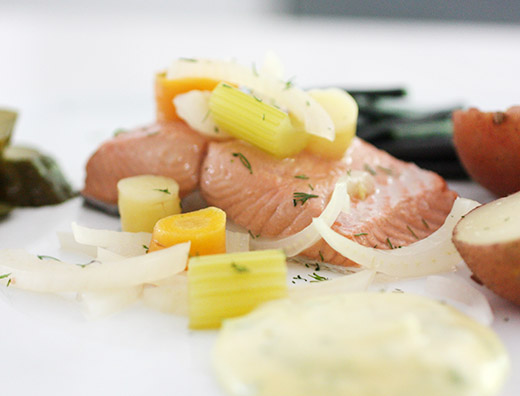
The dish I’m showing today would be perfect for celebrating Midsummer. I’ve never been to Sweden or any part of the Nordic region, but I’d love to visit during the Midsummer festival and enjoy daylight all night long. As usual, I’ve been virtually traveling with a cookbook, and this time it’s The Nordic Cookbook by Magnus Nilsson. I received a review copy of this hefty book that covers traditional and contemporary foods from Finland, Sweden, Norway, Denmark, the Faroe Islands, Iceland, and Greenland. Nilsson set out to show the similarities as well as the differences between each part of the Nordic culture. Several dishes are found in multiple locations and go by different names in each place, and some are unique to one area. He accepted that the book could never be a complete record of all the recipes from this large area, but it was intended to inform the reader about this food culture and provide guidance in creating some of that food. It also includes beautiful photos of the areas that were visited during the research phase. There’s a simplicity to the ingredients and most preparations, and flavors are brightened by vinegars, horseradish, and herbs. I loved all the potato recipes including several potato salads, soups, creamed potatoes, gratins, potato cakes, and Potatoes Hasselbacken. Why have I never made those? I learned the dish was invented in the 1950s at a restaurant that became a cooking school called Hasselbacken. There are meat and poultry dishes, sausage and charcuterie, breads and waffles and dumplings, cakes and pastries, and a chapter for little cookies and other sweets that I imagine would be perfect on a holiday cookie tray. I really enjoyed reading about all the various fish dishes with fresh, pickled, smoked, and dried variations. I really like pickled shrimp, so I had to try the Poached and Pickled Salmon since fresh wild salmon season is in full swing. 

In the end, the dish is a bit of a decomposed salad, and you can mix and match whatever items you’d like to serve with the salmon. Making the salmon itself was as easy as it gets. Fresh salmon fillets were cut into portions and placed in a heat-proof dish. Water was brought to a boil with salt, red wine vinegar, white vinegar, chopped carrots, sliced fennel, sliced onion, chopped celery, thyme springs, bay leaves, parsley stalks, and peppercorns. I'm thrilled to finally get to use my own thyme growing right outside once again. After boiling for a minute, the hot water, with vegetables and herbs, was poured over the salmon, and it was left to cool to room temperature. This steeping step was how the salmon was cooked. Once cool, the salmon was left in the liquid with the vegetables and herbs and refrigerated overnight. The next day, I made a homemade mayonnaise with dill to serve with the salmon. Fresh, new potatoes and purple long beans from Boggy Creek Farm were my cooked accompaniments to the salmon. And, I sliced some lacto-fermented cucumber pickles I had in the refrigerator as well. The chilled salmon was served with the carrot and fennel alongside the boiled potatoes and blanched beans with a dollop of dill mayonnaise and some pickle slices. Each bite of salmon and potato was swiped through the rich mayonnaise. 

The flavor of the salmon was mildly pickled, and I might add more vinegar to the steeping liquid next time. But, the mayonnaise was bright and lively with the vinegar in it and the dill. Those fresh, boiled potatoes went so well with the other parts of the dish. And, it could be presented in different ways. The salmon could be flaked rather than left as a fillet, or all the parts could be combined for a less-deconstructed salad. However it’s served, it’s a great way to celebrate summer. 

Poached and Pickled Salmon 
Recipe reprinted from The Nordic Cookbook by Magnus Nilsson with publisher's permission (Phaidon, $49.95 US/$59.95 CAN, October 2015) 

This is a real summer dish, often served with Boiled Potatoes, Dill Mayonnaise, and Quick Pickled Cucumber. The pickled vegetables are delicious and should also be served with the fish. The salmon is not pickled in the sense that herrings are pickled and won’t keep for very long but should be eaten within a week if stored in the refrigerator. In a restaurant, where you would fillet a whole salmon to make this dish, it’s a good idea to cook the salmon bones and head together with the pickling liquor. If you do so, it will produce a light and very delicious jelly when it cools down. If you decide to try this at home, then add the bones, head and any salmon scraps you have to the pickling liquor, but leave out the vegetables. Bring it slowly to a simmer, then let it sit for 5 minutes before proceeding as described below. If you like the idea of the jelly, but you have no fish bones, then add 2 leaves of gelatin per 1 litre/34 fl oz (4 1/4 cups) of finished pickling syrup. 

Preparation and cooking time: 30 minutes 
Pickling time: overnight 
Serves: 4 

800 g/1 3/4 lb salmon fillet, cut into 4 pieces 
50 g/2 oz (1/4 cup) sugar 
2 tablespoons salt 
100 ml/3 1/2 fl oz (1/3 cup plus 1 tablespoon) red wine vinegar 
100 ml/3 1/2 fl oz (1/3 cup plus 1 tablespoon) Attika (12%) vinegar or white distilled vinegar 
2 carrots, cut into 5 mm/1/4 inch slices 
1 red onion, thinly sliced 
1 small fennel bulb, sliced 
1 celery stalk, chopped 
1 sprig thyme 
2 bay leaves 
12 white peppercorns 
1 handful parsley stalks 

Place the salmon pieces in a pot and keep at room temperature to warm up slightly. Pour 2 litres/3 1/2 UK pints (8 1/4 cups) water into another pot and add the sugar,salt and vinegars. (Remember that it needs to be saltier than you would think because it is supposed to season the salmon. 2 tablespoons fine salt could be a starting point point but you will have to taste your way forward.) Bring to the boil, then add the vegetables and aromatics and continue boiling for 1 minute. Pour the pickling liquor over the pieces of salmon in the other pot and leave to cool to room temperature. 

Refrigerate the salmon in the pickling liquor overnight. Serve the salmon cold. 

Dill Mayonnaise 
I hate mayo that is not thick enough; it should be stiff! If not, it goes very liquid from dilution as soon as it comes in contact with any type of moist food you are eating or mixing it with. Add more oil if it isn’t really thick. If you are using it in a sauce that has more liquids in it, or a salad, it could be on the verge of splitting from containing a lot of oil when you mix it with the remaining ingredients. The water content in the thing you are mixing the mayo with will make it perfect as it dilutes it a bit. 

Preparation time: 20 minutes 
Serves: 4 

2 egg yolks 
1 tablespoon Dijon mustard 
2 tablespoons white vinegar 
250 ml/8 fl oz (1 cup) neutral oil 
salt and white pepper, to taste 
a handful of chopped dill leaves 

Put the egg yolks in a bowl. Whisk in the mustard and vinegar then season with a pinch of salt and a little white pepper. Add the oil, a drop at a time, beating slowly but constantly, until no oil remains and the mayo is nice and thick. Stir in chopped dill. Season to taste. 

I am a member of the Amazon Affiliate Program. 

Tuesday, March 13, 2012

Blackened-Redfish Sandwich with Miso Mayonnaise

Before I even begin to tell you about this sandwich, I’m going to suggest you stop what you’re doing, go directly to the nearest kitchen, and whip up a bowl of homemade miso mayonnaise. I wish someone would have given me this advice whenever this recipe was first invented because when I made it last weekend, I immediately felt all those years spent eating other mayonnaises had been squandered. If you’re someone who likes mayonnaise, then you probably already know the wonders of a homemade version. Now, imagine how good that homemade mayonnaise is, and then imagine it even better as if it’s been given a flavor boost. That’s miso mayo. This mayonnaise and the sandwich were in the second issue of Lucky Peach. In the magazine, the sandwich was made with bluefish, but I used Texas redfish. Really, there’s so much going on with flavors from the aforementioned, amazing mayonnaise and the blackening spice, just about any fish or tofu or even blackened bread would make a terrific sandwich here. I cheated in a couple ways in making this. I skipped the recipe for the homemade bread-and-butter pickles for the sandwich. It didn’t seem worth doing since cucumbers aren’t in season right now, and I have a preference for sour dill pickles with no sign of sweetness anyway. So, I used dill pickles from a jar. Next, I cheated with the blackening spice mix. I somehow blanked on the ground konbu in the ingredient list and didn’t even know I should have looked for it at the grocery store. Also, I miscalculated how little mustard seed I had on hand and failed to buy more for this. Oddly enough, I did, however, have the grains of paradise, whole allspice, and tomato powder, along with all the other ingredients, in my spice cabinet. Next time I make this, I will try to get the konbu for the umami it would have added to the mix. In general though, with so many different spices involved, if you add more of one item, less of another, or need to skip something, you’ll still have a great spice mix.

The full list of everything in the blackening spice is: three tablespoons grains of paradise, and I’ve gone on about grains of paradise once before, two teaspoons black peppercorns, one teaspoon coriander seed, four tablespoons mustard seed, one teaspoon cumin seed, one teaspoon whole allspice, one quarter cup ground konbu, three tablespoons onion powder, two tablespoons cayenne powder, one quarter cup tomato powder, and one half cup sweet smoked paprika. Note: in the magazine, the quantity for cayenne powder is six tablespoons, and I think that must have been a typo. I like things spicy, but that seemed like an extraordinary amount of cayenne. I used two tablespoons and tasted to see if I wanted it spicier. Two tablespoons gave it a good amount of heat even to my palate. The whole spices were toasted in a dry skillet, and then ground and mixed with the powdered spices. Fish fillets were seasoned with salt, dredged with the blackening spice, and seared in a hot pan with a little oil. The blackening spice was also used on some oven fries. Again, I cheated. In the magazine, the blackened potato chips were to have been fried. Now, for that amazing mayonnaise, you make a typical homemade mayonnaise and add one tablespoon of champagne vinegar and two tablespoons of white miso. I don’t seem to have the gene that allows one to make a mayonnaise with one egg yolk. Mine always breaks when I start with just one yolk, and I always start over with another yolk and mix the broken oil mixture into the second yolk. I also seem to have better luck with a hand mixer than with a food processor or blender. I’ve used a whisk as well, but a hand mixer is easier. The sandwich was built with toasted and buttered bread, shredded lettuce, sliced pickles, the blackened fish, and the wonder that is miso mayo.

The spice mix does exactly what it’s intended to do once it hits the hot oil in the pan. It blackens as quickly as the fish cooks, and that deepens the flavors of the spices. It was just as delicious on the oven fries, and the extra miso mayo makes a great dipping sauce for them. My mind is already swirling with thoughts of other ways to use that mayonnaise.


Wednesday, October 13, 2010

Piquillo Pepper Num Pangs

I made homemade Kaiser rolls, and I had a plan for them. I had been thinking about these sandwiches on Kaiser rolls for a year, or the recipe had been sitting in my files for that long anyway. Last September, these num pangs appeared in Food and Wine, and the combination of big flavors and crisp vegetables was something I wanted to try. They could have been made with just about any roll, and semolina baguettes were suggested as another option, but they were shown on Kaiser rolls which seemed just right. There’s a lot going on in these sandwiches. The julienned carrots aren’t just raw carrots. They’re crisped in vinegar with a little sugar. And, the pesto is no standard pesto. It’s made with Thai basil and spiked with anchovies, lime juice, and fish sauce. That’s not all. While plain mayonnaise would have been good, drizzled with sriracha, it was even better.

So, to make those quick-pickled carrots, cider vinegar and sugar were combined and the julienned carrot sticks were tossed in the mixture. That was left at room temperature for an hour and stirred from time to time. The pesto was made by whizzing the following in a food processor: Thai basil leaves, anchovies, lime juice, fish sauce, crushed red pepper flakes, and chopped garlic. The Kaiser rolls were split, toasted, and buttered, and then it was time to build sandwiches. One side of each roll was spread with mayonnaise and drizzled with sriracha, and the other side was topped with pesto. The sandwich was layered with thinly sliced cucumber, piquillo peppers, carrots, and cilantro leaves.

This sandwich has been by far my favorite use of these Kaiser rolls. For a sandwich full of vegetables, the flavor was incredible. The smokiness from the piquillos was a nice touch, but even raw red bell pepper strips would have been great. I definitely recommend the pesto, and there’s a tip in the recipe intro for a quicker version. Store-bought basil pesto could be doctored by adding chiles, lime juice, and fish sauce for a similar result. I also wouldn’t skip the sriracha on the mayonnaise. In fact, that will be appearing on almost all of my future sandwiches.


Tuesday, May 27, 2008

Lime-Habanero Mayonnaise with Grilled Salmon and Micro Greens

This dish was inspired by a Bobby Flay recipe, but I made a few changes. Bobby’s dish was tuna salad made with the mayonnaise and put into a sandwich with watercress. He suggested a lemon-habanero mayonnaise, but I’ve moved on from lemon for now so I used lime. Also, I used less lime juice and less onion than suggested, and I added garlic. I used the mayonnaise as a sauce over grilled salmon, and since I couldn’t find watercress, arugula micro greens dressed in a lime vinaigrette danced on top. As a sauce, it’s a little acidic, so next time I might cut back on the reduced lime juice, but if it were put into a sandwich or on a fish taco, it would be fine. Actually, on a fish taco it would be amazing. The mayonnaise gets even better after sitting in the refrigerator overnight. It was divine on a veggie burger the next day. Grilled chicken would also be a good vehicle, and I might try that tomorrow. When making the mayonnaise, I would recommend adding just a little habanero at first, tasting, and adding more if you want it hotter. I ended up using one and a half habaneros this time as they were kind of small. Here's my rendition of the mayonnaise:

2 c fresh lime juice
1 to 1 1/2 habanero chiles, seeded and chopped
1 t lime zest
1 c excellent, prepared mayonnaise (or, make it fresh)
2 T red onion, finely diced
½ large stalk celery with leaves, finely diced
2 cloves garlic, chopped
2 T fresh flat-leaf parsley, chopped
Salt and pepper to taste

-Place lime juice in a small saucepan and bring to a boil. Cook until reduced to 1/3 c. Remove from heat and let cool slightly. Place lime syrup, habanero (a little at first), and remaining ingredients in blender and blend until smooth. Add more habanero to taste.


Blogging tips