



Showing posts with label serranos. Show all posts

Wednesday, May 18, 2016

Ground Chicken Kebabs

Did you see the film The Hundred Foot Journey? Do you remember the omelet-making scene? That omelet was the creation of Floyd Cardoz who was the consulting chef on the film. It’s also found in his new book, Flavorwalla, of which I received a review copy. In the book, he explains that a walla in India is someone who sells something specific or is particularly knowledgeable about a topic. A paowalla is someone who sells bread. Floyd Cardoz is the flavorwalla because he has “made his mark as a creator of bold, exciting food with balanced layers of flavors and textures that play off each other.” The recipes reflect his varied style of cooking with a mix of cultural influences. There are Mexican, Thai, Moroccan, and Portuguese influences in the dishes as well as Indian flavors. The common thread is the use of spices, herbs, and aromatic ingredients to punch up the results. There’s a Spiced Chicken Soup with Chickpea Noodles that sounds like it’s guaranteed to lift you from feeling under the weather. It’s made with cinnamon, cloves, cumin, scallions, ginger, fresh chiles, and homemade noodles with chickpea flour. I was intrigued by the Yellow Lentil “Dal” enriched with whisked eggs stirred in at the end. And, the Stewed Chicken with Fresh Tomatoes with chipotle, ginger, turmeric, and tamarind paste sounds great for late summer tomatoes. There are other egg dishes in addition to the omelet like Oven-Baked Eggs with Poblanos and Fingerling Potatoes and Coddled Eggs with Crab, Grits, and Leeks. There are quick meals for weeknights and dishes that are perfect for parties, and there are a few cocktails as well like the Tamarind Margarita. I fired up the grill for the Ground Chicken Kebabs because of the big flavors from ginger, garlic, mint, and serrano, and they were great served with the fresh, zesty Romaine Salad with Lime and Thai Chile. 

Cardoz explains that in many places in the world “kebab” is anything grilled whether it’s a cut of meat or piece of sausage or something formed into a patty. It doesn’t always involve food on a stick. And so, these patties were not skewered, just grilled as is. Two cloves of garlic, an inch of ginger peeled and cut into coins, and half a serrano chile chopped were combined in a food processor and finely chopped. Two tablespoons of cilantro and two more of mint leaves were added and finely chopped. A half cup of finely chopped onion was added to the mixture along with salt, pepper, and a half teaspoon of Garam Masala. The mixture was worked into a pound of ground chicken by hand. Lately, I’ve been buying humanely-raised, pastured chicken from Smith and Smith Farm at the farmers’ market and have been completely avoiding industrially-raised chicken. Direct from the farm, they sell whole chickens, pieces, and even boneless breasts and packs of ground chicken. So, once mixed, the chicken was formed into small patties that were refrigerated while the grill was being prepped. I brushed each side of the patties with vegetable oil and seasoned them with salt and pepper before placing them on the grill. They only need about three minutes per side depending on the heat of the grill. The dressing for the salad was made with canola oil, lime juice, fish sauce, minced ginger, and a minced Thai chile. It was tossed with chopped romaine, sliced radishes, cilantro leaves, and mint leaves. I served the kebabs with lime wedges and the salad on the side. 

The simplicity of little, grilled patties made the brightness of flavors even more unexpected. The squirt of lime on each kebab brought out the herbs, ginger, and chile within. A bite of kebab with a bite of fresh, crisp salad made an ideal mix. If you’re looking to add more spice and interesting flavors to your cooking, this book would be a great place to start. 

I am a member of the Amazon Affiliate Program. 

Monday, November 16, 2015

Black Drum Ceviche with Coconut Water, Cucumber, and Avocado

For a quick virtual vacation to the Yucatan, just open up the book Hartwood by Eric Werner and Mya Henry. As I turned the pages of my review copy, I was brought into the restaurant, Hartwood, and then on into the jungle where many of the ingredients used there are grown. The restaurant was built in 2010 in Tulum and was intentionally left mostly open to the surrounding natural setting. They have solar panels and a gas generator instead of power lines, ice is delivered, and the cooking is done over fire on a grill or in a wood-burning oven. The experience of the restaurant and the food served is very specific to the place despite the challenges that brings. The upkeep of the restaurant is a constant chore due to the heat, humidity, and rain. Werner and Henry clearly didn’t set out to take it easy after moving to the Riviera Maya. But, they did intend to take full advantage of all the local flavors available. The book explains how those flavors are built with roasted oils, pickled vegetables, and the use of wood smoke in the cooking. Lively mixes of fruits and chiles are seen in many dishes, and there are always suggestions for substitutions for ingredients and cooking techniques. I’ve marked the page for the Lentil and Papaya Salad with Lime and Honey Vinaigrette that’s made with summer squash and puffed amaranth seeds. There’s also a Grilled Nopales Salad with Queso Cotija served with a pink hard-boiled egg that was pickled with dried Jamaica flowers. The grilled seafood dishes all look fresh and flavorful like the Maya Prawns with Chipotle Mezcal Sauce served with sliced cucumber, radishes, and mandarin orange segments. There are also vegetable dishes, meat, desserts, and fruity cocktails. My first task was to choose one of the several recipes for ceviche because they all sounded fantastic. 

Of course, the most important thing about ceviche is choosing some perfectly fresh fish. In the book, each recipe is specific to a different type of fish, but there are suggestions for other good options depending on what’s available. In the past, I’ve always cut fish for ceviche into small cubes. Here, thin cuts against the grain are advised. The pieces are shaped more like sashimi. I decided to try the recipe called Ceviche de Robalo in the book, and robalo is a fish that moves in and out of fresh and saltwater. I used Gulf-caught black drum instead. My reason for choosing this version of ceviche was the juices, fruits, and vegetables that come together in it. The sliced fish was marinated in orange juice and lime juice with chopped red onion, sliced red serrano, and salt. Meanwhile, a cucumber was juiced by pureeing it in the blender and then straining it. That juice was mixed with coconut water. After the fish had marinated in the refrigerator for 30 minutes to an hour, it was moved with a slotted spoon to a serving dish. The cucumber-coconut water mixture was ladled over the fish. The garnishes were grapefruit segments, thin batons of jicama and radishes, little cubes of cucumber and avocado, and I added cilantro leaves. I can never resist baking some long, thin wedges of tortillas to serve with ceviche. 

Enjoying this dish was like a mini getaway with the flavors of coconut, serrano, fresh fruits, and crunchy vegetables. I might always add coconut water to ceviche from now on. Obviously, this restaurant makes the most of the variety of produce available nearby. I’d like nothing more than to visit in person and stroll in after a day on the beach, but until I can get there, I’ll keep virtually traveling with the book. 

I am a member of the Amazon Affiliate Program.

Tuesday, March 31, 2015

Rice Noodles with Green Onions and Edamame

What happens when one of my most favorite cookbooks is given a part two to accompany it? I go through many, many Post-it flags marking pages. I’ve been reading and marking pages in Plenty More and looking forward to various vegetables coming into season. I can’t wait for summer to try Dakos made with ripe tomatoes, Corn Slaw, and Eggplant with Black Garlic. After my first glance at this new book, I was worried that this was just the collection of dishes that weren’t quite good enough for the original Plenty. And, I still don’t think that first book can be surpassed, but the more time I spend with Plenty More the more I find to love about it. The Urad Dal with freshly grated coconut, the Polenta Chips with Avocado and Yogurt dipping sauce, and the Taleggio and Spinach Roulade are all competing for the top spot on my list of what to make next. Every dish combines flavors, textures, and colors that are hard to resist. For spring, the Fava Bean Spread with Roasted Garlic Ricotta; the Sprout Salad Part Two with radishes, kohlrabi, carrot, and avocados; and the Rice Noodles with Green Onions and Edamame are bursting with bright, fresh tastes. I can never turn away from a noodle salad especially one that’s this easy to make. 

I learned a trick from Dorie Greenspan for cooking rice noodles in advance and letting them stand until time to serve. You just rinse and drain them after cooking and then toss them with a little oil to prevent sticking. That same technique is employed here. The cooked, rinsed, drained, and oil-tossed noodles are set aside and covered to keep them warm. Next, sliced green onions and serranos were stir fried in a wok, and blanched, frozen edamame were added. The noodles were added to the wok along with sesame oil, black and white sesame seeds, rice vinegar, and chopped cilantro. The dish was served garnished with lime zest and more sesame seeds with lime wedges on the side. 

This was intended to be served warm from the wok which I did, but the cold leftovers from the refrigerator the next day were delicious too. The lime and chiles work their way through the few other ingredients to brighten the whole dish. This book is going on the shelf next its older sibling for now, but neither of them will be left sitting for long. 

I am a member of the Amazon Affiliate Program.

Monday, April 22, 2013

Sour Cream Chicken Enchiladas with Swiss Chard

I realize it’s customary for food cravings to strike when you miss a particular dish, when you haven’t had the chance to taste a favorite thing for a long time, and when you can’t wait for the next opportunity to have whatever that is once again. However, even though I live smack in the middle of Austin where you can’t take too many steps in a row without tripping over another Tex-Mex restaurant, I constantly crave Tex-Mex food. I can order tacos for breakfast, burritos for lunch, and enchiladas for dinner by traveling a few blocks from home in any direction whenever I want, but sometimes, home-cooked Tex-Mex is the way to go. Our favorite spots do get crowded causing long waits for a table at peak times, and besides, by making my own enchiladas, I can do things like add some sauteed CSA Swiss chard and top them with sliced, fresh jalapenos for even more heat. These Sour Cream Chicken Enchiladas are found in The Homesick Texan Cookbook as well as on the website, and this tangy sauce is one I’ll now be making often. The sauce is quick to make, and it starts like a veloute with a serrano chile-spiced roux to which chicken broth is added. Sour cream and roasted tomatillos are blended in to finish. It thickens as it bakes with the chicken- and cheese-filled enchiladas and makes you happy you’ll have some leftovers, which is another advantage of cooking at home. 

The recipe includes instructions for cooking chicken breasts for the enchiladas, but any cooked and shredded chicken will work here. With your chicken ready and some Monterey Jack cheese shredded, it’s time to make sauce. To start, I broiled a pound of cleaned tomatillos until well-browned on all sides, and transferred them to the blender. Then, butter was melted in a saucepan, and diced serrano chiles were added followed by minced garlic. Flour was whisked in to make a roux, and then chicken broth was slowly added while whisking. It was cooked until thickened, and I added sour cream, cumin, cayenne, and chopped, fresh cilantro off the heat. The sour cream mixture was poured into the blender with the tomatillos, but it was a little too much for my blender pitcher. I ended up pureeing in two batches. With the sauce completed, you can begin assembly of the enchiladas. I set up a row of warmed corn tortillas and started topping them with the fillings. A little shredded chicken was placed on each, followed by shredded cheese, and in my case sauteed Swiss chard. I skipped the suggested chopped onion because I tend to skip onions most of the time. With all the fillings in place, you just roll each tortilla into a cylinder. A cup of the sour cream sauce is poured into an oiled baking dish, and the filled tortillas are placed seam side down in the sauce. When all the enchiladas are in the pan, the remaining sauce is poured over top, the remaining cheese is sprinkled over it, and the dish is baked for 25 minutes. I gave it a few minutes under the broiler to brown the cheese at the end of the baking time. 

Not all of my food cravings are this crazy. Of course, I crave fresh, ripe tomatoes when there are none to be had in the winter, and I even start to long for dark, leafy greens when they just don’t grow here in the heat of summer. But, I don’t think a day will ever come when I won't crave a Tex-Mex meal either from a restaurant or home-cooked. 

I am a member of the Amazon Affiliate Program.

Saturday, March 23, 2013

Chickpea Samosas with Spicy Mint Sauce

I’ve wanted to try making samosas for years. Those crispy, little nuggets full of fluffy, mashed potato, maybe some peas, and spices are a favorite of mine. I always have at least one with whatever else I order at Indian restaurants, but I’d never worked up the courage to make them at home. Then, I saw this version with chickpeas, carrots, and some minced green chile in the filling and the accompanying recipe for the dough that seemed easy enough, and I was inspired to give it a shot. This is from Savory Pies by Greg Henry. The book, of which I received a review copy, includes Appetizer Pies, Main Course Pies with both meat and seafood options as well as vegetarian, and Hand Pies. There’s an Asiago Mac-n-Cheese Pie with Potato Crust that sounds delightfully decadent, pretty little Tomato Caprese Tarts with Chive Oil, a Shaved Asparagus Galette with Mascarpone and Jarlsberg, and Baked Egg Shakshuka in dough-lined bowls that I want to try. I approached the samosas with a one-step-at-a-time mindset. I knew this was going to take some time, and I didn’t want to feel rushed. I made the dough and the filling a day in advance, and then I formed the samosas and fried them the next day. I realized right away that forming samosas is not a natural talent I possess. The dough is easy to work with, and the instructions for filling each piece of it are clear, but I wasn’t producing good results. My first few might have been the ugliest samosas of all time. I found this video which I replayed repeatedly as I continued filling pieces of dough and never got close to producing the tidy little packages seen in it. Thankfully, once fried and golden, the look of them doesn’t matter at all. 

The dough is a mix of flour, semolina, and salt that is stirred into a bowl with water and vegetable oil. After incorporating all the flour, the dough is then kneaded until smooth. It was wrapped in plastic and chilled. For the filling, peeled chunks of potatoes were boiled, drained, and returned to the pan to be heated again to remove excess water. Then, they were mashed and combined with curry powder and butter. In a large skillet, cumin seeds were added to hot oil followed by minced onion and finely diced carrots. Ginger and minced green chile were added and briefly cooked before that mixture was added to the potatoes. Last, rinsed and drained canned chickpeas, thawed frozen peas, and chopped chives were added to the filling. I refrigerated the filling overnight before proceeding. The next day, the dough was divided, rolled into little circles, each circle was cut in half, and each half was filled. The most important thing is to be sure the edges are sealed, and this dough is very easy to seal as it’s pinched together. The samosas were fried in batches and left to cool. The sauce was a quick puree of mint, cilantro, onion, lime juice, serrano chile, a pinch of sugar, and water. 

The recipe makes a lot, and I went ahead and fried them all at once. I’ve since pulled leftovers from the freezer and reheated them in the oven which worked very well. The crunchy crust and fluffy potato filling topped with the spicy, herby sauce were well worth the effort. I’ve learned I’ll never be a pro samosa maker, but I’m thrilled to have finally made these at home. 

Chickpea Samosas with Spicy Mint Sauce 
Recipe reprinted with publisher’s permission from Savory Pies

This is India’s version of street food perfection—a hand pie, of course. Every culture has one, but there’s something about Indian samosas that has led the way in a worldwide surge in street-food culture. 

makes 32 

Spicy Mint Sauce 
2 cups lightly packed fresh mint leaves 
1 cup lightly packed cilantro sprigs 
1/2 cup minced onion 
1 1/4 cups water, divided 
1 tablespoon fresh lime juice 
1 teaspoon minced serrano chile 
1 teaspoon sugar 

Dough 
1 1/2 cups all-purpose flour, plus more for rolling 
2 tablespoons semolina 
1 teaspoon kosher salt 
Pinch of ajwain seeds (optional, may be found in Indian markets or online) 
2 tablespoons vegetable oil 
3/4 cup water 

Filling 
2 medium Yukon Gold potatoes, peeled and cut into 2-inch chunks 
1 teaspoon kosher salt, plus more as needed 
1 teaspoon Madras-style curry powder, or more to taste 
2 tablespoons unsalted butter, melted 
1 teaspoon vegetable oil 
1 teaspoon cumin seeds 
1/2 cup minced onion 
1 small carrot, peeled and finely diced (about 1/2 cup) 
1 teaspoon peeled and grated fresh ginger 
1 teaspoon minced mild green chile 
1 cup canned chickpeas, drained 
1/2 cup frozen peas 
2 teaspoons minced fresh chives 
Freshly cracked black pepper, as needed 
Peanut or canola oil as needed for frying 

To make the mint sauce, combine the mint, cilantro, 1/2 cup minced onion, 1/2 cup water, lime juice, serrano chile, and sugar in a blender to form a rough purée. (The sauce may be made up to 2 days ahead and refrigerated, covered. Bring to room temperature to use.) 

For the dough, in a medium bowl mix together 1 1/2 cups all-purpose flour, semolina, 1 teaspoon salt, and ajwan seeds (if using). In another bowl mix together the oil and water. (Don’t try too hard—you know what they say about oil and water.) Stir the flour mixture into the oil mixture in 3 or 4 increments, mixing well between additions. On a lightly floured surface, knead the dough, using more flour as needed until you have a smooth but fairly stiff dough. Press your thumb in to check—there should be almost no bounce-back in the indentation. Wrap in plastic and set aside to rest at room temperature at least 1 hour. (The dough may be made up to 2 days ahead and refrigerated, covered. Bring back to room temperature before continuing.) 

For the filling, place the potato chunks and 1 teaspoon salt in a large saucepan. Add just enough water to cover by about 1 inch. Bring to a boil, then reduce to a simmer. Cover and cook until the potatoes fall apart when poked with a fork, about 20 minutes. Drain and return to the hot, dry pan. Turn the heat to low and cook, uncovered, shaking the pan often to evaporate as much water from the hot potatoes as you can, about 4 minutes. Let cool somewhat, then push through a ricer into a large bowl, or use a masher or fork. Stir in the curry powder and melted butter. Set aside. 

Heat the vegetable oil in a large cast-iron or other heavy-bottomed skillet over medium-high heat. Add the cumin seeds. Once they begin to pop, add the onions and carrots. Cook until softened, stirring often, about 6 minutes. Stir in the ginger and mild green chile; cook about 1 minute. Set aside to cool somewhat, then add to the potatoes. Stir in the chickpeas, peas, and chives. Adjust the seasoning with salt and pepper as needed. Set aside. (The filling may be made up to 2 days ahead and refrigerated, covered. Bring to room temperature before continuing.) 

To assemble the samosas, on a lightly floured surface form the dough into 16 balls, about 1 3/4 ounces each. Use a lightly floured rolling pin to roll into 6-inch rounds, a generous 1/8 inch thick; cut in half to create half-moons. Spoon a generous 2 tablespoons filling in the center of a half-moon; lightly moisten the dough edges with water, using your finger. Lift 1 corner and fold halfway over the filling at a 45-degree angle, aligning the straight edge down the center. Press lightly to seal the dough along the outer edge. Repeat with the other corner, creating a neat triangular packet. Pinch or crimp any openings shut. Repeat to form 32 small samosas. 

Fill a medium straight-sided pot with 4 inches of oil and heat to 365 degree F. Fry the samosas in batches, rolling them around in the oil until golden, about 3 to 4 minutes per side. Use a slotted heatproof spoon to transfer them to a paper towel–lined plate as they finish cooking. Serve hot (but not too hot) with the mint sauce. 

I am a member of the Amazon Affiliate Program.

Thursday, August 9, 2012

Porch Crawler Cocktail

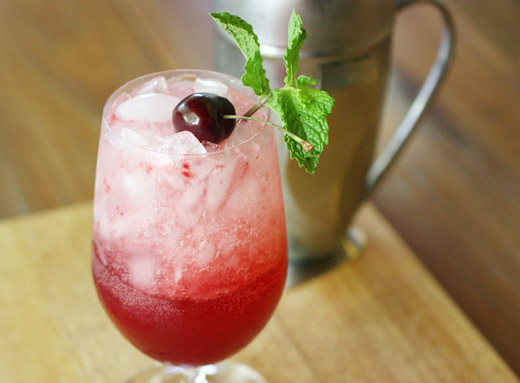
The name of this cocktail makes it sound more lethal than it really is. Porch Sitter might be a better title for it. It’s a fruity, zingy ice-cold drink for summer, and it’s a perfect excuse to sit down and put your feet up for a minute or two. I did some searching on the name Porch Crawler and learned it’s a common name for highly alcoholic drinks with some sweetness and fruit. This one just has a little rum, not a mix of different spirits, but it does have fruit. I had every intention of making this at some point last summer after cutting the page from the April 2011 issue of Food and Wine, but the weeks flew by and cherry season was over before I knew it. So this year, it had to happen. Fresh, pitted cherries are muddled with mint leaves and a halved serrano chile. When you taste it, you don’t really notice the chile at first since the fruit and mint get all the initial attention. Then, you realize there’s something else going on here. It’s just a hint of heat to make things interesting.

Stem and pit a handful of cherries, and place them in a cocktail shaker. Add a few mint leaves and a halved serrano chile. You can remove the seeds from the chile if you’d like to make it milder. Muddle those ingredients in the shaker, and then add some ice. Next, add rum, lemon juice, and simple syrup, and shake until cold. Strain the cocktail into a glass with ice, and top with club soda.

I suppose it’s possible you could end up needing to crawl if you consumed enough of these, but I’ll still argue it could use a better name. I wouldn’t change anything else about it though. And, I still have time to make a few more before cherries disappear for this year.


Tuesday, May 8, 2012

Green Herb Ceviche with Cucumber

The 2012 James Beard Foundation award winners were just announced. In Austin, we're all extremely proud of Paul Qui who won Best Chef Southwest. This year's Outstanding Chef was Daniel Humm. The James Beard Foundation has been giving annual awards since 1990, and the foundation celebrated its 25th anniversary in 2011. I received a review copy of the book The James Beard Foundation's Best of the Best which honors all the recipients of the Outstanding Chef title from the first that was awarded through the 2010 award. While this isn't a cookbook for quick and easy weeknight dinners, it is a wonderful collection of bios of all the Outstanding Chefs, and each bio is accompanied by a signature dish or two or three from the chef. I probably won't attempt the Hot Potato, Cold Potato, Black Truffle, Parmesan dish from Grant Achatz who won in 2008, but it is fascinating to read about how it's made after reading about Achatz's career. There are photos of most of the dishes, and the salads are all gorgeous and very approachable. There's a Beet Salad with Mango, Feta, Orange, and Mint from Alfred Portale, a Greenhouse Salad with Blue Hill Farm Yogurt from Dan Barber, and a Summer Salad from Alice Waters. I'd love to adapt and simplify a couple of the recipes like the Chilled Honeydew Melon Soup with Crab Remoulade from Jeremiah Tower and the Spice-Roasted Lobster with Buttermilk Chutney from Tom Colicchio. What was most interesting about this book was learning how several of these chefs have worked together or under some of the same chefs at some point in their careers. And, did I mention the photos of the food? There is page after page of very beautiful food.

While most of the recipes are somewhat complicated chef dishes shown just as they are served at the restaurants, a few of them are very doable. One of those is the Green Herb Ceviche by Rick Bayless who was Outstanding Chef in 1995. Here in Austin, we're surrounded by many, great Mexican restaurants, and I order ceviche from their menus often. The few times I've made it at home, I went the simple, classic route with lime juice and chiles. This ceviche caught my eye because it started with an herb seasoning made with garlic, serranos, cilantro, parsley, and olive oil. The chiles and garlic were roasted before being pureed with the other ingredients. Some of that puree was mixed with lime juice for the marinade for the fish. I used halibut which was cut into small chunks before being left in the lime juice mixture for about an hour. Small chunks of cucumber were marinated with the fish as well. Just before serving, chunks of avocado were added to the ceviche.

I loved the herby green of this ceviche, the fresh crunch of cucumber in it, and of course the avocado. I have to say, it's fun to attempt to cook like an Outstanding Chef. It's also fun to flip through a yearbook of sorts of some of our very best American chefs.

Green Herb Ceviche with Cucumber (Ceviche Verde con Pepino)
Recipe re-printed with publisher's permission from The James Beard Foundation's Best of the Best.

Herb Seasoning
1/2 head garlic, cloves broken apart
2 or 3 fresh serrano chiles
1 medium bunch cilantro, thick bottom stems cut off (1 cup packed) 1
 small bunch flat-leaf parsley, thick bottom stems cut off (1 cup packed)
1/2 cup olive oil salt

Ceviche
1/4 cup fresh lime juice, plus more if needed
1 1/2 pounds sashimi-quality skinless, boneless fish fillets, such as Alaskan halibut
7 ounces small pickling cucumbers or Persian (baby) cucumbers, cut into 1/2-inch cubes
Salt, if needed
2 ripe large avocados, pitted, flesh scooped from skin and cut into cubes
Lettuce leaves, preferably butter lettuce, for garnish

To make the herb seasoning
1. Set a dry skillet over medium heat. Lay in the unpeeled garlic cloves and chiles. Roast, turning frequently, until they are soft and blotchy brown in spots, about 10 minutes for the chiles and 15 minutes for the garlic. Cool until easy to handle, and then slip the skins off the garlic, pull the stems off the chiles, and roughly chop (no need to remove the seeds). Put them in a food processor along with the cilantro, parsley, oil, and two generous teaspoons salt. Process until nearly smooth (it will be pasty). Scrape the mixture into a storage container and refrigerate until serving time.

To make the ceviche
1. In a large bowl, whisk together the lime juice and 1/2 cup of the herb seasoning. (Cover and refrigerate the remainder for another preparation.) Add the fish and cucumber, and stir to combine. To blend the flavors, cover and refrigerate for 1/2 hour (for best results, no more than one hour). Taste and season with a little more lime juice or salt if needed, then gently stir in the avocado (save a little for garnish if you want). Serve on plates or in martini glasses lined with lettuce leaves.

Serves 6 to 8 as a starter

I am a member of the Amazon Affiliate Program.

Monday, June 7, 2010

Tamarind Chicken

I somehow managed to take what was supposed to have been a quick and simple stir fry and turn it into a two-day preparation. This meal is from the book Modern Spice, and the focus of this book is on updated, doable dishes that bring forth the great flavors of Indian cuisine without extreme effort. And, I completely ruined that concept when I went and made my own chutney. After calling around town in an attempt to locate prepared tamarind-date chutney, I learned it was available at one market. When I arrived at that market, there were several other chutneys from various brands and some wonderful, natural, preservative-free options. However, there was only one brand of tamarind-date chutney, and it was not so free of preservatives. A quick online search led me to a simple recipe for making my own, and so instead of purchasing a jar, I bought jaggery, tamarind paste, and dates. I exaggerated a bit when I said I stretched this into a two-day process because making the chutney takes about 15 minutes total, and the stir fry comes together in not much longer. I just made the chutney in advance so the meal itself would be an especially quick one. I’m happy to have my homemade chutney and plenty of it because it’s also used in recipes for peanut tikkis, tamarind-glazed honey shrimp, catfish curry, and the tamarita which is a tamarind-flavored margarita.

You can use brown sugar instead of jaggery, but since I was going to the trouble of making a homemade chutney, I wanted it to have the flavor of jaggery. That flavor is like molasses with a hint of smokiness. I bought enough that I can use some for cookies, and I can’t wait to taste them. Chunks of jaggery are very firm, and the best way to make them usable is to whack them with a hammer. I put a big chunk in a plastic bag, covered that with a towel so the plastic wouldn’t rip, and gave it a few wollops. It crumbled into a powdery pile after just a couple of hits. The jaggery was combined with pitted dates and water in a saucepan, and that was simmered for about eight minutes. Tamarind paste was added, it was blended until smooth, and then it went back into the saucepan with hot chile powder, ground ginger, garam masala, and salt. It simmered again until thick, and then I refrigerated it until the next day. Making the stir fry was as simple as can be. Chicken was cut into cubes, serrano chiles were halved, garlic was sliced, and shallots were chopped. The shallots, chiles, and garlic cooked for a bit in vegetable oil, and then the chicken was added. Once the chicken was cooked through, turmeric, red chile flakes, and salt were added, followed by the tamarind-date chutney. All the while, basmati rice was cooking.

I sliced a piece of serrano to use as garnish, but I should mention that those slices were not needed for any added spice. The halved serranos that cooked in the oil along with the red chile flakes gave the dish a very good level of heat which I enjoyed. The chutney was a nice, sweet, sour counterpoint to that heat giving the dish exciting, varied flavor. This is a meal that will be repeated often, and next time I’ll think to mix up some tamaritas while the rice starts cooking.


Monday, August 17, 2009

Redfish and Shrimp with Coconut and Lime Sauce

I think we skipped spring cleaning this year which may be why we’re now doing summer cleaning. And, really, re-organizing may be a better word for what is being done. Either way, it’s always interesting to find things that have been stored away for several years that make you wonder why on earth you bothered keeping them. It’s fun to get those things straight into the trash and start filling up the space with something else. What’s even more fun is finding something you forgot you had and then putting it to use. This recipe falls into that last category. It was included in a booklet that was mailed by our grocery store, Central Market, and that was a booklet mailed several years ago. I cut out the page, filed it away, and then finally re-discovered it over the weekend. The original recipe included a pan sauteed fish, but I used grilled fish and shrimp instead. I wanted to use a light, flaky, white-fleshed fish and chose Texas redfish, and the shrimp were from the Gulf.

While the fish and shrimp were on the grill, the sauce was prepared in a saute pan on the stove. I was able to use some of my own lemongrass which I’ve been watering constantly this summer, and the peeled white ends were combined with coconut milk, lime juice, lime zest , sliced ginger, sliced serrano chiles, and salt. That was brought to a boil and stirred while boiling for five minutes. I left the lemongrass and sliced ginger in the pan as the sauce was spooned over the fish and shrimp. Then, I added some sliced, fresh serrano and chopped cilantro as garnish.

I pushed the chile heat in the sauce to the high end of the scale, but that can easily be controlled by removing the seeds and membranes from the chiles before chopping them and by reducing the amount of chiles. When I tasted the sauce, I thought it would also be great for steaming mussels or clams, and I can’t wait to try that. It’s a very low-effort sauce that delivers big flavor for a light, summery dish. I kept the meal simple by serving this with a fresh and crunchy Thai salad. This was proof that being a pack rat isn’t all bad, but why do we always think we’ll someday need those random scraps of wood and all those extra tiles?

Coconut and Lime Sauce


2 stalks lemongrass
1 c coconut milk
3 T freshly squeezed lime juice
½ t grated lime zest
8 thin slices peeled ginger
2 serrano chiles, thinly sliced (or to taste, or remove seeds and membranes and chop)
1 t salt
additional sliced serrano and chopped cilantro leaves for garnish if desired

-peel the lemongrass and trim to the white part; bruise the white parts of the stalks with the back of a knife; in a saute pan, combine the lemongrass, coconut milk, lime juice, lime zest, ginger, chile, and salt; bring to a boil, stirring frequently; boil for five minutes to reduce sauce slightly;


Monday, April 6, 2009

Crema de Guacamole with Crunchy Topopos

This past weekend, we had the opportunity to entertain some friends one more time before they leave Austin to embark on new adventures. My goal for this dinner party was to piece together a menu that hinted at local flavors and highlighted local ingredients. Also, I wanted to exploit our friends’ willingness to act as tasting guinea pigs once more. I kid, but they have been quite kind and patient about tasting my experiments over the years. Not every item on the menu was a first-time test. The dinner began with Feisty Jamaican Splash cocktails and Tuna Tostadas. Up next, I served a chilled crema de guacamole soup from Super Natural Cooking. SNC is the beautifully designed book by Heidi Swanson of 101 Cookbooks. The book contains a wealth of information about many whole and natural ingredients and how to use them in various ways. It’s organized by concept such as Know Your Superfoods and Explore a Wide Range of Grains. This recipe is from the Cook by Color chapter. It’s described as a perfect make-ahead soup, and that made it ideal for our dinner party.

There are two main parts to the soup, and the first involves cooking chopped tomatillos, serrano chiles, white onion, and garlic in vegetable stock. Once the tomatillos became tender, the mixture was blended until smooth and passed through a strainer. When cool, lime juice was added, and this soup base was chilled for a couple of hours. The second part of the soup was avocado blended with cilantro, salt, and lime juice. The two parts were then blended together. Topopos were made by cutting thin strips of corn tortillas and frying them for a few minutes per side. As they drained on paper towels, they were seasoned with salt and lime juice. To serve, I spooned the soup into espresso cups. The garnishes included the topopos, a little swirl of crema or thinned sour cream, and a tiny dollop of fresh tomato salsa.

The soup was thick, smooth, and deliciously fresh tasting. The tomatillos and lime juice acted together to brighten the flavor. The serranos gave it just enough of a kick, and the garnishes brought together all the elements I so love in Mexican cuisine. I wondered if the nice green color would dull as the soup chilled, but it did not. It was as pretty when it was served as it was a few hours before when it was blended. It was a great way to start this meal, and I’m looking forward to trying many more things from this book.


Thursday, March 19, 2009

Shredded Salad with Chicken and Peanut Sauce over Rice Noodles

Back to the files I went, and there are so, so many things in those files. I was in spring cleaning mode, and I managed to sort through two bulging folders of recipes before it was time to do something else. It’s kind of fun to look back and see what pages I cut out of magazines years ago. Some recipes are things I’ve tried since then from other sources and no longer require the pages I saved. With other recipes, I can’t believe they’ve been hidden away for so long and I still haven’t tried them. Such was the case with this salad. My best guess is that it came from a summer issue of Living in 2002. I just searched that site and couldn’t find the recipe, so I’ll include my version at the end of this post.

On a side note, I finally made a trip to MT Supermarket to shop for noodles and whatever else caught my eye. I have to say I was overwhelmed by the number of choices of everything. There are countless varieties of rice, soy sauces, fish sauces, vinegars, and on and on. I literally could not decide which noodles to buy and came home with so many my pantry is overflowing. For anyone in Austin who hasn’t gone there yet, I highly recommend it.

But, back to the salad. There is a lot of chopping and shredding and poaching and cooking, so allow plenty of time to complete it. Or, make the peanut sauce or do some chopping in advance. Every layer of this dish is full of flavor beginning with the chicken. Chicken breasts were poached with ginger, garlic, cilantro stems, and sesame oil. The vegetable mixture included cabbage, carrots, serrano chiles, green onions, mint, and cilantro leaves. And then, the peanut sauce is a powerhouse of flavor accenting everything else. This is exactly the kind of dish in which you can add more of a favorite item, leave out one you don’t like, and still have a very interesting combination. The chicken was tender and delicious, but as I was cooking it, I was thinking about how tofu would be just as good and much quicker. I used green cabbage, but savoy or napa would have been great. I shredded it very thinly on a Benriner, but thicker pieces would have added nice texture. I think I say this of every recipe, but next time, I’ll add more chiles. It’s not just me. Kurt always requests more chile flavor and heat as well. So, change this or add that, and you’ll still have a fantastic salad.

To poach the chicken:
1 three-inch piece of ginger, thinly sliced
4 garlic cloves, peeled, smashed and cut in half
10 cilantro stems
2 T toasted sesame oil
1/2 t salt
2 large, bone-in, skin-on chicken breasts

-in a large saute pan, add ginger, garlic, cilantro, sesame oil, and salt and enough water to reach halfway up the side of the pan; bring to a boil over high heat; add the chicken, reduce heat to medium, and cover; simmer until chicken is cooked through; remove from heat and let stand until cool enough to handle
-transfer chicken to a cutting board; remove skin and cut meat from bone, cut meat into small strips or shred with your fingers

Prep vegetables and herbs:
1/2 head green cabbage (or savoy or napa), cored and thinly sliced
6 carrots, peeled and thinly sliced or julienned on slicer
3 serrano chiles, seeded and thinly sliced into long strips
1 bunch green onions, thinly sliced white and green parts
1/2 c fresh mint leaves, chopped
1/2 c fresh cilantro leaves, chopped

-place all sliced and chopped vegetables and herbs in a large mixing bowl

Peanut Sauce:
1 five-inch piece of ginger, peeled and grated
2 shallots, peeled and minced
1/4 c fish sauce
1/2 c soy sauce
3/4 c freshly squeezed lime juice
1 c smooth, natural peanut butter
1/4 c toasted sesame oil
2 T water if needed

-in a large measuring pitcher, combine ginger, shallots, fish sauce, soy sauce, and lime juice; whisk in peanut butter; whisk in sesame oil; if sauce is too thick, whisk in water starting with one tablespoon and adding more as needed

To finish salad:
1 pound rice vermicelli noodles
1/2 c roasted, unsalted peanuts for serving

-bring a large pot of water to a boil; cook noodles according to package instructions or until al dente; transfer to a colander to drain; rinse under cold water, drain, and place on a serving platter
-add prepared chicken to bowl of vegetables and herbs and toss to combine; pour half of the peanut sauce over this mixture and toss to coat; taste and add more peanut sauce as desired
-to serve, top noodles with chicken salad mixture, drizzle with some remaining peanut sauce, sprinkle with peanuts, and garnish with any extra herbs or green onions


Tuesday, March 10, 2009

Andhra Scrambled Eggs with Hot Chile Oil Paste

I read Mangoes and Curry Leaves when I received it a few years ago, and it’s a beautiful, informative, well-crafted book. I also have Alford and Duguid’s equally gorgeous, newer book, Beyond the Great Wall, and it’s sitting in my to-read stack. Their books are part travel memoirs, but they are mostly in-depth looks at completely authentic regional foods. Despite having enjoyed reading Mangoes and Curry Leaves, I hadn’t cooked anything from it simply because I’m a big, big chicken. I feared failing horribly at my attempts to re-create what looks so incredible in the photos, and sub-continent cuisine is not my forte. I do wish to learn though, and there’s only one way to do that. So, what we have here today is the first item I cautiously attempted, and Kurt even more cautiously tasted. He knows when there’s a good chance we’ll have a failure on our hands, and he was rightly concerned when I announced I was going to make Andhra scrambled eggs.

The introduction to this recipe explains that these eggs are like ones author Jeffrey Alford had at a tea shop in rural Andhra Pradesh which is a day’s drive north of Chennai (Madras). To make the eggs, they were whisked in a bowl with some salt while sesame oil was heated in a large skillet. Minced garlic and ginger, chopped shallots and chiles, and turmeric were added. The chiles specified here were cayenne which I can never find in local grocery stores, although I did receive a few in a CSA pick-up last summer. I used serranos instead. Those ingredients were stir-fried in the sesame oil for a couple of minutes before chopped tomato was added. After another couple of minutes the eggs were added and stirred about to mix everything together. Once just barely set, the eggs were transferred to plates and topped with chopped cilantro leaves.

I was feeling a little cocky since this was just a simple egg dish, so I went ahead and made the hot chile oil paste from the front of the book as well. This involved chopping ginger, garlic, and dried red chiles in a food processor and then placing that in a heat-proof bowl. Minced scallions were added to that bowl. Then, vegetable oil was heated in a skillet until almost smoking, it was poured over the mixture in the bowl, and it was allowed to cool. I poured this cooled mixture into a jar with an air-tight lid, and it will last in the refrigerator for up to one month. I’m looking forward to using it as a condiment on all kinds of things like grilled chicken or fish, maybe a dollop on some soup, and maybe even use some on plain scrambled eggs. For the Andhra scrambled eggs, it was an added punch to an already very flavorful dish, but we used a little anyway.

And, the result? Satisfactory all around. Kurt was pleasantly surprised with the level of success achieved here and quite enjoyed the dish. I may have worked up enough confidence to attempt some other things. I’ll have to remember to plan ahead and allow plenty of time for tracking down some ingredients like curry leaves, but I’m looking forward to learning more and experiencing more of the food described in the book.


Blogging tips