Showing posts with label haloumi. Show all posts

Thursday, April 21, 2022

Syrian-Style Flatbreads

Savoir vivre
, I think, sums up the lure of French style. It’s defined near the beginning of the book Work Food: Paris of which I received a review copy. It means “having an intelligent approach to enjoying life, greeting each situation with refinement and poise.” The reader is encouraged to “embody this attention to detail” when preparing the dishes in the book for results that are emblematic of Parisian cuisine. That sounds almost strict, but the stories throughout the book actually showcase a very down-to-earth, welcoming style of entertaining and cooking at home. But, the cooking described is done with care and with specific ingredients suited to the time of year. One very casual entertaining option mentioned is the apero dinatoire which involves an offering of charcuterie, cheeses, simple dishes either purchased or quickly made like slow-roasted cherry tomatoes, breads, etc. The classic French dishes and anecdotes with the recipes are splendid. There’s a spinach tart inspired by a grandmother’s recipe made after a trip to a street market for the freshest spinach. Herb-Poached Fish with Beurre Blanc Sauce and pickled shallots is a recipe shared from mother to daughter with coaching via video call. You’ll find Coq au Vin, Steak Frites, and Quiche Lorraine among the well-known French favorites. There are also descriptions of French breads, wines, and cheeses to keep in mind. In the sweets chapter, I was enchanted by the Parisian Black and White Cookies and had to try them. Shortbread dough is made in both vanilla and chocolate. Then, two logs are formed: one with chocolate dough in the center and vanilla wrapped around and a second made the opposite way. Sadly, my dough turned out a bit dry, and I blame the flour that sometimes needs more moisture than it should. I wasn’t happy with the look of my cookies, but the taste was delicious. The Creme Brulee, Ile Flotantes, and Crispy Almond Cookies beckon as well. But, what repeatedly caught my attention as I read through the book were the dishes that aren’t traditionally French. The Tunisian Salad with preserved lemon and harissa, the West African Rice with Fish and Vegetables with chile-marinated and panfried fish, and the Syrian-Style Flatbreads added some interesting flavor twists to the collected recipes here. It was the photo of the flatbread that inspired me to try it. 

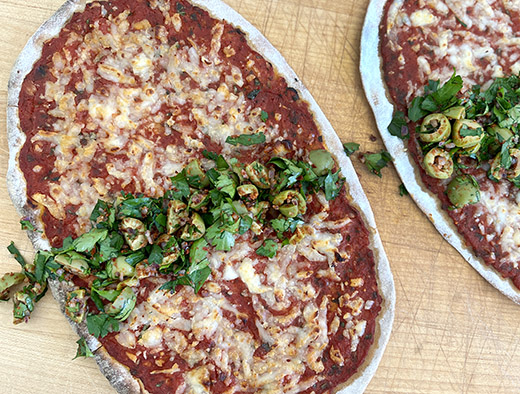
I’ve read a little about lahmajun, or Syrian flatbread, before. The crust is so thin. In the book, it’s topped with spicy ground lamb. I went a different route and topped mine with grated halloumi, but I used the sauce as written. The dough was just flour, water, and salt. After mixing, it was set aside while making the sauce. The sauce was a mix of grated tomato, minced garlic, minced onion, parsley, cayenne, and cumin. The dough was divided, rolled into ovals that were placed on parchment paper, topped with sauce and grated cheese, then transferred to a pre-heated baking sheet, and placed in a hot oven just until the edges began to brown. The dough should remain foldable and not become crisp throughout. A bright, fresh topping was made from parsley leaves, minced onion, Aleppo pepper, and I added chopped olives. That mixture was spooned on top of the flatbreads before serving. 

What I learned about this type of flatbread from this recipe is that you should roll it up and eat it like a burrito. That was a fabulous way to enjoy it. Bits of the edges of crust were crunchy, but the center was tender enough to roll. There was a hit of spice from the Aleppo pepper and freshness from the parsley. Now, I just need to experience this while actually in Paris.

I am a member of the Amazon Affiliate Program. 

Tuesday, January 12, 2016

Brussels Sprout, Chickpea, and Haloumi Sandwich

Aaaaaand, I’m back. We’ve moved back to our permanent property, into our new house, and I’m finally using my new kitchen. Regarding moving into a new house during the holiday season, I only recommend it if you’ve been waiting way, way too long for said new house to be completed. Otherwise, the whole process is much better suited to a time when you’re not missing all the celebrating and relaxing going on all around you. But, we’re so glad to be back. Waking up in the morning and looking out the window at our own yard and our own plants and trees is a delight. As soon as I got somewhat organized in the kitchen, I located my always-growing, to-try stack of recipes. The stack gets shuffled and reordered from time to time, and I lose track of what’s in there. After spending a few minutes flipping through the pages, I found some gems I couldn’t wait to make. First, I whipped up the Mafaldine with Shrimp and Lemon from last March’s Living magazine. Next, I found the open-faced sandwich shown here that was from the October/November 2012 issue of Donna Hay magazine. My first thought was: which farms have local Brussels sprouts right now? The following morning, I saw a post on Facebook showing what was available at Boggy Creek Farm—including Brussels sprouts. Off I went, and I got there just in time to nab the last little basket of them. I found the green onions I needed at Springdale Farm. And, I wasn’t sure I’d find local mint at this time of year, but Springdale did still have some growing. This was going to be a fresh and lovely sandwich. 

The parts of this recipe are a mix of home-cooked and store-bought. I bought the sourdough bread and the hummus, and the chickpeas came out of a can. And, I made a few minor changes. The intent was to pull the leaves from each Brussels sprout, but these were fresh, tightly bundled, little heads I had brought home. As I cut the ends from each sprout, I collected any leaves that fell to the side and left the remaining sprouts intact. The sprouts and leaves were boiled briefly in salted water and then drained and rinsed in cold water. The canned chickpeas were rinsed and drained as well before being sauteed with garlic and chile flakes. After about 10 minutes, the chickpeas take on a darker, golden color and get crispy on the edges. You should mash some of the chickpeas as they cook as well, and the mashed ones get the crispiest. The next item to prep is the haloumi, and it was sliced and fried in olive oil until browned. The cooled Brussels sprouts were added to a mixing bowl with sliced green onion and chopped mint. Chopped cucumber was to have been added as well, but I skipped it. I wanted to make this all about the Brussels sprouts. Lemon, olive oil, and salt and pepper were added to the bowl, and the mixture was tossed to combine. To assemble the sandwiches, I toasted slices of sourdough, spread each piece with hummus, topped the hummus with the sauteed chickpeas, layered on haloumi slices, and spooned the Brussels sprouts mixture on top. 

This is a knife-and-fork kind of open-faced sandwich but deliciously so. After my first bite, I was so glad I located and included the mint. It added a brightness and freshness to the lemony vegetable salad. And, haloumi. No explanation required. It continues to be one of my favorite ingredients. Overall, this was a great combination for a vegetarian sandwich. I have several new books to cook from as I continue to break in my new kitchen and try to remember where I’ve put everything. Stay tuned for more food coming soon. Happy New Year! 


Saturday, October 3, 2015

Crispy Haloumi Cheese with Dates, Walnuts, and Apples

Sometimes new cookbooks don’t draw me in right away. I might need to read a few pages to get a feel for the style of cooking in the book, and eventually I start getting excited about the dishes. That was not the case with Zahav: A World of Israeli Cooking. My first look inside the review copy I received had me completely intrigued. The colorful, vibrant salads and vegetables dishes, the various rice dishes and pilafs, and skewers of grilled chicken and salmon with flavorful marinades left no doubts that I’d enjoy this book. Zahav, the restaurant, opened in Philadelphia in 2008, and this book presents the mix of dishes from the menus over the years. Chef Michael Solomonov writes that these dishes “make an impression of a cuisine that is evolving.” They reflect an idea of Israeli cooking, but at times, traditional approaches are changed to accommodate what’s available and in season at the restaurant. I like this thought of the food giving a sense of a culture and a place and not sticking too strictly to original versions. I learned that “tehina” is the same thing as “tahini,” and it’s invaluable in Israeli cooking. It’s used to add richness without the use of cream or butter for keeping kosher. It’s used in hummus, of course, but also in many other applications both sweet and savory. For instance, there’s a vegetable dish in which cooked green beans are mixed with sauteed mushrooms and tehina sauce and then topped with lentils and crispy garlic. I’m noting that for my Thanksgiving menu. One recipe I already tried was the Latke with Gravlax. It’s one big latke made in a skillet and turned in one solid piece. There’s no onion, flour, or egg, just grated potatoes cooked in oil. It was simple, crispy, and delicious. The vegetable-filled borekas are similar to turnovers and are made with a dough kind of like puff pastry, and I want to try them all. I also want to attempt making laffa flatbread. The recipes in the book quickly caught my attention, but so did the writing. Solomonov shares his stories about living in Isreal at different times and his training as a chef. There are interesting historical insights like the fact that Israeli couscous was first made as a wheat-based substitute for rice when there was a rice shortage. And, there are explanations about the mix of cultures that make up Israel and how the food represents many different origins. There’s so much to appreciate here from the Pumpkin Broth with Fideos soup to the Chocolate Babka served with cardamom-flavored Turkish Coffee Ice Cream. 

I’ve been making use of our fall fruits in salads like arugula with pears, gorgonzola, and pecans and mixed greens with apples, pecans, and goat cheese. I can’t get enough of the mix of sweet, tart, nutty, and salty. With these flavors already on my mind, I had to try the Crispy Haloumi Cheese with Dates, Walnuts, and Apples recipe. And, I can never resist a dish with haloumi. Pitted dates, toasted walnuts, olive oil, sherry vinegar, pinches of salt, and some hot water were combined in a food processor and pureed until smooth. This paste formed the base of the dish. Next, cubes of haloumi were sauteed in oil until golden on all sides. These were set on top of the date paste. Last, an apple was cut into matchsticks, and I used a Benriner, and those little sticks were perched on top of the haloumi. Dill and Urfa pepper were sprinkled on top to finish the dish. 

In the head note for this recipe, it’s mentioned that this dish cannot be taken off the menu at the restaurant because it is so well-loved. I can understand completely. This is such a good mix of textures and flavors, and haloumi works its magic when paired with something a little sweet like the dates here. And, crisp, fresh apple brightens the combination. Now, I need go shop for fideos to try that soup I mentioned, and I really want to attempt making Persian rice and about 20 other recipes as well. 

Crispy Haloumi Cheese with Dates, Walnuts, and Apples 
Recipe reprinted with publisher’s permission from Zahav: A World of Israeli Cooking

Serves 4 

1 cup roughly chopped dried dates 
1/2 cup walnuts, toasted and chopped 
1/3 cup olive oil 
1 tablespoon sherry vinegar 
Kosher salt 
Canola oil 
8 ounces haloumi cheese, cut into 1-inch cubes 
1 apple, peeled and cut into matchsticks 
Chopped fresh dill 
1/2 teaspoon ground Urfa pepper 

Combine the dates, walnuts, olive oil, vinegar, a couple pinches of salt, and 1/2 cup hot water in a food processor and puree until smooth. Set the date paste aside. 

Film a skillet with canola oil and heat over medium-high heat until the oil is shimmering but not smoking. Arrange the cheese cubes in a single layer in the skillet and cook, turning, until the exteriors are golden and crisp, about 2 minutes per side. 

Spread the date paste over the bottom of a serving plate and add the fried haloumi. Top with the apple, dill, and Urfa pepper, and serve immediately. 

I am a member of the Amazon Affiliate Program.

Sunday, February 15, 2015

Fatayer with Cheese and Spinach

If I’d been asked a few weeks ago what I knew about Lebanese food, I would have said that I didn’t really know anything. It turns out, I’ve been enjoying the flavors of Lebanese cooking for years without even realizing it. I received a review copy of the new book Comptoir Libanais: A Feast of Lebanese-Style Home Cooking by Tony Kitous and Dan Lepard and started learning a thing or two about this wonderful food. Kitous opened the London restaurants Comptoir Libanais to share Lebanese culture through the food, the look and feel of the dining rooms, and the design of every item seen throughout. He set out to create “something that wasn’t pretentious but inviting, simple, and that had something for everyone.” I’d love to visit one or several of the locations. A mix of mezze dishes like Tabbouleh, Fattoush, Labneh with Black Olives and Mint, Sambusak turnovers, and Falafel might be found on the tables. Some of my favorite ingredients like halloumi and feta cheeses, pomegranate seeds and pomegranate molasses, and sumac and za’atar figure prominently in many of the recipes. I can’t wait for ripe, summer tomatoes to use in the Comptoir Tomato and Halloumi Salad and zucchini to turn into crispy fritters. So far, I’ve tried the Bulgur Salad with Peas and Mint which is a good choice for winter since it’s topped with pomegranate seeds and can be made with frozen peas. Like classic tabbouleh, this salad is as much or more so about the mint and parsley as it is the bulgur. Next, I tried the Fatayer with Cheese and Spinach which are filled, savory pastries. They’re made with Sambusak Pastry that’s like pizza dough minus the yeast. The dough is very easy to work with, and it’s used for a few different recipes in the book. 

To start, water, flour, olive oil, honey, and salt were stirred together in a bowl. It was set aside to rest for about 10 minutes, and then it was kneaded until smooth. The dough easily goes from ragged to smooth while kneading. At this point, the dough can be refrigerated until you’re ready to make the pastries, or it needs to be set aside for an hour to rest before using. Next, spinach was cooked in olive oil until wilted and then drained, cooled, and squeezed to remove excess moisture. The cooked spinach was chopped and then combined with toasted chopped walnuts and pomegranate molasses. The dough was divided into small pieces, and I aimed for 20 pieces which was the number this recipe was intended to make. The dough pieces were rolled into balls and left on an oiled plate. One piece of dough at a time was rolled into a circle, and a spoonful of spinach filling was placed in the center. The edges of the dough circle were rubbed with water, and the dough was pinched up around the filling forming three points with the center left open. Once all the dough circles were filled and crimped, the cheese was added on top. I used a mix of grated halloumi and crumbled feta. The cheese mixture was spooned into the opening of each pastry, and then they were topped with black onion, or nigella, seeds. The pastries baked for about 30 minutes until golden and crisp on the edges. 

As an option, mozzarella can be used in place of the halloumi. That would have made the filling more melty and gooey in a delicious way, but I can never resist the salty flavor of halloumi. These little savory pastries were crunchy with crisp edges on the outside and the nuts in the filling. The pomegranate molasses added just the right amount of tanginess and interest. Like all of the dishes in the book, this was perfect for sharing with a group or serving at a party. And, since the Breakfast chapter has caught my eye, it might be time to plan a brunch party.

Fatayer with Cheese and Spinach 
Recipes reprinted with publisher’s permission from Comptoir Libanais: A Feast of Lebanese-Style Home Cooking by Tony Kitous and Dan Lepard. Copyright © Tony Kitous and Dan Lepard, 2013. Published on November 19, 2014 by The Overlook Press, Peter Mayer Publishers, Inc. www.overlookpress.com. All rights reserved. 

Fatayer are usually triangular-shaped pastries, either sealed at the top or left open. Sealing the edges of the pastry at the top protects the filling so it’s perfect or you can leave the top open the way we do at Comptoir and pinch the edges of the filled fatayer to form a triangular shape as in the photo here. If you sprinkle a deep layer of cheese on top before baking, any filling underneath is protected from the heat of the oven, allowing the pastry to be crisp but the filling soft. 

Makes about 20 small fatayer 

1 recipe Sambusak Pastry 
flour or oil, for rolling the dough 

for the filling: 
2 tbsp olive oil 
1 pound (500g) baby spinach 
1/2 cup (50g) walnuts, chopped 
2 tbsp pomegranate molasses 
5 ounces (150g) halloumi or mozzarella, drained and grated or finely chopped 
5 ounces (150g) feta cheese, crumbled 
small bunch fresh mint, leaves only, chopped 
black onion (nigella) seeds or za’atar, to finish 

Start by preparing and resting your dough (see p. 82). Preheat the oven to 350°F (180°C/160°C fan/gas 4). Line a few baking sheets with parchment paper. 

Make the filling by heating the olive oil in a large frying pan until smoking hot, then add the spinach and fry quickly until it just begins to wilt. Tip the spinach into a colander and set aside to cool, then squeeze the cooked spinach as hard as you can to remove the liquid. Chop the spinach, then place it in a bowl with the walnuts and pomegranate molasses, and mix well. 

Chop the dough into small pieces, about the size of an unshelled walnut, then shape these into balls and set aside to rest on an oiled plate, covered, for 15 minutes (this makes rolling easier). Roll out each dough ball on a lightly floured or oiled surface to about 3 inches (8cm) wide. Place a heaping teaspoon of the spinach filling in the center of one, then with the tips of your fingers rub a little water around the bare edges of the dough. At 3 equal points, pull the dough up 1/2 to 3/4 inch (1 to 2cm) and pinch the dough together to seal — you should have created a protruding edge around the filling. 

Spread the cheese over the filling, then top with a pinch of mint, sprinkle with the black onion seeds or za’atar, and place on the lined baking sheets. Repeat with the remaining dough and filling, then bake for about 30 minutes, until crisp and golden, rotating the baking sheets if one batch looks like it is browning more quickly.

Sambusak or fatayer pastry 
Little pastries filled with a variety of ingredients, from chopped herbs and soft cheese to meat, walnuts, or chicken, can be found throughout the Arab world, under different names. These cheeky little savory parcels have a delicious filling tucked inside and can be served either hot or cold. They freeze well, and because they’re so small they can be reheated easily. You want a flour that produces a dough that stretches easily, and bread flour will do that. However, this can make the pastries a little tough and not as tender as the ones we have at Comptoir. If you want to experiment, use half bread flour and half all-purpose flour or half Italian pasta flour, as this will give a more tender result. 

Makes 12 ounces (350g) dough 

1/2 cup (125ml) warm water 
1 1/2 cups (200g) bread flour, plus extra for kneading 
1 1/2 tbsp (25ml) olive oil 
1 tbsp superfine sugar or clear honey 
1 tsp salt 

Pour the water into a bowl, then add the flour, olive oil, sugar or honey, and salt and mix everything together well. Aim for a firm-ish dough, adding more water or flour to get the texture you want. Cover the bowl with plastic wrap, set aside for 10 minutes, and then lightly knead the dough. Return it to the bowl, cover again, then set aside for about 1 hour at room temperature and it’s ready to use. If you want to make the dough ahead of time, you chill it at this point, then leave it at room temperature for 1 hour before shaping. 

Some basic tips for making the best pastries: roll the dough very thin, otherwise you end up with too much pastry surrounding the filling. I use a little flour, as oil sometimes stops the edges from sealing firmly, but figure out what works best for you. The dough will keep well in the fridge for a few days, and gets easier to roll, but it will change color and go slightly gray. This is just the flour oxidizing and it won’t affect the flavor. You can also freeze the dough. Simply thaw it and return it to room temperature before using.


I am a member of the Amazon Affiliate Program.

Monday, April 1, 2013

Spinach and Red Quinoa Salad with Pecans and Halloumi

I realize this just looks like a spinach salad, but there’s a lot more going on in there. For one, it was intended as a quinoa and spinach salad, and I did use the entire suggested amount of quinoa, but I had a lovely bunch of spinach and wanted to use every bit of it rather than only a couple of handfuls. So, the extra spinach is hiding a lot of the red quinoa. But, that’s not all. There are also chewy pieces of dried apricots, toasted pecans and pumpkin seeds, and a tangy dressing with pomegranate molasses and lemon juice. And, the grilled halloumi is seasoned with ras-el-hanout. All those lovely flavors combined to make much more than some simple, spinach salad. I found this dish in the book New Vegetarian Kitchen which was an impulse buy a few weeks back. I was standing in the coffee bar line at Whole Foods when I saw the bright green cover of this book on a display and naturally grabbed a copy to peruse while my cappuccino was being made. In it, there are things like Watermelon Curry on Black Lentil Cakes, Bhel Puri on Poppadom Crisps, Spring Vegetables with Crunchy Walnut Crumble and Harissa Mayonnaise, Vietnamese Tofu and Mango Salad Cups, and many other things I want to try. The variety of dishes including sweet, savory, starter, and main convinced me I needed to take this book home. 

The first step of making this salad is to cook three-quarters of a cup of red quinoa. Do you rinse your quinoa before cooking it? I never used to rinse quinoa or rice but I’ve started doing so lately. Quinoa has naturally-occurring saponins on the surface that could affect the taste if not rinsed away. Odds are that it was rinsed before being packaged, but I give it another rinse in a sieve just to be sure. So, rinsed quinoa was cooked, drained, and allowed to cool. Next, halloumi was sliced, brushed with olive oil, dusted with ras-el-hanout and grilled on each side on a grill pan. At the same time, pecans were toasted in the oven, and pumpkin seeds were added to the baking sheet for the last few minutes. I made a little extra dressing since I was also using extra spinach, and that included about four tablespoons of pomegranate molasses, two tablespoons of lemon juice, four tablespoons of olive oil, one crushed clove of garlic, a pinch of ground cumin, and some freshly ground black pepper. To build the salad, the cooled quinoa was placed in large bowl and topped with the dressing. Cleaned and chopped fresh spinach was added followed by some chopped dried apricots, minced red onion, and chopped parsley. Each serving of salad was topped with a few pieces of grilled halloumi and some pecans and pumpkin seeds. 

I’m easily drawn to any dish with halloumi. I love the salty flavor it adds and the firm texture that takes so well to grilling or searing. The spices that mixed with the dressing, sweet dried apricots, nuts, and parsley were an added bonus. This tasty meal-of-a-salad indicates that my impulse buy was a good one. 

I am a member of the Amazon Affiliate Program.

Tuesday, March 23, 2010

Braised Chickpeas with Spinach, Haloumi, Crispy Shallots, and Mojo Verde

The last time I browsed the newsstand in a book store, I was hoping to find something new to me. Tucked back behind Bon Appetit and to the side of Donna Hay I found Cuisine, a publication from New Zealand which I’d never read. It takes a little longer to appear on the racks in the States, which is why the issue I bought is from September. It’s full of incredible photography, a lot of wine info, and many, many recipes I want to try. There was an article about informal entertaining and dishes that can be easily eaten with just a fork, and that’s where I came upon these braised chickpeas. First, I saw the photo with the crispy onions on top of browned haloumi in a bowl of chickpeas, and then I flipped the page and read about the mojo verde that adorns it all. That was it. I had to make this dish.

I used dried chickpeas which I soaked overnight before cooking, but rinsed and drained canned chickpeas would also work. While the chickpeas cooked, I mixed together the mojo verde in a food processor and fried some thinly sliced shallots since they could sit while the rest of the dish was prepared. I decided to use shallots for the crispy topping, but onions were used in the original recipe. To begin the braise, finely chopped onion, garlic, broken pieces of dried red chiles, and ground cumin were sauteed in olive oil. Tomato paste was stirred into that mix before the cooked chickpeas and some of their cooking liquid was added. That was left to simmer until the liquid had almost disappeared, and then I added a mix of fresh greens that I found at the farmers’ market. There were spinach leaves and mizuna and a few small kale leaves which were washed, stemmed, and torn into pieces. While the greens wilted their way into the chickpeas, the haloumi was quickly pan-fried in olive oil.

The chickpeas were full of flavor from the onion, garlic, and dried chiles and those flavors wound into the greens as well. Haloumi can’t help but be delicious. The same goes for crispy shallots, and the mojo verde with cilantro and sherry vinegar was a touch of herby acidity in the dish. This could make a very good, little starter stacked nicely with the frizzy shallots on top, but I’m glad I served this as a main course because I would have wanted more than just a small plate of it.

The recipe is not available on Cuisine’s web site, so I’ll include it here.


Braised Chickpeas with Spinach, Haloumi, Crispy Shallots, and Mojo Verde
Chickpeas:
1 1/2 cups dried chickpeas, soaked overnight (or two cans of chickpeas, rinsed and drained)
2 tablespoons olive oil, plus extra for frying haloumi
1/2 yellow onion, finely chopped
4 cloves garlic, finely chopped plus 2 cloves garlic smashed
3 small dried chiles such as chile de arbol, crumbled
2 teaspoons ground cumin
2 tablespoons tomato paste
4 big handfuls spinach leaves or small leaves of other greens, washed, drained, stemmed, and chopped or pulled into pieces
1 package haloumi, cut into ¼ inch slices
Salt and pepper to taste

-Drain the soaked chickpeas and place in a large saucepan with water to cover by two inches. Add the smashed garlic cloves and one crumbled chile. Bring to a boil and simmer until chickpeas are tender, about one to two hours. When cooked, reserve the cooking liquid.
-While the chickpeas are cooking, prepare the mojo verde and fry the sliced shallots as described below.
-In a large saucepan, heat two tablespoons olive oil and fry the onion until soft. Add garlic, crumbled chiles, and cumin and fry for an additional minute. Stir in the tomato paste. Add the cooked, drained chickpeas and two cups of the reserved cooking liquid. If using canned chickpeas, add two cups water. Season with salt and pepper and simmer until most of the liquid has evaporated.
-Add the spinach and/or greens and stir to combine. Check seasoning and adjust as needed.
-As the greens wilt into the chickpeas, fry the haloumi slices in olive oil until golden on each side, about one minute per side.
-Serve the braised chickpeas and greens with a few slices of haloumi on top. Drizzle haloumi and chickpeas with mojo verde, and top with crispy shallots.

Mojo Verde:
3 cloves garlic
1 teaspoon cumin seeds, toasted and ground
1 teaspoon sea salt
1/2 cup tightly packed cilantro leaves
2 tablespoons sherry vinegar
4 tablespoons olive oil
-Place garlic, cumin, and sea salt in a mini food processor and process until smooth. Add the cilantro, vinegar, and olive oil. Process again until smooth and emulsified.

Crispy Shallots:
2 large or 4 small shallots, skinned and thinly sliced
1/4 cup olive oil
- Place oil and sliced shallots in a small frying pan and slowly bring up to bubbling. Continue cooking until the shallots are golden, about 10 minutes. Remove shallots and drain on paper towels.


Monday, July 6, 2009

Tabbouleh, Tzatziki, and Watermelon Salad

We had a great fourth of July holiday weekend. We spent a lot of time outside, we had a lot of fun, but mostly, we ate a lot of food. I had several things in mind that I wanted to try, and I managed to put them together into one big feast of a meal on Sunday night. My original inspiration for the meal came from the cucumbers that were included in our CSA pick up. I love chopped cucumbers simply tossed into a green salad, but these were destined for something more interesting. I’m not sure of the varieties of cucumbers we received, but one was long, skinny, and striped. As soon as I saw it, I started thinking about tzatziki and how I had never made it myself. I flipped to the recipe in the Barefoot Contessa Parties! book, and right there on the preceding page is the tabbouleh recipe. I had also just seen some fantastic-looking watermelon salads on both Kopiaste and Kalofagas, and I decided to put these ideas together along with some pita, feta, hummus, good olives, and grilled kabobs. I wanted to make homemade pita but ran out of time. One of these days, I’ll try making it myself. As long as I’m confessing, I bought the hummus already made as well. There were just too many other fun things to do this weekend, but all the parts came together for a meal that left me wishing I could keep eating for several hours in a row.

Early in the day, I marinated chicken in lemon juice and zest, olive oil, garlic, and oregano. I also started the tzatziki by grating the cucumber and leaving it in a sieve over a bowl in the refrigerator for a few hours. Ina’s recipe suggests that the yogurt also be strained, but I used thick, Greek yogurt and skipped that step. To complete the tzatziki, the strained cucumber was combined with yogurt, sour cream, minced garlic, lemon juice, white wine vinegar, fresh dill, salt, and pepper. The tabbouleh is also a good dish to prepare in advance so the flavors can form a mutually respectful union, and I have actually made the recipe from this book before. First, bulgur wheat was covered with boiling water, and lemon juice, olive oil, and salt were added. That was left for an hour while green onions, fresh mint, parsley, cucumbers, and cherry tomatoes were chopped. After the bulgur had absorbed the water, the other ingredients were incorporated, and it was placed in the refrigerator until ready to be served.

We had green bell peppers, onions, and yellow squash also from our CSA, so those were included on the kabobs with the chicken. While the kabobs were on the grill, I sauteed sliced haloumi in olive oil for the watermelon salad. I used basil because my mint has succumbed to the heat, and I forgot to save some of the store-bought mint I used in the tabbouleh for this salad. I also completely forgot about the red onion that should have been added to the salad, but it worked out ok. Actually, this simple salad of watermelon chunks, browned haloumi, basil, and olive oil was one of the single most delicious things I’ve eaten lately. I can’t stop talking about it, and I highly suggest everyone give it a try.

The watermelon salad was definitely the star of the evening, every bite inspired nodding and smiling, but the table was loaded with delicious things. The kabobs were made even better with the tzatziki, the tabbouleh was cool, fresh, and crunchy, and the sharp, sheep feta and mix of olives were tasty accessories on the platter. I’m now wondering why I had never made tzatziki before, but I’ll certainly be making it again. The cucumber, dill-flavored, creamy goodness pairs so well with lemon-marinated chicken. At the end of the meal, we were beyond stuffed, and we were saddened that we’d reached a point at which not one more bite could be taken. Luckily though, with leftovers, we can enjoy it all again.


Blogging tips