Savoir vivre, I think, sums up the lure of French style. It’s defined near the beginning of the book Work Food: Paris of which I received a review copy. It means “having an intelligent approach to enjoying life, greeting each situation with refinement and poise.” The reader is encouraged to “embody this attention to detail” when preparing the dishes in the book for results that are emblematic of Parisian cuisine. That sounds almost strict, but the stories throughout the book actually showcase a very down-to-earth, welcoming style of entertaining and cooking at home. But, the cooking described is done with care and with specific ingredients suited to the time of year. One very casual entertaining option mentioned is the apero dinatoire which involves an offering of charcuterie, cheeses, simple dishes either purchased or quickly made like slow-roasted cherry tomatoes, breads, etc. The classic French dishes and anecdotes with the recipes are splendid. There’s a spinach tart inspired by a grandmother’s recipe made after a trip to a street market for the freshest spinach. Herb-Poached Fish with Beurre Blanc Sauce and pickled shallots is a recipe shared from mother to daughter with coaching via video call. You’ll find Coq au Vin, Steak Frites, and Quiche Lorraine among the well-known French favorites. There are also descriptions of French breads, wines, and cheeses to keep in mind. In the sweets chapter, I was enchanted by the Parisian Black and White Cookies and had to try them. Shortbread dough is made in both vanilla and chocolate. Then, two logs are formed: one with chocolate dough in the center and vanilla wrapped around and a second made the opposite way. Sadly, my dough turned out a bit dry, and I blame the flour that sometimes needs more moisture than it should. I wasn’t happy with the look of my cookies, but the taste was delicious. The Creme Brulee, Ile Flotantes, and Crispy Almond Cookies beckon as well. But, what repeatedly caught my attention as I read through the book were the dishes that aren’t traditionally French. The Tunisian Salad with preserved lemon and harissa, the West African Rice with Fish and Vegetables with chile-marinated and panfried fish, and the Syrian-Style Flatbreads added some interesting flavor twists to the collected recipes here. It was the photo of the flatbread that inspired me to try it.
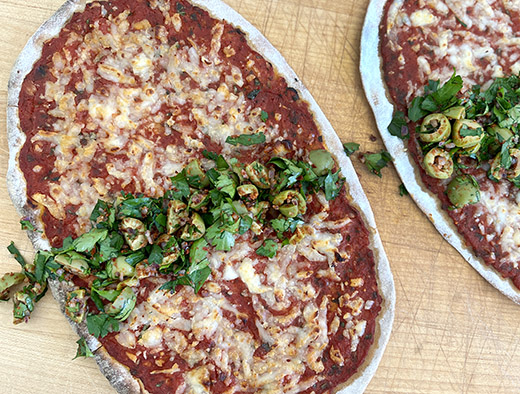
I’ve read a little about lahmajun, or Syrian flatbread, before. The crust is so thin. In the book, it’s topped with spicy ground lamb. I went a different route and topped mine with grated halloumi, but I used the sauce as written. The dough was just flour, water, and salt. After mixing, it was set aside while making the sauce. The sauce was a mix of grated tomato, minced garlic, minced onion, parsley, cayenne, and cumin. The dough was divided, rolled into ovals that were placed on parchment paper, topped with sauce and grated cheese, then transferred to a pre-heated baking sheet, and placed in a hot oven just until the edges began to brown. The dough should remain foldable and not become crisp throughout. A bright, fresh topping was made from parsley leaves, minced onion, Aleppo pepper, and I added chopped olives. That mixture was spooned on top of the flatbreads before serving.
What I learned about this type of flatbread from this recipe is that you should roll it up and eat it like a burrito. That was a fabulous way to enjoy it. Bits of the edges of crust were crunchy, but the center was tender enough to roll. There was a hit of spice from the Aleppo pepper and freshness from the parsley. Now, I just need to experience this while actually in Paris.
I am a member of the Amazon Affiliate Program.








 of which I received a review copy. Made with coconut yogurt and turmeric, I couldn’t resist this one. At first, it reminded me of the
  last year and now had to try them. The version in this book is vegan and a bit lighter, and I liked the idea of topping them with olives and tomatoes. I


 , and I received a review copy. In the introduction, it’s explained that the climate and terrain of the Middle East is suited to growing a variety of vegetables and less so to raising animals for meat at a large scale. So, we easily find many vegetable, grain, and legume dishes with plenty of herbs and spices. As the authors set out to create this vegetarian cookbook, they wanted to excite people who are trying to eat more plant-based foods and offer some new ideas to those already on that path. The chapters include Breakfast, Breads, Butters and Preserves, Dips and Spreads, Pickles and Relishes, Soups, Stuffed Vegetables, Fritters, Savory Pastries, Raw Vegetable Salads, Cooked Vegetable Salads, Hot Vegetable Dishes, Grains, Rice, Legumes, Pasta and Couscous, Ices, Desserts, Sweet Pastries, and Cakes and Cookies. And, there’s a Menu Ideas list for how to group dishes for different occasions. One of my favorite menus is the Middle-of-the-week working lunch menu: Semolina Bread with Aniseed and Sesame; Artichoke and Lemon Labneh; Baked Tomatoes with Saffron, Bulgur, and Barberries; Shankleesh Salad with Parsley and Pomegranate; and Lemon Posset with Fennel Shortbread Thins. Some other recipes I’d like to try include the Middle Eastern Granola with Pomegratate, Sour Cherries, and Pistachios that’s made even prettier with dried rose petals and the Honey-Roasted Carrots with Dates Dandelions and Moroccan Dressing. But, I got completely distracted by the Breads chapter. The soft, pillowy-looking Sesame Joujou Breads were a strong contender, and then I saw the Griddled Flatbreads and all the suggested options for toppings. To go with the flatbreads, the Spicy Carrot Pickle looked like a fun pairing, and as warned in the head note, it is addictive.


 , I mentioned that I planned to make the shrimp rillettes for Thanksgiving. Well, I did, and I’m so glad that I did. I made the fennel flatbreads too which was the option for making this basic recipe brilliant, and they were fantastic as well. After the shrimp were cooked and pureed with butter and cream cheese, the mixture needed to be chilled for at least eight hours, but a quick taste let me know we’d be in for something delicious. While the rillettes chilled in a covered ramekin, I set about making the flatbreads and learned a good lesson. After rolling out pieces of dough as thinly as possible, they were supposed to have been placed directly onto a baking sheet that had been brushed with olive oil. I somehow thought it would be a good idea to use a silpat brushed with olive oil and placed on a baking sheet as you can see in the photo below. The silpat prevented the flabreads from browning in the oven. So, then I did as I was told in the recipe and baked the next few directly on a baking sheet, and they were golden, crispy, fennel seed-flecked perfection.


 and learned of several new things about the food scene there. The number of artisan food purveyors has drastically increased. There's now La Quercia in Iowa which makes prosciutto from heritage Berkshire pigs, foraged foods are showing up on high-end restaurant menus, microbreweries and microdistilleries are making small batch products, and Prairie Fruits Farm in Champaign, Illinois and other small dairies are making chevre. Years ago, I attended the University of Illinois at Urbana-Champaign, and I don't recall any local cheese purveyors in town back then. I was thrilled to read about this change and the growing focus on local foods. I also learned that the Midwest now has thirty-three


 It was a simple combination of flavors that balanced the squash’s sweetness with the earthy mushrooms and herbal rosemary. The camembert was rich and smooth and couldn’t possibly have done anything wrong. These flatbreads tasted a little like fall but not too much. They were crunchy and fun enough to not be too serious about the winter squash, and camembert was the perfect choice for cheese.