I have a little problem. I'm addicted to cookbooks, food writing, recipe collecting, and cooking. I have a lot of recipes waiting for me to try them, and ideas from articles, tv, and restaurants often lead to new dishes. I started losing track of what I've done. So now I'm taking photos and writing about what I've prepared—unless it's terrible in which case I forget it ever happened.
When I received a review copy of Cuban Flavor: Exploring the Island's Unique Places, People, and Cuisine by Liza Gersham, the photos immediately began to tell the story. My first reaction to the book was that it was going to make me want to travel. I wanted to see the sights and taste the food in Cuba. But, as I started reading and becoming more informed about current life there, I realized that tourism brings as many problems as solutions. Food scarcity among Cubans is common, and ration books for food tend to last for only part of a given month. A lot of the food supply is taken by restaurants serving the tourist trade where higher prices are paid. So, I began to wonder if visiting is a good idea. I found an article that describes both sides of the conundrum, and it does a good job of pointing out ethical ways of traveling. Staying in a home via a service like Airbnb and visiting paladares, or restaurants created in homes, can more directly benefit families. Also, bringing supplies to share with locals is a good way to help slightly alleviate needs. Being mindful of the local situation helps in making the best choices you can as a visitor. And, without even leaving home this book transports you to the island with recipes and stories about their origin. There are recipes for beef although it’s pointed out that access to beef is a rarity. The Carne con Papas stew is a dish from a feast served at the Finca Agroecologica El Paraiso. There’s a chapter just for chicken and another for fish. The Shrimp Tamales and Empanadas Decameron both got my attention. In the Vegetariano chapter, it was interesting to read that organic farming in Cuba is common because it’s a necessity. The farmers don’t have access to pesticides and are coming to realize the benefits of growing food without chemicals. Among the desserts, the Chocolate Rum Ice Cream and Guava Sugar Cookies both sound delicious. And, several of the cocktails would be fun to sample. It had been ages since I’d made tostones, though, and I had an idea to use them as bases topped with salad to serve as little appetizers.
Making tostones is a fun process. The hardest part is peeling the green plantains. Once they’re peeled, you slice the plantains into thick chunks and fry them for a few minutes on each side. After the first frying, the plantain pieces are drained on paper towels and mashed while still warm with a spatula. They crush easily and smoosh down to about a third of their original height. Then, each piece is fried again for just about 30 seconds per side. After draining on paper towels a second time, the tostones are sprinkled with salt and are ready to serve. I also made the Mango and Avocado Salad from the book. The dressing was a mix of olive oil, lime juice, cilantro, ground achiote, minced garlic, and salt. A red bell pepper, a mango, and an avocado were diced and tossed with minced onion and more cilantro before the dressing was added. I cut all the salad ingredients small so they would fit better on top of the tostones.
I felt more than a little guilt having read that avocados in Cuba can cost almost as much as a laborer’s day’s wage when they can be found at all. Avocados are enjoyed and shared when available. I kept that in mind and enjoyed every bit of this salad on the crunchy tostones. They made a great pairing, and I learned to appreciate the ingredients that are often taken for granted.
Tostones are a ubiquitous starter in Cuban restaurants. Known throughout Latin America as tachino, chatino, or plátano a puñetazo, this savory twice-fried plantain can be very filling and tasty. There are two types of plátanos that offer significantly different flavors—one variety looks more like a banana and is sweet, while the other is starchy and bigger. You can make chips with it, or you can boil it, mash it, and fry it to make the well-loved tostones.
2 green plantains Vegetable oil, for frying Salt, to taste Dollop of sour cream (optional)
Peel the plantains, removing the ends. Cut them in rounds that are 1–1½ inches in thickness to make the shape of a chip.
Carefully place the plantains in a pan with hot oil for approximately 7 minutes. When crisp, remove, drain, and press the plantains with a spatula to flatten until they are approximately 1/2 inch thick.
Raise the temperature of the oil and add the flattened plantains again. Cook for approximately 80 additional seconds.
Sprinkle with salt and serve with sofrito salsa. Add a side of sour cream if you like.
Mango Avocado Salad Unlike Mexico’s abundance of avocados, avocados in Cuba are a rarity. Difficult to find in local markets, avocados typically cost almost as much as a laborer’s day’s wage. Therefore, when an avocado comes your way in Cuba, you covet it and share with friends.
1/4 cup olive oil 3 limes, juiced (about 1/4 cup) Sprig of cilantro 1 Tbsp achiote 2 cloves garlic 2 Tbsp salt 1 red bell pepper 1/2 large sweet red onion, sliced 2 ripe avocados, sliced Sea salt, to taste 1/2 fresh mango, cubed Fresh cilantro, chopped
Prepare the dressing. Whisk olive oil, lime juice, cilantro, achiote, garlic, and salt.
Blanch the bell pepper, and then dice into pieces. Place in a bowl and let cool. Add the dressing to the cooled bell pepper.
Arrange red onion slices on a plate, and top with sliced avocados and a touch of sea salt. Pour dressing over, and top with mango cubes and fresh cilantro.
I am a member of the Amazon Affiliate Program. Tweet
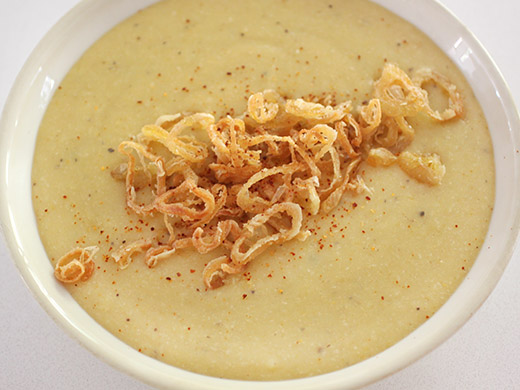
Have you booked a trip to Cuba? Are you intrigued to visit now that it’s become just slightly easier to do so? I’d love to see everything before any major real estate development takes place, but I don’t have a trip planned at this point. In the meantime, I’ve been reading a review copy I received of the new book Cuba!: Recipes and Stories from the Cuban Kitchen. I’m fascinated with the fincas, or farms, where land that’s less than ideal for growing food is being slowly turned into productive areas with traditional, earth-friendly techniques. Soil is being revived with crops that return nutrients to the ground, and only natural fertilizers are used. The stories in the book are based on just a few visits to Cuba by the authors. The recipes cover Cuban basics, snacks, sandwiches, stews, meat dishes, seafood, sweets, and drinks. There are a few that I wasn’t sure are entirely authentic, classic, Cuban dishes like the Caribbean Black Bean Burger and the Mojito Cake. I did love seeing the Jibarito, though, and I can’t wait to make that again soon. I always seem to be drawn to recipes with plantains. This time, the Pureed Plantain Soup got my attention because it’s a texture I’d never tried with plantains.
I love making pureed soups due to the ease of chopping the vegetables roughly since perfect size and shape doesn’t matter as much. The soup was started by sweating chopped onion and garlic. Green plantains were peeled and chopped into large chunks and added along with chicken stock. The soup simmered for about thirty minutes or so until the plantains were very tender. Then, it was ladled into the blender in batches to be pureed. After pureeing, it was returned to the stock pot to rewarm, and lime juice was added. While the soup was cooking, shallots were thinly sliced, dredged in cornstarch, and slowly fried in olive oil. The real trick to frying shallots is to take plenty of time and fry over low heat. You can watch the slices and decide how dark you want them to brown. When ready, the shallots were drained on a paper towel-lined sheet pan and seasoned with salt. The soup was served with a generous portion of crispy shallots on top.
There was no warning in the book, but this soup thickens considerably once it cools. It occurred to me that it was actually a bit like polenta. I added water and whisked to combine to reheat it after refrigerating. But, I thought I might make this again and treat it intentionally more like polenta by letting it become thick. The mild flavor of pureed plantain with the onion, garlic, and lime would be great as a backdrop to a mix of spicy seafood.
I am a member of the Amazon Affiliate Program. Tweet
When you’ve just roasted a whole, double turkey breast for a household of two people, odds are good that meals for the next several days will involve sandwiches. That’s not a bad thing considering how versatile a turkey sandwich can be, and it’s even better when you’ve just read the recipe for jibaritos in Daisy: Morning, Noon, and Night. A jibarito is a sandwich in which the bread has been replaced by slices of fried plantains. Apparently, the original jibarito was made with beef, but Daisy suggested leftover turkey breast pavochon. This sandwich is usually built like a cubano with a primary meat (turkey in this case but it's often roast pork), ham, swiss cheese, mustard, and sliced pickles, but I omitted the ham and used all leftover turkey. Once assembled, just like a cubano, it’s toasted in a panini press. It sounded delicious but maybe a little on the heavy side considering the ‘bread’ is fried plantains, but I had to give it a try.
Plantains were peeled and sliced lengthwise. Since the plantains I was using were large, I cut each piece in half crosswise as well. They were fried in canola oil for a total of five minutes and were turned at the halfway point. After this initial frying, they were drained on paper towels and allowed to cool just a little. While still warm, they needed to be pounded down to a thickness of one quarter inch. I used a meat tenderizer for this fun task, and they easily flattened out to an even height. After smooshing the plantains down to size, they were fried a second time to crisp them, and again, the frying time was five minutes total with a flip after two and a half minutes. I used firm, green plantains, and they held their shape very well, crisped nicely, and didn’t seem to absorb the oil. The sandwiches were built with slices of the roast turkey, swiss cheese, sliced dill pickles, and mustard. They spent about six minutes in the panini press, and came out looking toasted, golden, and just gooey enough in the middle.
I have to mention again that I was really happy with the texture of the plantain ‘bread.’ It wasn’t mushy or greasy at all, and it delivered a satisfying crunch. Of course, the melted cheese, pickles, and well-flavored turkey were great on the inside too. As I had guessed, this was a filling sandwich. One small portion was enough for a meal for me, but it was a lip-smackingly good meal.





 by Liza Gersham, the photos immediately began to tell the story. My first reaction to the book was that it was going to make me want to travel. I wanted to see the sights and taste the food in Cuba. But, as I started reading and becoming more informed about current life there, I realized that tourism brings as many problems as solutions. Food scarcity among Cubans is common, and ration books for food tend to last for only part of a given month. A lot of the food supply is taken by restaurants serving the tourist trade where higher prices are paid. So, I began to wonder if visiting is a good idea. I found an article that describes both sides of the conundrum, and it does a good job of pointing out ethical ways of traveling. Staying in a home via a service like Airbnb and visiting paladares, or restaurants created in homes, can more directly benefit families. Also, bringing supplies to share with locals is a good way to help slightly alleviate needs. Being mindful of the local situation helps in making the best choices you can as a visitor. And, without even leaving home this book transports you to the island with recipes and stories about their origin. There are recipes for beef although it’s pointed out that access to beef is a rarity. The Carne con Papas stew is a dish from a feast served at the Finca Agroecologica El Paraiso. There’s a chapter just for chicken and another for fish. The Shrimp Tamales and Empanadas Decameron both got my attention. In the Vegetariano chapter, it was interesting to read that organic farming in Cuba is common because it’s a necessity. The farmers don’t have access to pesticides and are coming to realize the benefits of growing food without chemicals. Among the desserts, the Chocolate Rum Ice Cream and Guava Sugar Cookies both sound delicious. And, several of the cocktails would be fun to sample. It had been ages since I’d made tostones, though, and I had an idea to use them as bases topped with salad to serve as little appetizers.


 . I’m fascinated with the fincas, or farms, where land that’s less than ideal for growing food is being slowly turned into productive areas with traditional, earth-friendly techniques. Soil is being revived with crops that return nutrients to the ground, and only natural fertilizers are used. The stories in the book are based on just a few visits to Cuba by the authors. The recipes cover Cuban basics, snacks, sandwiches, stews, meat dishes, seafood, sweets, and drinks. There are a few that I wasn’t sure are entirely authentic, classic, Cuban dishes like the Caribbean Black Bean Burger and the Mojito Cake. I did love seeing the Jibarito, though, and I can’t wait

 . A jibarito is a sandwich in which the bread has been replaced by slices of fried plantains. Apparently, the original jibarito was made with beef, but Daisy suggested leftover turkey breast pavochon. This sandwich is usually built like a
