Showing posts with label bread. Show all posts

Tuesday, September 3, 2019

Brioche

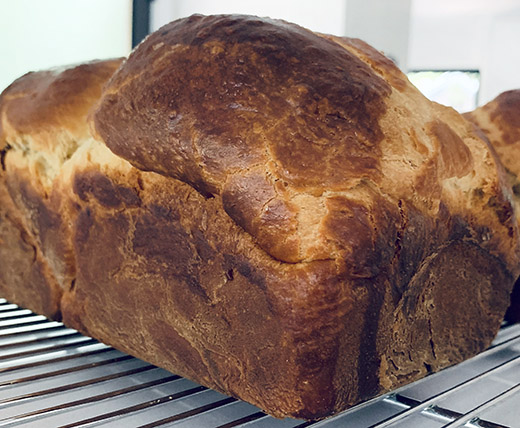
As a long-time fan of Martha Stewart, when she raves about a cookbook I pay attention. I noticed on Instagram that she had mentioned Baking at République: Masterful Techniques and Recipes by Margarita Manzke a couple of times. Specifically, she mentioned baking the brioche from this book and how delicious it is. Naturally, upon receiving a review copy of the book, I had to try the brioche. There are chapters devoted to some of the basic recipes that are used for several types of baked goods. Brioche is the first, and after the master recipe for brioche dough, there are several examples of how to use it including Brioche Fruit Tarts, Brioche Bread Pudding, Cardamom Sticky Buns, and more. Other chapters offer master recipes for Pain au Lait, Croissants, Kouign Amanns, Pate Sucree, Pate Brisee, and Pate a Choux. And, there are delightfully decadent recipes for using all of those types of dough. Following those chapters are ones for Muffins and Scones, Cookies and Bars, Cakes, Custards Puddings and Cream, and Basic Components. The Chocolate-Hazelnut Paris-Brest, Creme Brulee Cheesecake Tarts, and Mini-Chocolate Bundt Cakes all nearly distracted me from my intent to make the brioche first. But, I stayed on track. Now, in the days prior to tackling the brioche recipe, my trusty stand mixer of about 18 years had started acting a little funny. It didn’t seem to like operating at the lowest speed, but it was working at all the higher speeds. I was sure I could get through the dough making for this recipe by avoiding the lowest speed and working with the weirdness. Onward I went with letting a pound of butter warm a bit out of the refrigerator, cracking nine eggs, and getting the milk and locally-milled flour ready to go. And, the mixing got off to an ok start, but as soon as the dough became a bit heavy with the flour my mixer just stopped working at any speed. I was completely offended. How could it do this to me after all these years? How did it know I had all these ingredients ready to be used for a big batch of sticky, messy dough that really, really would be best made with a mixer? I didn’t seriously consider throwing out all the butter and eggs for even a moment. Instead, I started devising a plan for mixing all that butter in by hand without getting the butter too warm from my hands. Did I mention this was a big batch of sticky, messy dough? My kneading method involved using a bench scraper in one hand while turning and kneading with the other hand. After a few turns, I scooped it all into a bowl and refrigerated it for a bit before repeating. I wasn’t at all sure that this would turn into any kind of edible bread, but I was going to bake whatever became of it. 

It wasn’t particularly helpful to be reminded by others that we didn’t always have mixers. There must have been a time when this dough was made by hand. After everything was mixed, more or less, the dough was left to rise for 30 minutes before being turned and left for another 30 minutes. After the second rise, it was refrigerated overnight. I really believe the slow, cold rise overnight saved the dough. It was a smoother, lovelier dough the next day. To make the loaves, the dough was divided into four pieces, two dough balls were placed in each of two loaf pans, and they were left to rise again for about an hour and a half. After being brushed with an egg wash, the loaves were baked until deeply browned. 

Amazingly, the result was outstanding. Tender, buttery loaves were delicious sliced and served with blueberry jam. I also made very thick-cut French toast inspired by the book. I still have the second loaf in the freezer awaiting an occasion for a savory French toast with slow-roasted tomatoes. My old mixer and I have since parted ways after learning that a repair was unlikely, and a newer model has taken its place in the kitchen. I have lots of recipes to try with it!

I am a member of the Amazon Affiliate Program. 

Monday, September 10, 2018

Fruit Sourdough

If I were lucky enough to be visiting Melbourne, Tivoli Road Bakery is exactly the kind of place I’d want to find while out for a stroll. Michael and Pippa James’ bakery was built on their relationships with farmers and suppliers while finding the best ingredients, and it was built on excellent baking, of course. The book The Tivoli Road Baker: Recipes and Notes from a Chef Who Chose Baking, of which I received a review copy, tells the whole story. Descriptions of ingredients and suppliers are interspersed throughout the pages of recipes making clear the bakery’s goal of using the best in terms of flavor, sustainability, and cultural identity. One story highlights work being done to learn how early indigenous Australians harvested grain and made bread, and another explains the methods of a biodynamic farm. I was sold on the philosophy and then became a bigger fan as I read about the types of sourdough bread they bake. There are complete instructions for creating and maintaining a sourdough starter and step-by-step guides for each stage of dough mixing, shaping, and baking. I was intrigued by the Olive Loaf made not just with a mix of green and black olives marinated with herbs but also with tapenade incorporated into the dough. The Wholegrain Rye and Buttermilk Loaf looks delicious on its own and as the base of an open-faced, cured salmon sandwich. In fact, there’s a chapter of Sandwiches for inspiration for all the breads and Salads to go with them. There are also chapters for Viennoiserie, Pastry, Seasonal treats, and British Bakes. After mastering the Croissant Pastry, there are several recipes for using it like the incredible Morning Buns with vanilla custard. Some other recipes that I’d love to try include the jam-filled Lamington Doughnuts, the gluten-free mini Pear Almond and Brown Butter Bundt Cakes, and the loaf-pan baked Pistachio Cake. While reading the book, I pulled my sourdough starter from the refrigerator to feed it and get it ready to go to work. I had to try the Fruit Sourdough first. It’s a bread loaf with almost as much jewel-toned dried fruits as bread in each slice. 

As always with sourdough, I had to get my starter back into shape first. I store it in the refrigerator and let it go dormant between baking projects. I feed it in incrementally bigger portions for three feedings one day before I intend to use it. For this bread, the dried fruit needed to be soaked overnight before beginning. Also, all of the sourdough breads in this book begin with a starter build that’s mixed four to six hours before being added to the dough. For the fruit, golden raisins, currants, black raisins, pitted and halved dates, stemmed and quartered figs, and some ground ginger were measured and placed in a bowl. In a saucepan, a cinnamon stick, a star anise, and some water were combined. Red wine was to be added, but I used white wine instead since that seemed less wintry. The mixture was brought to a boil and then left to steep off the heat for 10 minutes. After steeping, the mixture was strained over the dried fruit, and it was left to soak overnight. The starter build was made with sourdough starter, bread flour, whole wheat flour, and water. The dough was started with bread flour, whole wheat flour, rye flour, and water and was left for the autolyse for about 30 minutes. Then, the starter build and salt were added, and the dough was mixed and left in a large bowl before the folds began. Before the first turn and fold in the bowl, the soaked fruit along with some chopped dried apricots were added. The fruit-filled dough was then turned and folded every 30 to 45 minutes a total of four times. Next, the dough was pre-shaped and left to rest for 20 minutes, and then it was shaped for the loaf pan. There are complete instructions for all of these steps in the book. I left the dough in the loaf pan in the refrigerator overnight before baking. And to bake, my preferred method for steam in the oven is to place some ice cubes in a cast iron skillet that sits on the oven floor for the first 15 minutes or so of the baking time. The loaf baked until golden and crusty on top. 


This was a somewhat wet and sticky dough that resulted in a tender crumb around all of that fruit. As noted in the book, all this bread needs for serving is a little butter. It was fruity and sweet with no added sugar, and it went perfectly with some afternoon tea. Melbourne is lucky to have this bakery that’s building strong ties in their food community, and I’m lucky to have their recipes.


I am a member of the Amazon Affiliate Program. 

Thursday, June 7, 2018

Edamame Pate Sandwiches with Molasses Oat Bread

I’m trying to remember my first encounter with hippie food. I know that I’d eaten whole wheat bread and home-grown vegetables my whole life, but my first memory of eating food that was created as a countercultural statement was when I was a student at the University of Illinois. There was a little, vegetarian cafe in Urbana called Nature’s Table, and I fell for their garbanzo spread sandwich on whole grain bread. I hadn’t thought about that place in years, but it came back to me as I read a review copy of Hippie Food: How Back-to-the-Landers, Longhairs, and Revolutionaries Changed the Way We Eat. This book looks back at the origins of what we’ve come to call “hippie food” and how many products that used to be hidden away in health food stores became mainstream. It all might have started in the 1950s in California where optimum health and trust in nature became linked to food choices. Soon thereafter, interest in macrobiotic diets were on the rise and a demand for organically-grown brown rice developed. At first, there weren’t always scientific reasons to back up various nutritional claims, but the idea that food grown without harsh chemicals is better for people and the planet began to resonate in health food circles. Just when industrialized farming was taking off, this nascent call for doing things the old-fashioned way arrived. It was interesting to read how the Lundberg family in California became a leader in growing rice organically. Following the interest in brown rice came the return to whole wheat. White bread became a symbol of the industrial, over-commercialized food system. Recipes for baking whole wheat bread at home began circulating. All the while, more health food stores and cafes cropped up around the country. Health food buying coops appeared as well, and I was interested to read about the start of Austin’s own Wheatsville Coop that is still in business today. Speaking of Austin, all of this also led to Whole Foods Market that started here as well. Hippie food often has a negative connotation as bland or boring in its meatlessness, but it’s come a long way. I’m so glad ingredients like all sorts of whole grain flours, brown rice, and organic produce have gained popularity and can be found everywhere. And, I’m thrilled that we now have so many cookbooks and magazines to inspire delicious ways to use those ingredients. This book and memories of Nature’s Table had me craving a vegetarian sandwich on whole grain bread. I’d just seen the Edamame Pate Sandwich in Clean Eating, and I decided to bake my own bread for it. 

When I read A New Way to Bake, I had marked the page for Molasses Oat Bread, and this was a perfect use for it. It’s an easy bread to make too. Boiling water was poured over some oats, and molasses was added. While it sat, more oats were coarsely ground in a food processor and then added to a bowl with whole wheat flour, bread flour, dry milk, and salt. Yeast was added to the oat-molasses mixture before it was combined with the flour mixture. The dough was kneaded and left to rise before being shaped and left to rise again. Before baking, the loaf was scored, brushed with egg white, and topped with oats. For the edamame pate, thawed shelled edamame were pureed with walnuts, mint, green onion, salt, lemon juice, and a little water. I made a few different sandwiches. Some were made with pea sprouts, some had home-grown arugula, and some were open-faced with just tomato. 

The molasses oat bread was a fitting and delicious vehicle for the edamame pate. It’s been too long since I last had that vegetarian sandwich at Nature’s Table, so I would be able to compare the two. But, I do know that Nature’s Table wasn’t using fresh, local tomatoes on their sandwiches back then, and that gave my edamame sandwich a big boost. Is this modern hippie food? Evolved hippie food? Whatever the label for this kind of eating, I hope the concept continues. 

I am a member of the Amazon Affiliate Program. 

Sunday, January 15, 2017

Za’atar Twists

Bread baking books get me every time. I always want to jump in and bake everything. It was no different with Breaking Breads: A New World of Israeli Baking--Flatbreads, Stuffed Breads, Challahs, Cookies, and the Legendary Chocolate Babka by Uri Scheft, and I received a review copy. He brings an international perspective to his baking as an Israeli who has worked in Denmark, Italy, and France and has learned from Moroccan, Yemenite, and Turkish family and friends. He opened his own bakery, Lehamim Bakery which means “breads” bakery, in Tel Aviv in 2002, and expanded the business by opening Breads Bakery in New York City in 2013. His babka is famous, and the various recipes for that dough in the book all look delicious. There are careful instructions for filling, rolling, twisting, and shaping all the different flavors and types of loaves. And, the chapter for Challah shows some beautiful creativity. The dough is fashioned into braided, twisted, and stacked shapes, and there are even some loaves with cups baked into them for holding dipping sauces. The Black Tie Challah has a small braid covered in black sesame seeds along the length, on top of the larger braided loaf. Some of the flavors of challah include Chocolate and Orange Confit Challah, Marzipan Challah, and Sticky Pull-Apart Cinnamon Challah Braid. It’s inspiring to see a basic bread recipe taken in so many directions, and the reader is encouraged to experiment and try whatever shapes you fancy. Other breads include Brioche, Ciabatta, Pan de Mie, and an incredible Dill Bread that’s formed into a coil and snipped with scissors to make a flower shape before baking. There are cookies in the book too. I have the page marked for Chocolate-Dipped Vanilla Krembos which are made with a coconut macaroon base topped with a stable meringue that gets dipped into chocolate. I also marked the page for Parmesan Cookies that are a slice-and-bake savory snack with sesame seeds on the outside edge. Before baking those cookies, I had to try the Za’atar Twists first. 

The twists are made with babka dough, and there is a Basic Babka Dough recipe and an Advanced Babka Dough recipe. Both start the same way with a rich dough made with eggs and butter. The advanced version becomes even richer with a process of layering in more butter in the way puff pastry is made. I opted for the leaner, basic option here. The dough was mixed and then left to chill in the refrigerator for at least an hour before proceeding with the rest of the recipe. These savory twists are filled with a buffet of delicious things. And, now that I look more closely at a photo in the book, I realize that I probably left my filling a bit too chunky. In the photo, it appears that the feta was very finely crumbled to make a smoother, flatter layer. After the dough chilled, it was rolled out into a large rectangle. Labne was spread across the surface followed by finely chopped fresno chiles, a drizzle of olive oil, crumbled feta, toasted sesame seeds and pine nuts, chopped fresh oregano, and za’atar. I was delighted to find my oregano plants hadn’t been affected by our below freezing weather, and I was able to harvest plenty for the whole cup of leaves needed. The dough was then cut horizontally to make two long pieces. Each piece was rolled up as tightly as possible the same way cinnamon rolls are made. Then, each roll was pulled to tighten and lengthen. The rolls each ended up about 35 inches long. Those long rolls were then cut in half along the length and then cut crosswise to make seven pieces from each of the four long strips. Those cut strips were then joined in pairs and twisted. The twists were left to proof for a few hours before being brushed with egg wash and baked. 

My twists are a bit less tidy than the ones pictured in the book since my filling wasn’t quite as smooth. But, as the author points out, no matter how your results look, they will taste great—and they did. These are kind of a meal unto themselves due to all the flavor from the feta, oregano, and za’atar and the added texture from the nuts and seeds. And, the dough was a lot of fun to work with and form into twists. As always with bread books, I’m going to be baking more things from this.  

Za’atar Twists 
Excerpted with publisher's permission from Breaking Breads by Uri Scheft (Artisan Books). Copyright 2016. 

Makes 14 twists 

A savory babka? And why not? I got the idea to make a za’atar babka when I was making a za’atar-seasoned bread. To fill the babka, I use labne, which is ultra-rich strained yogurt that has a wonderfully creamy texture and tangy flavor—not unlike sour cream. Chiles, feta cheese, and pine nuts add to the savory appeal. Here you take the babka dough and instead of twisting it and placing it in a loaf pan, you bake it free-form for individual twists or sticks. (You can follow the twist-shaping method for just about any of the babkas—some of the filling may ooze out onto the sheet pan, but those crispy bits are often the best.) 

Sesame seeds 30 grams (3 tablespoons) 
1 recipe Basic Babka Dough, chilled 24 hours 
All-purpose flour - for rolling and shaping 
Labne - 400 grams (11/3 cups) 
Red jalapeno or Fresno chile - 1, finely chopped (seeded for less heat) 
Extra-virgin olive oil - 20 grams (1 tablespoon plus 1 teaspoon), plus extra for finishing 
Feta cheese - 110 grams (1 cup), crumbled 
Pine nuts - 60 grams (1/2 cup) 
Fresh oregano leaves 50 grams (1 cup) 
Za’atar - 25 grams (2 1/2 tablespoons), plus extra for finishing 
Egg Wash Large egg - 1 
Water - 1 tablespoon 
Fine salt - Pinch 

1. Toast the sesame seeds: Place the sesame seeds in a small skillet over medium-high heat and toast them, shaking the pan often, until they are golden brown, 2 to 3 minutes. Transfer the seeds to a small plate and set aside. 

2. Roll the cold babka dough: Unwrap the cold babka dough and set it on a lightly floured work surface. Roll the dough into a 12-by-28-inch rectangle (it should be just a little shy of ¼ inch thick) with a long side facing you. Pull and shape the corners into a rectangle. 

 3. Fill and roll the dough: Spread the labne over the dough in a thin, even layer. Sprinkle it with the jalapeño, olive oil, feta, toasted sesame seeds, pine nuts, oregano, and za’atar. Divide the dough in half horizontally so you now have two 6-by-28-inch pieces. Working from the long bottom edge of one of the pieces, roll the dough up into a tight cylinder, pushing back on the cylinder with each roll to make it even tighter. Lift the cylinder, holding one end in each hand, and gently stretch and pull to tighten it even more (it will stretch to about 35 inches long). Repeat with the second piece of dough. 

4. Divide the dough into strips and make the twists: Use a bread knife to slice each cylinder in half lengthwise so you have 4 long pieces, and then slice those pieces crosswise into 7 equal sections (about 5 inches each) to make a total of 28 strips. Cross 2 equal-size pieces to create an X, keeping the exposed filling facing up. Twist the ends together like the threads on a screw so you have at least 1 twist on each side of the X (3 twists total). Repeat with the remaining pieces. Set 7 twists on one parchment paper–lined rimmed sheet pan and 7 twists on a second parchment paper–lined sheet pan. 

5. Let the twists proof: Cover the sheet pans with plastic wrap and set aside in a warm, draft-free spot until the twists have doubled in volume and are very soft and jiggly to the touch, 2 to 3 hours, depending on how warm your room is. 

6. Preheat the oven to 350°F. 

7. Bake the twists: Make the egg wash by whisking the egg, water, and salt together in a small bowl. Brush egg wash over each twist, and bake until they are dark brown and baked through, about 20 minutes; check the twists after 15 minutes, and if they are getting too dark, tent them loosely with a piece of parchment paper. Remove the twists from the oven and, while they are still warm, brush with more olive oil and sprinkle with a little za’atar. Serve warm or at room temperature. 

Basic Babka Dough 

Whole milk (at room temperature) - 120 grams (1/2 cup) 
Fresh yeast - 20 grams (2 1/2 tablespoons) or active dry yeast - 6 grams (2 teaspoons) 
All-purpose flour (sifted, 11.7%) - 280 grams (2 1/4 cups), plus extra for dusting and kneading 
Pastry or cake flour (sifted, 8.5 to 9%) - 220 grams (2 cups plus 2 tablespoons) 
Large eggs - 2 Granulated sugar - 75 grams (1/3 cup) 
Fine salt - Large pinch 
Unsalted butter (at room temperature) - 80 grams (5 tablespoons plus 1 teaspoon) 

1. Make the dough: Whisk the vanilla into the milk in the bowl of a stand mixer fitted with the dough hook. Use a fork or your fingers to lightly mix the yeast into the milk. Then, in this order, add the flours, eggs, sugar, salt, and finally the butter in small pinches. 

2. Mix on the lowest speed, stopping the mixer to scrape down the sides and bottom of the bowl as needed, and to pull the dough off the hook as it accumulates there and break it apart so it mixes evenly, until the dough is well combined, about 2 minutes. If the dough is very dry, add more milk, 1 tablespoon at a time; if the dough looks wet, add more all-purpose flour, 1 table-spoon at a time, until the dough comes together. Increase the mixer speed to medium, and mix until the dough is smooth and has good elasticity, 4 minutes. 

3. Stretch and fold the dough: Lightly dust your work surface with flour and turn the dough out on top; lightly dust the top of the dough and the interior of a large bowl with flour. Grab the top portion of the dough and stretch it away from you, tearing the dough. Then fold it on top of the middle of the dough. Give the dough a quarter turn and repeat the stretch, tear, and fold. Continue to do this until you can stretch a small piece of dough very thin without it tearing, about 5 minutes. Then use your hands to push and pull the dough against the work surface and in a circular motion to create a nice round of dough. Set the ball in the floured bowl, cover the bowl with plastic wrap, and set it aside at room temperature for 30 minutes. 

4. Chill the dough: Set the dough on a piece of plastic wrap and press it into a 1-inch-thick rectangle. Wrap the dough in plastic wrap and refrigerate it for at least 1 hour or up to 24 hours.

I am a member of the Amazon Affiliate Program. 

Sunday, May 8, 2016

Olive Twisty Bread

The topic of authenticity in relation to cuisines seems to pop up frequently lately. What is truly authentic to a place and time? When are outside influences permitted within what’s thought to be authentic? It’s not always black and white. I like the approach taken in Tasting Rome: Fresh Flavors and Forgotten Recipes from an Ancient City by Katie Parla and Kristina Gill. I recently received a review copy of the book. The authors, both American, became acquainted in Rome as they were both documenting the city’s dishes. They “enjoyed celebrating new flavors and breaking down the stereotype that Roman food must be hypertraditional in order to be authentic.” In fact over the centuries, there have been varied influences, from spice trade to immigration, on what has become Roman cuisine. This book, with both traditional and contemporary dishes, “focuses on the foods that best communicate the spirit of the Roman flavors,” and there are new twists that even include finding those flavors in cocktails. For instance, the Carbonara Sour di Co. So. is made with guanciale-washed vodka and a pinch of black pepper. There are also true classics like Torta Rustica, which is a savory pie filled with greens, and Cacio e Pepe. I liked that the Pollo alla Romana recipe spans generations by staying true to the original concept of a braised dish with wine and peppers with a contemporary spin of using leftover deboned meat and sauce on sandwiches. There are historical facts strewn about the pages and a section devoted to Cucina Ebraica, the distinctive cuisine of Roman Jews who were once confined to a walled Ghetto in the city. There are pizzas and breads, vegetable dishes, meat dishes, poultry dishes, and fish dishes. And, there are sweets and drinks as well. I’m looking forward to using summer vegetables for the Verdure Gratinate al Forno with the seasoned breadcrumb topping. I also want to try the Concia which is fried and marinated zucchini, and this too sounds great suggested as a sandwich filling. I was quickly drawn to the bread chapter by the cute, little Pizette made from rounds of puff pastry and topped with thick tomato paste and oregano. But, my first stop in the book was at the page for Trecce con Olive or Olive Twisty Bread. 

There are three variations for this bread shown in the book: olive, walnut, and zucchini. When I made this a couple of weeks ago, zucchini hadn’t quite come into season here yet, and I was so excited about the olive version I made the entire batch with an olive filling rather than making two loaves of each flavor. Making the dough begins a day in advance since it’s made with a biga. Flour, water, and yeast were combined, and the mixture spent the night in the refrigerator. The biga needs to come to room temperature before being mixed into the dough the next day. To make the bread dough, the biga was combined with water, olive oil, and malt syrup. Because the biga is a dry mixture, it takes a little work to break it up, and using your hands to mix it into the water is the best approach. Flour and yeast were added to the biga mixture and stirred with a wooden spoon. Salt was added, and the dough was kneaded until smooth but still somewhat tacky. This was a slightly wet dough but not unmanageable. While the dough was left to rise for an hour, the filling was prepared. In my case, I chopped olives and sauteed some garlic and red chile flakes in olive oil. The risen dough was divided into six pieces, and each piece was stretched to about 24 inches long. I brushed the pieces of dough with the garlic-chile oil and topped the bottom half of each piece with chopped olives. Each long piece of dough was folded over to enclose the filling leaving the sides open. Then, each piece was twisted to expose the filling in places. The tops of the loaves were brushed with more olive oil, and I sprinkled them with sea salt. They baked for about 20 minutes until golden. 

As the twisted dough baked, the edges became crisp and golden while the centers remained tender and full of olive flavor. These are great with a traditional accompaniment of wine keeping in mind “the ancient city was responsible for introducing vines and viticulture to every corner of its empire.” But, I can confirm that pieces of the olive breads are also delicious with more up-to-date gin cocktails. For tastes from both the past and present, you’ll find a lot to like in Tasting Rome

 I am a member of the Amazon Affiliate Program. 

Sunday, April 24, 2016

Bourbon Bread

One of things I’m enjoying most about my new kitchen is the counter space on the island where I can work with dough. First, there’s plenty of room to knead and divide and roll dough. And, second, the smooth Silestone surface makes working with dough easier than ever. I use less flour than I did in the past because it’s so smooth. So, I was delighted to peruse all the bread recipes in the book Bien Cuit, by Zachary Golper and Peter Kaminsky, of which I received a review copy. After reading it, I wondered if I could take a hiatus from work and all other time commitments and just bake bread until I had tried everything in the book. Bien cuit, or “well done,” refers to a dark, lovely crust that’s not burnt but completely browned. It brings flavor and texture to a loaf. I became a quick fan of the book because all of the breads are made with a starter or pre-ferment. Not all of the starters are sourdough, some are made with commercial yeast, but they all involve stages of long, slow fermentation for flavor development. That’s how I love making bread. There are classic loaves and styles and also some reinterpretations and new inventions. The Portuguese Corn Bread, or broa de milho, is made with a cornmeal and rye starter and is baked into a pretty, round loaf. The Ciabatta, one of my favorite breads, is made a little differently than other recipes I’ve tried. It’s made with a yeast starter, and the completed dough is left to rest in the refrigerator overnight. I have to try it soon. There are variations on sourdough loaves and a Sourdough Rye Bread I’d like to try. Then, there’s a chapter just for rolls. Toasted Oatmeal Rolls, Late-Harvest Carrot Rolls with roasted carrots and carrot juice, Port and Fig Rolls, Kaiser Rolls, Sun-Dried Tomato Mini Baguettes, and all the others are calling my name. The Quick Breads chapter includes biscuits and scones, and the method for scone making involving layering the dough and baking the scones cut side up was very intriguing. And last, there’s a chapter with instructions and photos showing each and every step needed to create these recipes. I so wish I could just bake from page to page until I’ve tried everything. But, alas, I’ll have to work my way through the book when time allows. I started with the Bourbon Bread because I’d never seen anything like it. It’s a yeast-raised, cornmeal and flour bread made with bourbon in place of some of the water in the dough. 

As with all the breads here, you’ll need to plan ahead. This bread was started two days before it was baked. The starter was made with cornmeal, white flour, instant yeast, and water. It was mixed and left at room temperature for about 12 hours. The dough was made by combining the starter with water to loosen it from its bowl and then mixing it with more water and bourbon. A mixture of flour, cornmeal, sugar, salt, and yeast was added to the starter and water. The dough was mixed with a spoon and then folded repeatedly with a bowl scraper to incorporate all the ingredients. Then, the dough was rolled and tucked by hand and left to rest. During the next two hours, the dough was stretched and folded four times. During the third stretching, butter was spread over the surface of the dough before it was rolled up and left to rest before the fourth fold. To form loaves, the dough was divided into two parts, each part was shaped into a tube with slightly pointed ends, and the loaves were deeply cut with crossing lines to form diamond shapes. The shaped loaves were transferred to a flour-dusted, towel-lined baking sheet with the cut sides down, and they were refrigerated for 16 to 22 hours. The next day, they were baked on a baking stone with steam. I’ve mentioned before that every bread book I read includes a different technique for creating steam in a home oven. The technique suggested here is the cast iron pan with ice in the bottom of the oven approach which is easier than opening the oven repeatedly to spritz with a spray bottle. The loaves baked for about 28 minutes. 

The bourbon and cornmeal make this a fragrant, sweet-smelling bread. The crumb is tender inside the crunchy crown of a crust. In the head note, Kentucky ham is suggested as a perfect pairing with this bread, and that makes sense. I went with smoked chicken and blue cheese and can report they make an excellent accompaniment as well. I don’t think I’ll be making room on a shelf for this book just yet. I have lots more baking to do first. 

Bourbon Bread
Excerpted from Bien Cuit by Zachary Golper and Peter Kaminsky. Copyright © 2015 by Zachary Gopler. Excerpted with permission by Regan Arts. 

makes 2 medium loaves 

I am very excited about this bread, in part because I think bourbon is one of the most elegant beverages. It is simultaneously sweet and bitter, smoky and smooth, and graced with the subtle vanilla notes of oak. Because bourbon is a corn-based whiskey, I include corn in the bread—both in the starter and the dough. I had thought it was a nice accompaniment to a vegetable course or salad. Then Peter served it with a slice of Kentucky ham (which, like bourbon, is one of the glories of the Bluegrass State). It was off the charts! The only thing missing was a mint julep. My one caution in regard to baking with bourbon (or any whiskey) is that it has a bitter component that can overpower, so don’t be tempted to put in a touch extra for good measure. The choice of bourbon is up to you. Common wisdom is that when cooking with wine, it’s best to use a wine you would like to drink. The same holds true for baking with whiskey. My choice here is Ezra Brooks because it’s pretty mellow, not overpowering, and not super expensive. 

STARTER 
200 grams (1 c + 3 tbsp) medium-grind cornmeal 
100 grams (1/2 c + 3 1/2 tbsp) white flour 
0.2 gram (pinch) instant yeast 
260 grams (1 c + 1 1/2 tbsp) water at about 60°F (15°C) 

DOUGH 
380 grams (2 1/2 c + 3 tbsp) white flour, plus additional as needed for working with the dough 
120 grams (3/4 c) medium-grind cornmeal 
30 grams (2 1/2 tbsp) granulated sugar 
15 grams (2 1/2 tsp) fine sea salt 
1 gram (generous 1/4 tsp) instant yeast 
150 grams (1/2 c + 2 tbsp) water at about 60°F (15°C) 
60 grams (1/4 c) bourbon 
 25 grams (1 3/4 tbsp) unsalted butter, at room temperature 

FOR THE STARTER 
1 Stir together the cornmeal and white flour in a medium storage container. Sprinkle the yeast into the water, stir to mix, and pour over the cornmeal mixture. Mix with your fingers, pressing the mixture into the sides, bottom, and corners until all of the flour is wet and fully incorporated. Cover the container and let sit at room temperature for 10 to 14 hours. The starter will be at its peak at around 12 hours. 

FOR THE DOUGH 
1 Stir together the white flour, cornmeal, sugar, salt, and yeast in a medium bowl. 

2 Pour about one-third of the water around the edges of the starter to release it from the sides of the container. Transfer the starter and water to an extra-large bowl along with the remaining water and the bourbon. Using a wooden spoon, break the starter up to distribute it in the liquid. 

3 Add the flour mixture, reserving about one-sixth of it along the edge of the bowl. Continue to mix with the spoon until most of the dry ingredients have been combined with the starter mixture. Switch to a plastic bowl scraper and continue to mix until incorporated. At this point the dough will be just slightly sticky to the touch. 

4 Push the dough to one side of the bowl. Roll and tuck the dough, adding the reserved flour mixture and a small amount of additional flour to the bowl and your hands as needed. Continue rolling and tucking until the dough feels stronger and begins to resist any further rolling, about 8 times. Then, with cupped hands, tuck the sides under toward the center. Place the dough, seam-side down, in a clean bowl, cover the top of the bowl with a clean kitchen towel, and let rest at room temperature for 30 minutes. 

5 For the first stretch and fold, lightly dust the work surface and your hands with flour. Using the plastic bowl scraper, release the dough from the bowl and set it, seam-side down, on the work surface. Gently stretch it into a roughly rectangular shape. Fold the dough in thirds from top to bottom and then from left to right. With cupped hands, tuck the sides under toward the center. Place the dough in the bowl, seam-side down, cover the bowl with the towel, and let rest for 30 minutes. 

6 For the second stretch and fold, repeat the steps for the first stretch and fold, then return the dough to the bowl, cover with the towel, and let rest for 30 minutes. 

7 For the third stretch and fold, gently stretch the dough into a rectangle. Pinch the butter into pieces, distributing them over the top of the dough. Using your fingers or a spatula, spread the butter across the surface of the dough. Roll up the dough tightly from the end closest to you; at the end of the roll the dough will be seam-side down. Turn it over, seam-side up, and gently press on the seam to flatten the dough slightly. Fold in thirds from left to right and then do 4 or 5 roll and tuck sequences to incorporate the butter. Turn the dough seam-side down and tuck the sides under toward the center. Return the dough to the bowl, cover with the towel, and let rest for 30 minutes. 

8 For the fourth and final stretch and fold, repeat the steps for the first stretch and fold, then return the dough to the bowl, cover with the towel, and let rest for 20 minutes. 

9 Line a half sheet pan with a linen liner and dust fairly generously with the dusting mixture. 

10 Lightly dust the work surface and your hands with flour. Using a bench scraper, divide the dough into 2 equal pieces. Press each into a 7-inch (18 cm) square, then roll into a loose tube about 7 inches (18 cm) long. Let rest for 5 minutes. Press each piece out and then shape into a very tight tube 9 to 10 inches (23 to 25 cm) long. Using a bench scraper, make 3 to 5 cuts on the diagonal down the loaf. Then, make 3 to 5 cuts in the opposite direction, crossing the first set of cuts, to make diamonds. 

11 Transfer to the lined pan, cut-side down, positioning the loaves lengthwise. Dust the top and sides of the dough with flour. Fold the linen to create support walls on both sides of each loaf, then fold any extra length of the linen liner over the top or cover with a kitchen towel. Transfer the pan to the refrigerator and chill for 16 to 22 hours. 

12 Set up the oven with a baking stone and a cast-iron skillet for steam, then preheat the oven to 480°F (250°C). 

13 Using the linen liner, lift and gently flip the loaves off the pan and onto a transfer peel cut-side up. Slide the loaves, still cut-side up, onto a dusted baking peel. Working quickly but carefully, transfer the loaves to the stone using heavy-duty oven mitts or potholders. Pull out the hot skillet, add about 3 cups of ice cubes, then slide it back in and close the oven door. Immediately lower the oven temperature to 440°F (225°C). Bake, switching the positions of the loaves about two-thirds of the way through baking, until the surface is a deep, rich brown, with some spots a long the scores being very dark (bien cuit), about 28 minutes. 

14 Using the baking peel, transfer the loaves to a cooling rack. When the bottoms of the loaves are tapped, they should sound hollow. If not, return to the stone and bake for 5 minutes longer. 

15 Let the bread cool completely before slicing and eating, at least 4 hours but preferably 8 to 24 hours. 
I am a member of the Amazon Affiliate Program. 

Friday, January 30, 2015

Meyer Lemon-Rosemary Campagne Boule

Since moving into our temporary home and using our temporary-too-small kitchen, I think I’ve spent more time reading about bread than baking bread. First, I read a review copy I received of In Search of the Perfect Loaf by Samuel Fromartz. This is a memoir of a bread baking journey. Fromartz set out to learn from other bakers in order to perfect his home bread baking, and in the process learned about different types of wheat used for flour in addition to learning new baking and dough making techniques. Time and again lately, I’ve been reading about the use of locally grown types of wheat that are fresher and more flavorful than the packaged stuff from the grocery store. Different flours present challenges and require adjustments to mixing and hydration percentages in recipes, but it’s so worth the effort to try what’s available and support the small-scale crop diversity. Fromartz visited bakers in Paris, Berlin, Cucugnan in the South of France, San Francisco, and Petaluma. Della Fattoria is located in Petaluma, California, and I first learned of this bakery from reading about it here. That led me to the next book I read recently about bread. 

I received a review copy of Della Fattoria Bread by Kathleen Weber who became a professional baker somewhat by accident. She began baking bread at home and developed a passion for it, eventually providing loaves for The Sonoma Mission Inn. Her second client was Thomas Keller of The French Laundry. Her bakery has grown substantially since then, but the artisanal process of bread making hasn’t changed. The book takes you by the hand and walks you through all the different types of bread Weber has baked at home and for the bakery over the years. The first chapters present Yeasted Breads and Enriched Bread before you get to the Pre-Fermented Breads and Naturally Leavened Breads. Last, there are Crackers, Breadsticks, Pizza Doughs, and Flatbreads. I want to make the Hot Dog Rolls because I’ve never made my own before, and the Sticky Buns look impossible to resist. I always mention that no matter how many books I read about baking bread, I always learn something new from each book. This time, I learned the technique of stuffing the dough with ingredients while shaping. There’s a Garlic Jack Campagne Boule made by spreading a garlic puree on the dough, topping that with grated Jack cheese, and then folding the dough up and around the fillings to shape the boule for proofing. Last, a hole is poked in the top of the boule and a small head of garlic is inserted into the loaf where it roasts as the loaf bakes. There’s a similar loaf made with a small bunch of grapes nestled in the top and grape leaves pressed on the surface. The loaves are beautiful and delicious-looking. I decided to attempt a loaf with a filling, and I chose the Meyer Lemon-Rosemary Campagne Boule. 

Delightfully, I had some Meyer lemons from my tree and some rosemary from our permanent home to use for this. I pop over to our property (permanent home) where our new house is being built to snip herbs when I need them. The bread was made with sourdough starter, so I needed to revive mine to get it ready to use. In the book, it’s suggested that starter be fed with a mix of all-purpose flour and whole wheat flour. I used locally grown, whole grain-whole wheat flour from Richardson Farms. The dough was made with water, starter, and all-purpose flour. Weber makes a point of mentioning that water is a large percentage of all bread dough, and the water you use should be considered. If your tap water smells or tastes off, it could affect the bread. I used filtered water. After the resting or autolyse phase, salt was added to the dough, and it was left to ferment. This was a very wet dough, and I have my troubles with wet bread doughs. It was folded and turned every 30 minutes for the first hour and a half, and then it was left to rest for another two to three hours before being pre-shaped. Since it is a wet dough, the folding and turning isn’t as simple as it could be, but I did my best. Lemon zest was mixed with chopped rosemary and olive oil. The dough was pressed into a round and dimpled with a well in the center, and the lemon-rosemary mixture was poured into the well. The dough was then carefully gathered up and around the oil mixture, the seam was pressed to seal in the oil, and the dough was turned over and formed into a boule. You can see the oil mixture spread just under the surface of the boule. The boule went into a proofing basket for two to three hours before baking. Just after slashing the top, coarse sea salt was sprinkled on top. La Baleine coarse salt was recommended, and I actually had some on hand. The book includes instructions for baking on a stone or baking in a lidded cast iron pot. I wanted to bake on a stone but probably should have known better. Of course, the dough spread a bit more than I would have liked, and a cast iron pot would have given it more support. Regardless of how it was baked, the aroma of the lemon and rosemary from the oven was fantastic. 

Adding the filling of lemon, rosemary, and olive oil was a new twist in bread making for me, and when I make sourdough breads, I usually use bread flour and a mix of other whole grain flours. Using only all-purpose flour resulted in an exceptionally tender and chewy crumb. And, the crust was crispy in the best way as a result of the oil. Even though the loaf flattened out more than I would have liked, the flavor of this bread more than made up for that small disappointment. This book has made me want to spend more time baking bread. 

Meyer Lemon–Rosemary Campagne Boule 
Excerpted with publisher’s permission from Della Fattoria Bread by Kathleen Weber (Artisan Books). Copyright © 2014. Photographs by Ed Anderson. 

Makes 1 large boule 

This has become our signature bread. Lemon zest and finely chopped rosemary are mixed with olive oil to make a pesto-like slurry that appears as a bright and delicious swirl along the underside of the crust. But what really sets the bread apart is its raised crown design, studded with large salt crystals. Ed, my husband, tells everyone to eat this bread toasted with soft-boiled eggs. I love cutting thick slices of the bread and grilling them over low coals, or pulling it apart and eating it just as it is. 

1 1/2 tablespoons (8 grams/0.3 ounce) grated lemon zest, preferably from Meyer lemons 
1 1/2 tablespoons (6 grams/0.2 ounce) chopped rosemary 
About 3 tablespoons (40 grams/1.5 ounces) olive oil 
Pain de Campagne Boule, taken through the pre-shape 
1 to 1 1/2 teaspoons (4 to 6 grams/1.4 to 2 ounces) coarse sea salt (see Note) 

1. Combine the lemon zest and rosemary in a small bowl. Add enough olive oil to create a pesto-like slurry. 
2. After the 10-minute rest, turn the dough over (flour side against the work surface) and gently press into a 9- to 10-inch round. Dimple the top, make a well, and add the rosemary mixture to the well. Fold the sides in, as when forming a boule, enclosing the mixture, then tighten the boule against the work surface until you just begin to see the rosemary mixture under the surface of the dough. 
3. Generously dust a 9-inch bread basket or linen-lined bowl with flour or a mixture of flour and wheat bran. Follow the remaining steps for proofing and baking the bread, and when ready to score, score it with a 4-scored asterisk. It will be because of the slurry underneath that the points raise into a crown as it bakes. Sprinkle the sea salt over the top. 

Note on coarse sea salt 
I prefer La Baleine coarse sea salt (in the red canister). The crystals are clear and shiny like diamonds, and they won’t melt. 

Pain de Campagne Dough 

Makes 1.35 kilograms/3 pounds 

A request from Thomas Keller right after he reopened The French Laundry in 1995 got me into making pain de campagne. So I asked Thomas lots of questions. (How do you envision serving this bread? Do you like lots of crust? What shape would look best on your bread and butter plate?) In the end, I created the bread he was looking for. For Thomas, I shaped the dough into batards. Here we make both a batard and a boule.  

Firm Starter 126 g -  4.4 oz - 1/2 cup 
Water at 80°F/27°C 506 g -  17.8 oz - 2 cups plus 2 1/2 Tbsp 
All-purpose flour 704 g - 24.8 oz - 5 cups 
TOTAL FLOUR 704 g - 24.8 oz -  5 cups 
Fine gray salt 19 g -  0.6 oz - 1 Tbsp 
TOTAL WEIGHT 1,355 g/1.35 kg - 47.6 oz/3 lbs 

1. Lightly oil or spray a deep 4 1/2- to 5-quart ceramic or glass bread bowl. 

2. Put the starter in the bowl of a stand mixer fitted with the paddle attachment. Add the water and mix on low speed until the starter is broken up and the mixture appears frothy, about 30 seconds. Add the flour and pulse a few times on the lowest setting (to keep the flour from flying out of the bowl), then mix on low speed for 2 minutes to combine. Remove the paddle attachment, scraping any dough from the paddle back into the bowl with a plastic bowl scraper, and let sit, uncovered, for 20 minutes. 

3. Scrape down the sides of the bowl with the bowl scraper and add the salt. Fit the mixer with the dough hook and mix on low speed for 6 minutes. This is a slightly sticky dough. Using the bowl scraper, turn the dough into the bread bowl. Cover tightly with a lightly oiled or sprayed piece of plastic wrap and let sit for 30 minutes. 

4. For the first fold, wet your hands, then loosen the dough from the sides and bottom of the bowl and fold it underneath itself from left to right and then top to bottom. Cover and let sit for 30 minutes. 

5. For the second fold, repeat as for the first fold. Cover and let sit for 30 minutes. 

6. For the third and final fold, repeat the folding as before. Cover and let proof in a warm, draft-free spot until there is bubbling on the surface of the dough, 2 to 3 hours. 

7. The dough is ready to be pre-shaped and shaped for Meyer Lemon–Rosemary Campagne Boule. 

I am a member of the Amazon Affiliate Program.

Wednesday, February 19, 2014

Kamut Crispbreads

As much as I love baking with my sourdough starter and love using all sorts of different grains in bread recipes, until recently, I’d never converted my starter to whole wheat. I knew it was an easy thing to do. You just start feeding it with whole wheat flour or a mix of whole wheat and bread flour. You can just as easily convert a starter with rye flour for rye bread, but I haven’t done that yet. The inspiration for going whole wheat with my starter came from the latest book from Chad Robertson, Tartine Book No. 3, and I received a review copy. If you’re familiar with his previous bread book, Tartine Bread, then the basic approach to bread baking will come as no surprise. He makes a leaven with a small amount of sourdough starter to prevent the final flavor from being too sour and then builds the dough from there. He works with very wet doughs and suggests baking loaves in a lidded cast iron pot. The techniques are all the same in this book for the hearth-style loaves, but this book starts fresh with a focus on different grains. Robertson had traveled to different parts of the world and took notice of the grains used by bakers in those locations. In Denmark, specific Nordic grains not found in the US were used in breads; in Sweden, bakers were using freshly-milled, biodynamic grains; and in Germany, a bakery was stone-grinding their flour daily. Back at home, he began experimenting with ways of using higher percentages of a variety of grains in breads without making the final loaves too dense. So, this new book includes loaves with mixes of whole grain flours, some made with sprouted grains both for hearth-style loaves and pan loaves, and breads made with porridge and cracked grains. And, then these different types of flour appear in crispbreads, cookies, eclairs, cakes, tarts, and scones. When I first flipped through this book, I was delighted by the look of the delicate crispbreads. The dough is rolled extremely thin either by hand or with a pasta machine, and the crisps are either topped with seeds or layered-over with herbs or thinly sliced nuts or vegetables. They’re like shards of delicious, edible, stained glass. 

In this book, the dough-making technique is explained in parts. At the beginning, the master method is explained for making a starter with a blend of whole wheat and bread flours with instructions for feeding it and making a leaven from it. Then, in the Crispbreads chapter, there’s a master method for using that leaven to make these doughs. The Crispbread doughs are not as high in hydration as those for hearth-style loaves, so it’s much easier to work with. Each Crispbread recipe includes an ingredient list for the flours used and quantities of water and leaven. The dough for the Kamut Crispbreads included whole-grain kamut flour, bread flour, wheat germ, salt, water, and leaven. It was mixed and left in the refrigerator overnight. The next day, the dough was divided into small pieces, and I used the pasta machine technique to roll each piece into long, thin ribbons. I topped the ribbons of dough with parsley leaves, thinly sliced garlic, lemon zest, and crushed red pepper. Then, the dough was folded over to encase the herbs and spices inside, and it was rolled through the machine again to seal it. The long pieces were cut into portions, brushed with melted butter, sprinkled with salt and pepper, and baked until crisp. They do brown quickly, so you need to watch and pull them from the oven before they get too dark. To further crisp them, they were placed back in the oven at a lower temperature on racks to fully dehydrate. 

I look forward to sprouting grains for the hearth-style loaves and trying some of the darker, seeded pan loaves like the Sprouted Buckwheat-Einkorn bread. I already visited the Pastry chapter and tried the Croquant D’Amandes which are kind of like almond biscotti made with hibiscus flowers, spelt flour, and kamut flour. They were crunchy, nutty, and deliciously tangy from the hibiscus, but mine turned out a bit flatter than what’s shown in the photo. The whole grain Pate a Choux dough has me very curious, and the Salted Chocolate-Rye Cookies look hard to resist. I can already tell I’ll be spending more time tracking down a variety of whole grain flours to use. 

Kamut Crispbreads 
Recipe reprinted with publisher’s permission from Tartine Book No. 3

Whole-grain Kamut flour (60%) 170 g 
Medium-strong bread flour (40%) 113g 
Wheat germ (7%) 20g 
Fine sea salt (2.5%) 7g 
Water (50%) 142g 
Leaven (15%) 45g 

*Herbs, edible flowers, and shaved vegetables for filling (optional) and flaky salt such as Maldon. 

(The dough is started by making a leaven from a mature starter that’s been fed with a mix of 50% whole wheat flour and 50% bread flour. The leaven is made with one tablespoon of starter, 200 grams of the 50/50 whole wheat-bread flour mixture, and 200 grams of warm water. The leaven is mixed and left at room temperature for 4 – 6 hours before proceeding with the recipe below.) 

Mix the dough with the above ingredients. Let ferment overnight, covered, in the refrigerator. The next day, divide the dough into small pieces, each about 50 grams, and shape into rounds. Let rest for 10 to 15 minutes. 

To make with a pasta machine: 
Flour your work surface and the dough. With a rolling pin, roll one piece of dough just thin enough so it will fit through the widest setting on your pasta machine. Flour the dough well, then feed it through the machine. Repeat this step, reducing the opening of the rollers a notch with each pass until you’ve reached the Number 1 setting on the pasta machine, flouring the dough each time as necessary to prevent sticking. 

As the dough gets thinner, use the backs of your hands to guide the dough through the rollers to help prevent tears. If at any time you feel your dough is too long to manage, cut it in half and roll both pieces separately. Transfer the dough to a well-floured work surface. 

To make filled crispbreads, after the final pass, transfer the dough to a well-floured surface. Roughly mark the center of your dough and, with a pastry brush, brush one half lightly with water. Lay the filling of your choice on the moistened half of the dough in a single layer, arranging it artfully, then fold the dough, encasing the filling, and pat well so that the two pieces of dough adhere to one another. 

Flour the dough well, then run it through the pasta machine again, beginning on the Number 4 or 5 setting and continuing until you’ve passed the dough through the Number 1 or 2 setting (depending on the thickness of the filling). 

Transfer the dough to a floured surface and cut each crispbread into the desired shape, transfer to a parchment-lined baking sheet, and brush with melted butter. Sprinkle with flaked salt. Bake at 425 degrees F/220 degrees C for 10 to 15 minutes, until golden brown. Remove from the oven. 

Reduce the oven temperature to 200 degrees F/95 degrees C. When the oven has cooled, remove the crispbreads from the baking sheets and return them to the oven, placing them directly on the oven racks. To allow moisture to escape, leave the oven door slightly cracked (use the handle of a wooden spoon to keep it ajar), and bake 10 to 15 minutes longer, until the crispbreads are thoroughly dehydrated. They should not have darkened in color. 

Carefully remove from the oven and transfer to a cooling rack. Once cool, break into large pieces or transfer whole to an airtight container right away so they stay crisp; they will keep for a week stored properly and can be recrisped by heating again in a moderate oven (300 degrees F/150 degrees C) for 10 to 12 minutes. 

I am a member of the Amazon Affiliate Program.

Thursday, October 17, 2013

Kalamata Olive Sourdough Bread

I think I’ll always assume that part of bread baking is magic. I can choose different flours for different textures, adjust the timing according to the temperature, make big loaves or small rolls, but I’m never completely sure what the result will be until it comes out of the oven. Hence, it’s magic. This is also why I love reading books about bread baking and learning more about every detail of the process. Every baker who has written about bread baking has unique insights or techniques to offer. And, when the baker in question happens to be a Master Baker who trained at Les Compagnons du Devoir guild and has taught and consulted on bread baking around the world while operating his own bakery, I know there will be plenty to learn. I received a review copy of A Passion for Bread by Lionel Vatinet in which he describes the importance of bread throughout his upbringing in France and how he was inspired to master the craft of bread baking. After doing so, it became his goal to teach what he’s learned to as many professional and home bakers as he can. The book walks you through the processes of mixing, kneading, and shaping with helpful step-by-step photos along the way. There are yeast-raised breads including plain Baguettes and several varieties of stuffed Baguettes, Focaccia with all sorts of toppings, and Ciabatta as a loaf or rolls. Up next are Sourdough Breads which I’m partial to because of the complete simplicity of ingredients and homemade-ness of them. Last, there’s a chapter for other uses for all of these breads like recipes for soups to be topped with croutons, sandwiches with different breads, and stuffing. My first stop was in the Sourdough chapter for the Kalamata Olive Bread. 

As usual in preparing to bake bread, the first step was to feed my starter and get it ready to do its thing. The dough here was a mix of whole-wheat flour, bread flour, water, liquid levain or starter, and salt. Vatinet points out that by adding the water to a bowl first and then adding the levain, you won’t risk the levain partially sticking to the bottom of the bowl. The olives were chopped in half or quartered, drained, and then patted dry before being tossed with some flour. After mixing the primary ingredients, the floured olives were added and mixed into the dough. This recipe makes a sticky dough, and Vatinet provides good guidance for working with it. He assures you that after folding the dough at intervals during the first fermentation, it will have developed some body and lost some of the stickiness. I actually doubled the recipe to make two loaves. So, after the first fermentation, I divided the dough in half. In my case, two loaves were shaped, and I refrigerated them overnight for a slow final fermentation before baking. The issue of adding steam to the oven while the bread bakes is something every baker seems to address in a different way. A technique that has become popular is to place a shaped loaf in a pre-heated cast iron pot with a lid to allow the steam rising from the bread as it bakes to be captured inside the pot. With that method, you have the difficulty of gently placing a risen loaf in a very hot pot and then having to reach in to slash the surface of the loaf while not burning your hands on the pot. Vatinet offers a different approach to achieve the same effect. He suggests you place the loaf on a cornmeal-dusted peel, slash the top of the loaf, slide the loaf onto a baking stone in the oven, and then place a stainless steel mixing bowl over the loaf for the first ten minutes of baking. The bowl is easy to remove with oven mitts after it has done its job of capturing steam. It worked great, producing nice, crusty loaves. 

An idea mentioned in the recipe headnote is what convinced me to try this bread, and that was to use the olive bread for a tuna Nicoise sandwich. I ended up doing a tuna-less twist on that by toasting pieces of the bread, topping them a white bean spread, setting an anchovy fillet on each pieces, and drizzling with olive oil. It was a delicious combination of flavors from bottom to top. The more I learn and the more I bake, there are fewer mysteries to the process. But, I think there’s still a bit of magic involved.

Kalamata Olive Bread 
Recipe reprinted with publisher’s permission from A Passion for Bread: Lessons from a Master Baker. Copyright © 2013 Lionel Vatinet. Little, Brown and Company. 

Makes 1 boule 

One of the stops on my Guild Tour de France was Nimes, where a fougasse (a French take on focaccia) with olives is the bread of choice. When I began baking in the United States, I added olives to my sourdough bread. It was instantly popular, which did not make me happy because the only olives available still had their pits. I spent more time pitting olives than making bread—not a fun job! Thankfully, pitted kalamata olives are now readily available in the United States. Try this bread to make a tuna Nicoise sandwich—a very French lunch. 

3.23 ounces/92 grams/about 3⁄4 cup pitted kalamata olives, well drained and patted dry 
2.28 ounces/65 grams/1⁄2 cup unbromated whole-wheat bread flour, plus .35 ounce/10 grams (2 teaspoons) for the olives 
11.03 ounces/315 grams/21⁄2 cups unbleached, unbromated white bread flour 
0.21 ounce/6 grams/1 teaspoon fine sea salt 
9.5 ounces/270 grams/1 cup plus 3 tablespoons plus 1 teaspoon water 
3.5 ounces/100 grams/1⁄2 cup liquid levain  
Cornmeal for dusting 

1. MEASURING 
Scale all of the ingredients. 

Using a chef’s knife, cut each olive into 6 pieces and place them in a small bowl. Add the .35 ounce/10 grams whole-wheat flour and stir to lightly coat each piece of olive, allowing the flour to absorb any remaining moisture. Set aside. Using an instant-read thermometer, take the temperature of the water. It should read between 65°F and 70°F. Record it in your Dough Log. 

2. MIXING AND KNEADING 
Place the 11.03 ounces/315 grams whole-wheat flour, the white flour, and the salt in a medium mixing bowl, stirring to blend well. 

Pour half of the water into a mixing bowl, and then add the liquid levain, stirring to blend. 

Pour the levain-water mixture into the bowl of the electric stand mixer. Add the flour-salt mixture. Then, attach the dough hook to the mixer. Begin mixing on low speed (“1” on most mixers) and continue to mix until the dough becomes soft and moist, about 5 minutes, frequently stopping the mixer and scraping down the sides of the bowl with a bowl scraper or rubber spatula to make sure that all of the ingredients are incorporated into the dough. 

Taste the dough to see whether you have forgotten the salt. If so, add it now and mix for another minute. The dough should just be beginning to come together. 

Stop the mixer and move the dough hook out of the way. Using your bowl scraper, scrape down the sides to make sure that all of the ingredients are combined in the dough. 

Return the dough hook to its original position. Increase the speed to medium-low (“2” on most mixers) and mix until the dough is soft and smooth, with a moist, tacky surface, about 2 minutes. 

Add the floured olives, reduce the speed to low, and continue to mix until the olives are completely incorporated into the dough. 

3. FIRST FERMENTATION 
Using an instant-read thermometer, take the temperature of the dough. It should be between 72°F and 80°F. If it is not, immediately make the necessary adjustments. Record the temperature of the dough and the time you finished this step in the Dough Log, and note the time the first fermentation should be completed. This dough will be in the first fermentation for 3 hours, with a fold each hour. 

Lightly dust a large glass or metal bowl with flour. Transfer the dough to the floured bowl, throw a light film of flour over the top to keep the plastic from sticking, tightly cover the bowl with plastic wrap, and place in a warm (75°F to 80°F), draft-free place for 1 hour. 

Lightly dust a clean work surface with flour. 

Uncover the dough and place it on the floured work surface. If the dough is very sticky, lightly flour your hands, but do not add more flour to the dough. If the dough sticks to the table, use your bench scraper to lift it up; do not pull and stretch the dough. Let the dough rest for 30 seconds. Using cupped hands, pat the dough into a thick square. Lift the right corners and fold them into the center of the square, lightly patting the seam down. Lift the left corners and fold them into the center of the square, again lightly patting the seam down. Repeat this process with the top two corners and then the bottom two corners, meeting in the middle of the square and lightly patting down the seams. 

Lightly flour the bowl and return the dough to it, seam side down. Cover with plastic wrap and return to the warm (75°F to 80°F), draft-free place for another hour. 

Repeat the above process and again place the dough in a warm (75°F to 80°F), draft-free place to rise for a third and final hour. At this point the dough should have increased in body and be less sticky. 

4. SHAPING 
Lightly dust a clean work surface with flour. 

Transfer the dough to the floured surface and, using a flat hand, lightly press the dough into a thick rectangle. Lift the dough to make sure that it is not sticking to the work surface. If it is sticking, use the dough scraper to lift it. If it continues to stick, again lightly dust the work surface with flour. Then, carefully shape the dough into a boule. 

Lightly dust a banneton with flour. Place the dough in the banneton, seam side up. Throw a light film of flour over the top to keep the plastic from sticking, and cover tightly with plastic wrap. 

5. FINAL FERMENTATION 
Place the banneton in a warm (75°F to 80°F), draft-free place for 21/2 to 3 hours or, alternatively, proof for 1 hour and then place in the refrigerator for 12 to 16 hours. If the dough has been refrigerated, let it come to room temperature for 1 hour before baking. 

If you are using the stainless-steel bowl method to bake the bread, about 30 minutes before you are ready to bake, move one oven rack to the lowest rung and remove the other. 

Place a large baking stone on the rack and preheat the oven to 450°F. To determine whether the dough is ready to be baked, uncover and gently make a small indentation in the center of the dough with your fingertip. If the indentation slowly and evenly disappears, the bread is ready to bake. If not allow for additional fermentation. 

6. BAKING 
Lightly dust a bread peel with cornmeal and carefully transfer the loaf to it, top side up. 

Working quickly and using a lamé or single-edged razor blade, score the top of the loaf. Cut in quick, decisive slashes, marking into the dough by no more than 1/8 inch. 

Slide the loaf onto the center of the stone, taking care not to touch the hot surface. Quickly cover with the stainless-steel mixing bowl. Immediately close the oven door. Bake for 10 minutes; then, lift the edge of the bowl with the tip of a small knife and use oven mitts to carefully remove the hot bowl. Continue to bake until the bread is a deep golden brown, about 30 minutes more. (It is a good idea to check after the bread has been baking for about 20 minutes to make sure it is browning evenly. If not, rotate the bread.) If you are concerned about the bread’s doneness, insert an instant-read thermometer from the bottom of the bread into the center. If it reads 185°F to 210°F the bread is fully baked. 

Transfer the loaf to a cooling rack and let it cool for at least 1 hour before cutting with a serrated knife or wrapping for storage. 

I am a member of the Amazon Affiliate Program.

Blogging tips